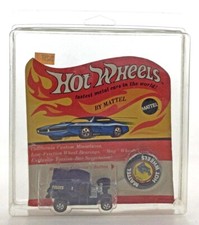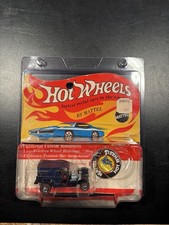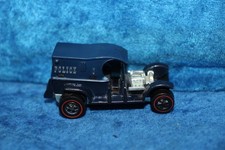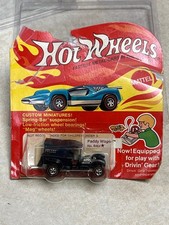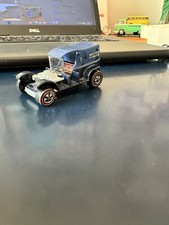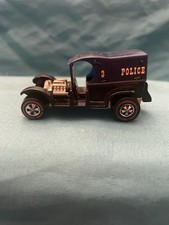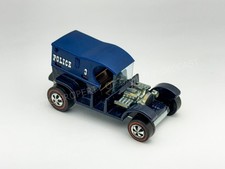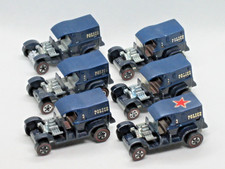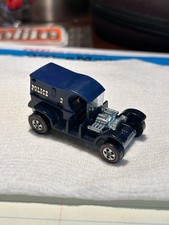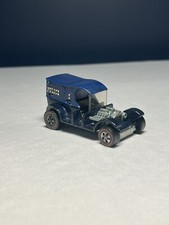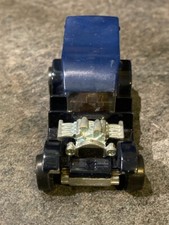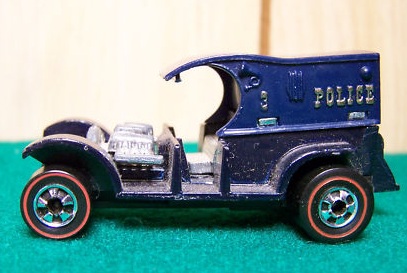
Casting #: 6966
Paddy Wagon
Previous Castings: Paddy Wagon (1970), (1973)
Production Run: 1974 only
Note: Produced in Hong Kong. No features have been changed from the 1973 version.
Picture and description thanx to NCHWA.comOpenAI/ChatGPT Collector Guide
1974 Hot Wheels Redline Paddy Wagon Collector Guide
Quick Value Snapshot
| Category |
Collector Guidance |
| Model |
1974 Hot Wheels Redline Paddy Wagon |
| Production |
1974 only for this listed version |
| Manufacture |
Hong Kong |
| Relationship to Earlier Versions |
Previous Paddy Wagon castings are listed for 1970 and 1973. The 1974 version is noted as having no feature changes from the 1973 version. |
| Pricing Confidence |
Limited. No confirmed sold-price data was supplied for this page. |
| Value Approach |
Use verified sold prices for original, complete, correctly identified examples. Do not use active asking prices as market value. |
Collector Summary
The 1974 Hot Wheels Redline Paddy Wagon is a late Redline-era release produced in Hong Kong. According to the supplied database notes, it was produced for 1974 only and no features were changed from the 1973 Paddy Wagon version.
For collectors, the most important point is identification. Because the 1974 version is described as unchanged from the 1973 version, loose examples may be difficult to date with certainty unless supported by packaging, provenance, or a reliable casting reference. Buyers and sellers should be cautious when assigning a loose Paddy Wagon specifically to 1974 without supporting evidence.
This casting appeals to Redline collectors, Hong Kong production specialists, late-run Redline collectors, and collectors building a complete Paddy Wagon timeline across the 1970, 1973, and 1974 releases.
Known Variations and Details
- Casting: Paddy Wagon
- Listed year: 1974
- Production run: 1974 only for this listed version
- Country of production: Hong Kong
- Previous listed castings: Paddy Wagon 1970 and Paddy Wagon 1973
- Feature changes: None noted from the 1973 version
- Wheel/base information: No additional wheel or base details were supplied in the listing data
Because no feature changes are noted from 1973, collectors should avoid assuming that every loose example with matching features is automatically a 1974 car. Packaging and reliable provenance matter more for year-specific attribution.
Color and Desirability Notes
No confirmed color list was supplied for this reference entry. As a result, this page should not be used to verify every possible color or finish variation for the 1974 Paddy Wagon.
In general Redline collecting, desirability is affected by originality, brightness of the finish, clean tampos or graphics if present, intact trim, wheel condition, and whether the car can be confidently identified as the correct release. For this casting, year attribution may be especially important because the 1974 version is noted as unchanged from the 1973 version.
Unusual colors, mismatched parts, or unusually fresh-looking examples should be evaluated carefully. They may be legitimate, but they may also be repaints, restorations, customs, or cars assembled from parts.
Condition Factors That Affect Value
- Original paint: Original finish is more desirable than repaint or touch-up. Look for consistent aging, correct surface texture, and paint wear in natural contact areas.
- Base condition: Check for corrosion, heavy toning, scratches, tool marks, and signs that the car has been opened.
- Wheels: Redline wheel condition matters. Inspect for bent axles, cracked wheels, missing chrome, flat spots, and replaced wheels.
- Glass and interior: Cracks, discoloration, warping, missing parts, or swapped components reduce confidence and value.
- Completeness: Missing or incorrect parts should be disclosed. Incomplete examples should not be priced like complete originals.
- Play wear: Edge wear, roof wear, chipped corners, and base scuffing are common on played-with Redlines and should be reflected in price.
- Packaging: Correct original packaging, when present, can help with year identification and usually changes the valuation category significantly.
Restorer Notes
The 1974 Paddy Wagon should be evaluated carefully before restoration because original examples, even with wear, are often more useful to collectors than repainted or modified cars. Restoration may improve display appearance, but it changes the collecting category.
- Do not represent restored cars as original.
- Document any repainting, wheel replacement, axle repair, polishing, base work, or part replacement.
- Keep original parts if they are removed.
- Use caution when polishing bases or brightwork, as over-cleaning can make an otherwise original car look altered.
- If reproduction parts are used, disclose them clearly in any listing or sale.
Buyer Cautions
- Do not rely on asking prices alone. Active listings show what sellers hope to receive, not what buyers have actually paid.
- Confirm the casting. Make sure the listing is actually for a Paddy Wagon and not a different Hot Wheels police or wagon casting.
- Confirm originality. Look for signs of repainting, new rivet work, reproduction parts, wheel swaps, or unusually clean components on an otherwise aged car.
- Be careful with year claims. Since the 1974 version is noted as unchanged from 1973, a loose car may not be easy to assign to 1974 without supporting evidence.
- Avoid mixed lots as value guides. Lot prices often reflect several cars, combined condition, or buyer interest in only one item.
- Check photos closely. Ask for clear images of the base, wheels, front, rear, roof, sides, and any damaged areas.
Seller Notes
- State that the car is a Hong Kong Paddy Wagon if the base confirms it.
- If claiming 1974 specifically, explain the basis for that identification, especially because no feature changes are noted from the 1973 version.
- Separate original, restored, custom, and parts cars in your description.
- Photograph the car in natural light and include close-ups of wear, wheels, base, and any decals or graphics.
- Do not use high active asking prices as proof of value. If referencing the market, use comparable sold examples only.
- Disclose wheel swaps, reproduction parts, repainting, axle repairs, and opened rivets.
Pricing Analysis
No specific confirmed sold-price records were supplied for this page, so pricing confidence is limited. A reliable valuation should be based on recent sold examples that match the correct casting, correct production type, originality, condition, and completeness.
| Price Source Type |
How to Use It |
Collector Reliability |
| Confirmed sold prices |
Best source when the car is original, correctly identified, complete, and comparable in condition. |
Highest |
| Active asking prices |
Useful for seeing seller expectations and current availability, but not proof of market value. |
Limited |
| Mixed lots |
Use carefully. Lot prices may include unrelated cars or may not reflect the Paddy Wagon alone. |
Low |
| Restored or custom examples |
Do not use as normal value comparisons for original cars. |
Low for original-market pricing |
| Damaged or parts cars |
Useful only for parts-value context, not for valuing complete collector-grade examples. |
Limited |
Strong outliers should be reviewed separately. A very high result may involve packaging, unusually strong condition, multiple bidders needing the same example, or misidentified contents. A very low result may involve poor photos, damage, incorrect listing title, restoration, missing parts, or a mixed lot where the Paddy Wagon was not the main item.
Listings to Exclude or Treat Carefully
- Repaints advertised as original
- Custom-built Paddy Wagons
- Restored examples when pricing original cars
- Cars with reproduction parts unless clearly disclosed
- Examples with drilled or altered rivets
- Wheel-swapped cars
- Damaged, incomplete, or parts-only examples
- Mixed lots where the individual Paddy Wagon value cannot be separated
- Wrong-casting listings using the Paddy Wagon name incorrectly
- Listings claiming 1974 without explanation when the car is loose and visually identical to the 1973 version
New Collector Advice
If you are new to Redlines, start by learning the difference between original, restored, custom, and reproduction-part cars. The Paddy Wagon is a good casting to study because year identification can be more complicated when a later version is noted as unchanged from the prior year.
- Buy the best original example you can comfortably evaluate.
- Ask for base and wheel photos before buying.
- Do not assume a loose car is 1974 unless the seller provides a good reason.
- Compare condition carefully rather than comparing only color or casting name.
- Keep records of where and when you purchased the car, especially if it came with packaging or collection provenance.
Advanced Collector Notes
Advanced collectors should treat this release as a year-attribution challenge. The supplied notes state that the 1974 Paddy Wagon was produced in Hong Kong and that no features were changed from the 1973 version. That means packaging, original collection context, and careful comparison with trusted references may be necessary to support a strict 1974 identification.
For cataloging, it is useful to record the car as a Hong Kong Paddy Wagon with notes on why it is being assigned to 1974. If no supporting evidence exists, a conservative description may be more accurate than a firm year claim.
When building a complete Paddy Wagon sequence, separate the 1970, 1973, and 1974 entries clearly and document any differences confirmed by reliable references. Do not create unverified variations from repaint colors, swapped wheels, or restored examples.
Short Page Blurb
The 1974 Hot Wheels Redline Paddy Wagon was produced in Hong Kong for 1974 only and is noted as unchanged from the 1973 version. Because loose examples may be difficult to date precisely, collectors should focus on originality, condition, base confirmation, and supporting provenance when buying or selling.
Disclaimer
This guide is for collector reference only. Values can change based on condition, originality, completeness, packaging, timing, and buyer demand. Active asking prices are not the same as actual sold prices. No exact value is guaranteed. Restored cars, customs, repaints, reproduction parts, damaged examples, lots, and wrong-casting listings should not be treated as normal price comparisons for original 1974 Hot Wheels Redline Paddy Wagon examples.
Gemini/Google AI Collector Guide
1974 Hot Wheels Redline Paddy Wagon Collector Guide
Quick Value Snapshot
Values for the 1974 Paddy Wagon vary significantly based on paint luster and the integrity of the plastic canopy. Loose examples typically range from $20 to $45 for played-with condition, while high-grade near-mint examples can reach $125 to $175+. Confirmed 1974-specific carded examples are rare and command significant premiums.
Collector Summary
The 1974 Paddy Wagon represents the final iteration of this Tom Daniel-designed casting during the original Redline era. Produced exclusively in Hong Kong, this version is functionally identical to the 1973 release. It features a dark blue enamel body, a bright yellow plastic canopy, and a white interior. Unlike the original 1970 release which featured Spectraflame paint, the 1974 version utilizes the Enamel "Flying Colors" era paint scheme.
Known Variations and Details
- Production Year: 1974 only.
- Country of Origin: Hong Kong.
- Paint: Dark Blue Enamel.
- Interior: White plastic.
- Canopy: Yellow plastic (retained from the 1973 design).
- Wheels: Small Redline wheels in front; large Redline wheels in rear.
- Base: Black unpainted or lightly plated metal base.
Color and Desirability Notes
While the 1970 Spectraflame versions are generally more valuable to high-end collectors, the 1974 Enamel version is prized for its "Flying Colors" aesthetic. Because there were no casting changes from the 1973 version, the 1974 is often grouped with its predecessor. Collectors look for "pop"—a deep, glossy blue enamel that hasn't succumbed to "dulling" or "toning" common in Hong Kong paint applications.
Condition Factors That Affect Value
- Canopy Integrity: The yellow plastic roof is fragile. Check for cracks, broken mounting tabs, or stress marks.
- Fender Wear: The large, flared fenders are high-wear areas. Missing paint on the edges significantly lowers the grade.
- Chrome Loss: The radiator, lamps, and engine are chrome-plated plastic. Rubbing or "tarnishing" on these parts is common.
- Wheel Chrome: The chrome foil on the Redline wheels often wears away, leaving dull grey plastic.
Restorer Notes
The Paddy Wagon is a popular candidate for restoration due to the availability of reproduction parts. The yellow canopy is frequently replaced. Collectors should be aware that many "mint" examples found online may actually be 1970 castings repainted in enamel or 1974 castings with reproduction roofs. Authenticating the rivets is essential to ensure the car has not been opened.
Buyer Cautions
The 1973 and 1974 versions are visually identical. Buyers should not pay a premium for a "1974" over a "1973" unless it is still on its original 1974-dated blister card. Additionally, ensure the car is an original Redline; the Paddy Wagon has been re-released many times in the "Classics" and "Vintage" series with black tires or different wheel styles that do not hold the same value as the original 1974 Hong Kong Redline.
Seller Notes
When listing a 1974 Paddy Wagon, clear photographs of the roof tabs and the underside of the chassis are required. If the roof is loose or has been glued, this must be disclosed. Sellers should emphasize the condition of the white interior, as it can often become stained or dusty over decades of storage.
Pricing Analysis
The market for the 1974 Paddy Wagon is stable but has lower volatility than Spectraflame-era cars. High-end collectors focus on "Case Fresh" examples.
| Condition |
Approximate Sold Price Range |
| Poor / Fair (Heavy wear, missing roof) |
$10 - $20 |
| Good / Very Good (Play worn, intact) |
$30 - $55 |
| Excellent / Near Mint (Minor chips, bright chrome) |
$70 - $110 |
| CGL (Collector Grade Loose / Mint) |
$130 - $180 |
Note: Market confidence is high for loose examples but limited for authenticated 1974-specific carded examples due to low sales volume.
Listings to Exclude or Treat Carefully
- Blackwall Conversions: Later 1977+ versions with plastic tires are not Redlines.
- Reproduction Canopies: Cars with suspiciously bright, un-aged yellow roofs may be using reproduction parts.
- Restored/Code 3: Heavily modified or repainted cars should be priced as "customs" rather than original collectibles.
New Collector Advice
If you are looking for an affordable entry into Redline collecting, the 1974 Paddy Wagon is an excellent choice. It offers the classic "Redline look" with large rear wheels and a distinctive profile at a fraction of the cost of the 1970 Spectraflame version. Focus on finding one with an original, unbroken roof first, as the car is difficult to display properly without it.
Advanced Collector Notes
Advanced collectors look for the "Flying Colors" card art variations. Because the 1974 production was a carry-over of the 1973 design, finding one in a 1974-specific "Flying Colors" blister pack is the ultimate goal for a completionist. Pay close attention to the base plating; some Hong Kong batches exhibit a darker, "smoky" chrome finish compared to others.
Short Page Blurb
The 1974 Redline Paddy Wagon is the final "original era" release of this classic Tom Daniel design. Featuring a dark blue enamel finish and its iconic yellow canopy, this Hong Kong-produced classic is a must-have for any Redline or Flying Colors enthusiast.
Disclaimer
Value guides are based on historical market trends and recent sales data. We do not guarantee that any specific car will sell for the prices listed. Condition is subjective, and the market for vintage toys can fluctuate rapidly. This guide is for educational and research purposes only.
Online Redline Guide / Color Reference
NCHWA.com Ratings
MINT Loose pricing below probably. Check ebay for blister pricing.
Note that these values are very old. Typical selling prices can be significantly higher now. Check the AI summaries for more info or ebay listings here.
Please see NCHWA.com Grading Page to reduce value due to condition.
| Color | Rating | Value |
|---|
| Dark Blue | 1+ | $30 | | . |
| | . | | . |
Looking for reproduction redline parts?

Total results 3
Average price for this page is $24