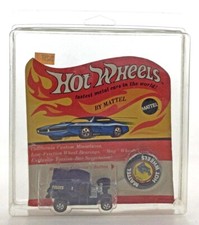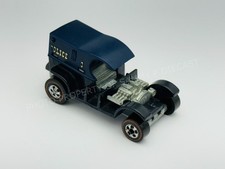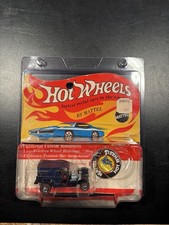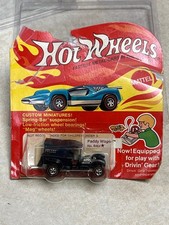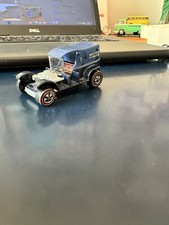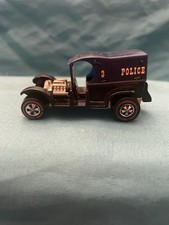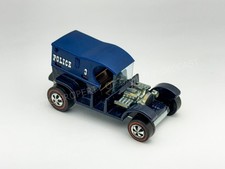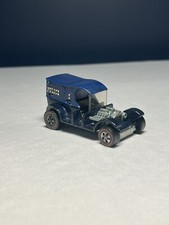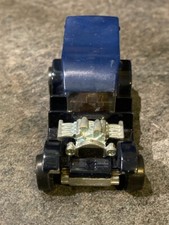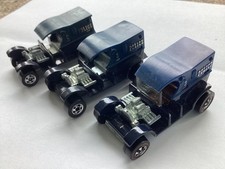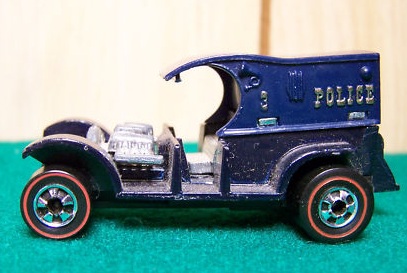
Casting #: 6966
Paddy Wagon
Previous Castings: 6402 Paddy Wagon (1970)
Production Run: 1973 only
Note: Produced in Hong Kong. The biggest difference between the '70 Paddy Wagon and the '73 version is the missing windshield. All other details remained the same.
Picture and description thanx to NCHWA.comOpenAI/ChatGPT Collector Guide
1973 Hot Wheels Redline Paddy Wagon Collector Guide
Quick Value Snapshot
| Item |
Collector Notes |
| Model |
1973 Hot Wheels Redline Paddy Wagon |
| Production |
1973 only, according to the supplied database notes |
| Country |
Hong Kong |
| Previous Casting |
6402 Paddy Wagon, originally from 1970 |
| Key Identifier |
The 1973 version is noted for the missing windshield compared with the 1970 Paddy Wagon |
| Value Confidence |
Limited without verified sold-price data. Use confirmed sales of correct, original 1973 examples rather than active asking prices. |
Collector Summary
The 1973 Hot Wheels Redline Paddy Wagon is a later Redline-era version of the earlier 1970 Paddy Wagon casting. The supplied database notes identify it as a Hong Kong-produced casting with a 1973-only production run. The most important identification point is that the 1973 version does not have the windshield found on the 1970 version.
For collectors, this model is important because it is easy to confuse with the earlier Paddy Wagon unless the windshield area and casting details are checked carefully. For new collectors, the missing windshield should not automatically be treated as damage on the 1973 version; it is the primary difference noted for this release.
Known Variations and Details
- Production year: 1973 only, based on the supplied database notes.
- Country of manufacture: Hong Kong.
- Previous casting: 6402 Paddy Wagon from 1970.
- Main difference from the 1970 Paddy Wagon: The 1973 version is missing the windshield. Other details are noted as remaining the same.
- Wheel/base information: No specific wheel or base variation data was supplied. Confirm wheel style, base, and construction against known original Redline examples before assigning value.
Color and Desirability Notes
The supplied listing data does not provide a color chart or verified color ranking for the 1973 Paddy Wagon. Because of that, this page does not assign specific premiums to individual colors.
In general Redline collecting, originality, clean paint, intact tampos or graphics where applicable, bright metal surfaces, correct wheels, and unaltered construction are major desirability factors. Any claimed rare color or unusual finish should be supported by clear photos, comparison to known original examples, and, ideally, documented sold results from correct 1973 cars.
Condition Factors That Affect Value
- Originality: Original paint, original wheels, original base, and unaltered construction are critical.
- Paint condition: Chips, scratches, rubs, oxidation, fading, and edge wear reduce value.
- Wheel condition: Redline wheel wear, bent axles, cracked wheels, mismatched wheels, or replaced wheels should be disclosed and valued accordingly.
- Base condition: Heavy toning, corrosion, scratches, tool marks, or signs of disassembly affect collector appeal.
- Missing windshield: On this 1973 version, the lack of windshield is a known identifying feature, not automatically a defect.
- Playwear: Loose, heavily played examples are still collectible, but should not be priced like clean original examples.
- Packaging: If an example is carded or boxed, packaging condition, originality, and correct pairing must be evaluated separately.
Restorer Notes
Restorers should be careful not to “correct” the 1973 Paddy Wagon by adding a windshield based only on comparison to the 1970 casting. The supplied database notes specifically identify the missing windshield as the biggest difference between the 1970 Paddy Wagon and the 1973 version.
Restored examples can be attractive display pieces, but they should be clearly labeled as restored. Repainted bodies, replaced wheels, reproduction parts, polished bases, and rebuilt examples should not be valued as untouched originals.
Buyer Cautions
- Do not rely on the title alone: Confirm that the listing is for the 1973 Hong Kong version and not the earlier 1970 Paddy Wagon.
- Understand the windshield difference: A no-windshield car may be correct for the 1973 version, but verify the casting and other details.
- Separate asking prices from sold prices: Active listings show what sellers hope to receive, not necessarily what collectors are paying.
- Avoid using lots as clean price references: Multi-car lots can hide condition issues and make individual values hard to determine.
- Watch for restored or customized cars: Repaints, wheel swaps, reproduction parts, and altered bases should be priced differently from original examples.
- Check photos closely: Look for rivet disturbance, repaint texture, overspray, incorrect wheels, bent axles, and base tampering.
Seller Notes
- State clearly that the car is the 1973 Hong Kong Paddy Wagon if the casting has been verified.
- Mention that the missing windshield is a known feature of the 1973 version, not necessarily damage.
- Provide clear photos of the front, sides, rear, base, wheels, roof, and windshield area.
- Disclose all condition issues, including paint chips, wheel wear, bent axles, corrosion, cracks, or restoration work.
- If the car has been restored, repainted, customized, or fitted with replacement parts, say so plainly.
- Use actual sold prices from comparable original examples when estimating value, not only active asking prices.
Pricing Analysis
No verified sold-price dataset was supplied with this entry, so pricing confidence is limited. The correct approach is to compare only actual sold results for original, correct 1973 Hong Kong Paddy Wagon examples in similar condition.
Active asking prices should be treated cautiously. A high asking price may reflect seller optimism, rarity claims, or a long-unsold listing. It should not be treated as market value unless supported by comparable completed sales.
Condition has a major effect on value. A clean, original example with strong paint, good wheels, and no signs of restoration will generally be more desirable than a worn, damaged, repainted, or rebuilt example. Conversely, restored cars, customs, parts cars, and wrong-casting listings should be analyzed separately and should not be used as normal pricing references.
If strong outliers appear in sales data, they should be reviewed individually. Possible reasons include exceptional condition, packaging, incorrect identification, bidding competition, unusual presentation, or inclusion in a lot. Outliers should not automatically reset the expected value range for ordinary loose examples.
Listings to Exclude or Treat Carefully
- Active asking-price listings with no confirmed sale.
- Lots containing multiple Redlines where the individual Paddy Wagon value cannot be isolated.
- Repainted, restored, customized, polished, or rebuilt examples.
- Cars with reproduction parts or replaced wheels unless clearly disclosed.
- Damaged examples with missing wheels, broken axles, severe corrosion, or major body damage.
- Listings that confuse the 1970 Paddy Wagon with the 1973 no-windshield version.
- Wrong-casting listings or listings using photos that do not match the description.
- Unverified rare-color claims without supporting evidence.
New Collector Advice
Start by learning the main identification point: the 1973 Paddy Wagon is the Hong Kong-produced version noted for not having the windshield found on the 1970 Paddy Wagon. Do not assume a no-windshield example is broken until the casting has been checked.
When buying, focus on clear photos and honest condition descriptions. For a first example, it is usually better to buy an accurately described original with moderate wear than to overpay for a questionable car with poor photos or vague rarity claims.
Advanced Collector Notes
Advanced collectors should treat the 1973 Paddy Wagon as a casting-specific comparison piece against the earlier 6402 Paddy Wagon. Because the supplied data states that all other details remained the same except for the missing windshield, careful side-by-side comparison is useful when verifying authenticity and cataloging examples.
When researching values, separate examples by originality, condition, and correct identification. A verified original 1973 Hong Kong no-windshield example should not be grouped with restored cars, customs, incomplete cars, or earlier 1970 examples when building a pricing history.
Short Page Blurb
The 1973 Hot Wheels Redline Paddy Wagon is a Hong Kong-produced, 1973-only version of the earlier 1970 Paddy Wagon casting. Its key identifying feature is the absence of the windshield found on the 1970 version. Values depend heavily on originality, condition, correct wheels, and verified sold-price comparisons.
Disclaimer
This guide is for collector reference only. Values can change over time and depend on condition, originality, buyer demand, and available comparable sales. Active asking prices are not the same as actual market value. Restored, customized, damaged, reproduction-part, lot-based, and incorrectly identified listings should not be used as normal price examples.
Gemini/Google AI Collector Guide
1973 Hot Wheels Redline Paddy Wagon Collector Guide
Quick Value Snapshot
| Condition |
Estimated Value Range |
| Poor / Play-worn |
$20 - $40 |
| Good / Fair |
$45 - $85 |
| Fine / Excellent |
$90 - $160 |
| Near Mint / Mint (Loose) |
$175 - $275+ |
Collector Summary
The 1973 Paddy Wagon is a reissue of the original 1970 casting designed by Tom Daniel. Unlike the original 1970 release which was produced in both the United States and Hong Kong, the 1973 version was produced exclusively in Hong Kong. This release is a one-year production run, making it a distinct target for year-set collectors. While it retains the iconic police transport aesthetic, it features specific modifications intended to simplify the manufacturing process for the 1973 line.
Known Variations and Details
- Missing Windshield: The most significant diagnostic for the 1973 release is the complete absence of a plastic windshield. The 1970 version included a clear or tinted windshield; the 1973 version does not.
- Base: Hong Kong production markings are found on the chassis.
- Gold Chrome: The engine, exhaust pipes, and radiator are typically finished in a gold-tone chrome plating.
- Wheels: Standard Redline wheels, typically the capped style common for the early 1970s.
- Interior: Often features a black interior, though consistency can vary based on production batches.
Color and Desirability Notes
The 1973 Paddy Wagon is most commonly found in a dark "Police Blue" enamel finish. While the color remains fairly consistent, collectors look for deep, uniform paint with minimal "flea bites" (small chips). The contrast between the dark blue body, the white plastic roof, and the gold chrome engine is the primary aesthetic appeal of this casting.
Condition Factors That Affect Value
- Gold Chrome Wear: The gold plating on the engine and radiator is prone to "rubbing" or oxidation. Cars with bright, mirror-like gold chrome command a significant premium.
- White Roof Integrity: The plastic roof can become brittle, crack, or discolor over time. A clean, bright white roof without chips or stress marks is essential for high-grade examples.
- Paint Chips: Because of the dark enamel paint, chips are highly visible. Check the sharp edges of the fenders and the rear step.
- Wheel Straightness: Bent axles are common in play-worn examples, which significantly reduces the value to serious collectors.
Restorer Notes
When restoring a 1973 Paddy Wagon, it is vital to remember the lack of a windshield. Adding a reproduction windshield to a 1973 base technically creates a "fantasy" hybrid or a modified 1970-style car. Authentic 1973 restorations should maintain the "windshield-less" look. Replacement gold-chrome engines and white roofs are available from hobby suppliers, but their presence should always be disclosed upon resale.
Buyer Cautions
Buyers should be wary of sellers misidentifying the 1970 version as a 1973 version or vice versa. If a car has a windshield, it is likely a 1970 casting (or a 1970 body swapped onto a later base). Conversely, a 1970 model with a broken or missing windshield is often mistaken for a 1973 model. Always check the base for Hong Kong markings and verify the casting details against known 1973 specifications.
Seller Notes
When listing a 1973 Paddy Wagon, highlight the "No Windshield" feature in the title or description, as this confirms you have correctly identified the 1973 one-year run. Clear photos of the gold chrome and the roof tabs are essential. Sellers should also clearly photograph the red lines on the wheels to show the level of wear or "chrome loss" on the hubcaps.
Pricing Analysis
Asking Prices: Asking prices on major auction sites often range from $150 to $350 for high-condition examples. However, these are often "Buy It Now" prices that may sit for months without a sale.
Actual Sold Prices: Market data shows that most average-to-good condition 1973 Paddy Wagons sell in the $60 to $120 range. Mint examples are rarer and can fluctuate wildly based on the number of active bidders at the time of the auction. Because the 1973 run is specific and has a niche following, confidence in high-end pricing is limited unless the car is in exceptional, unplayed-with condition.
Listings to Exclude or Treat Carefully
- Repaints: Cars with non-original blue paint should not be used as price benchmarks for original survivors.
- Modified/Customs: Paddy Wagons with real-rider tires or modern paint schemes are not representative of Redline market value.
- Missing Roofs: Examples missing the white plastic roof are considered "parts cars" and generally sell for under $15.
- 1970 Reissues: Do not confuse this with the 1970 original or the much later "Vintage Series" or "Classics" reissues which have different wheel types and base markings.
New Collector Advice
If you are looking for an affordable entry into the 1973 "Transition Era" Redlines, the Paddy Wagon is an excellent choice. It is easily identifiable due to the missing windshield and the gold chrome. Focus on finding an example with a solid, uncracked white roof first, as the roof is one of the more fragile components of the toy.
Advanced Collector Notes
Advanced collectors often look for "transitional" wheel variations or specific shades of the dark blue enamel. While the 1973 run was consolidated in Hong Kong, slight differences in the gold chrome "wash" can be observed, ranging from a deep brassy gold to a lighter, more lemon-gold hue. These nuances, while subtle, can be the deciding factor for collectors completing a master year-set.
Short Page Blurb
The 1973 Redline Paddy Wagon is a unique one-year production variant of the classic Tom Daniel design. Produced only in Hong Kong and distinguished by its lack of a windshield, it remains a staple of the 1973 Hot Wheels lineup and a must-have for those documenting the transition of the Redline era.
Disclaimer
Historical data and market trends are provided for educational purposes only. RedlinePriceGuide.com does not guarantee specific sale prices or the authenticity of any individual listing. Market values fluctuate based on demand, platform, and buyer/seller interaction.
Online Redline Guide / Color Reference
NCHWA.com Ratings
MINT Loose pricing below probably. Check ebay for blister pricing.
Note that these values are very old. Typical selling prices can be significantly higher now. Check the AI summaries for more info or ebay listings here.
Please see NCHWA.com Grading Page to reduce value due to condition.
| Color | Rating | Value |
|---|
| Dark Blue | 1+ | $30 | | . |
| | . | | . |
Looking for reproduction redline parts?

Total results 4
Average price for this page is $21