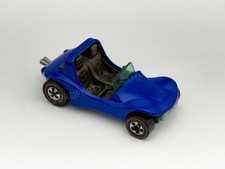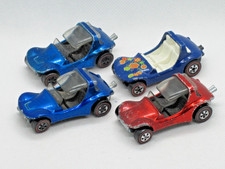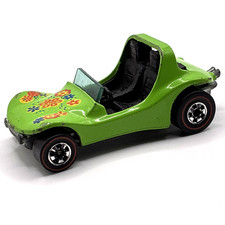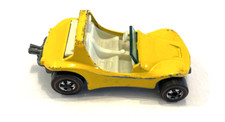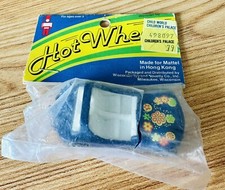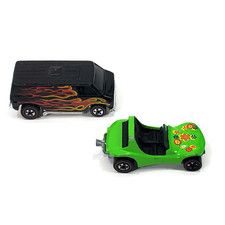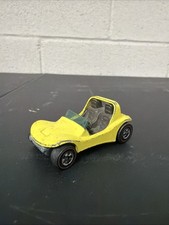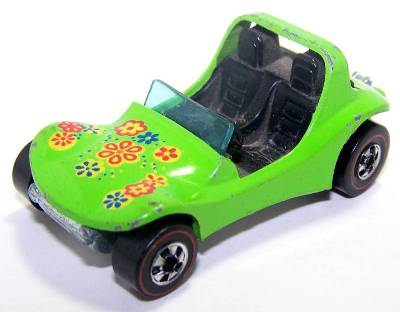
Casting #: 6967 The 1975 Dune Daddy is a late-era Redline casting produced in Hong Kong. It is an evolution of the 1970 Sand Crab and the 1973 Dune Daddy. While earlier versions of this casting often featured different paint styles or configurations, the 1975 release is characterized by its bright enamel colors and distinctive flower tampos (graphics) on the rear trunk area. This model features a metal chassis and a highly detailed exposed engine, making it a favorite for collectors who appreciate the "California Buggy" aesthetic of the 1970s. The Light Green version is the most common and is generally considered the "standard" representative for this year. The Orange version is the "chase" color for collectors; it appears far less frequently on the secondary market and commands a premium. Because 1975 was a transition year for Mattel, many collectors look for examples with deep, consistent enamel coverage and perfectly centered trunk tampos. Restoring a 1975 Dune Daddy requires attention to the enamel paint, which differs in application from the earlier Spectraflame finishes. Because this casting uses a metal chassis, it is a sturdy candidate for restoration. However, the flower tampos are the most difficult part to replicate. Aftermarket water-slide decals are available, but they are easily spotted by experienced collectors. If the original tampos are even 50% intact, many collectors prefer the original "survivor" state over a total repaint. When purchasing online, be wary of "restored" cars being sold as "mint." Look closely at the flower tampos; if they look too thick or sit on top of the clear coat incorrectly, they may be modern reproductions. Additionally, verify the base is metal; later non-redline versions of this casting may have plastic bases or different wheel types. Ensure the wheels are genuine Redlines and not "snap-on" replacements. When listing a 1975 Dune Daddy, high-resolution photos of the rear trunk are mandatory. Sellers should clearly state if the flowers are 100% complete. Mention the color of the body clearly (Light Green vs. Orange) and confirm the presence of the Redline wheels. If the car has "wheel wobble" or if the axles are bent, disclose this, as it affects the value for "track" collectors. Market data for the 1975 Dune Daddy is stable but varies based on color. Asking prices on major auction sites often range from $100 to $175 for clean examples, but actual sold prices for the Light Green version typically settle in the $50 to $85 range for high-quality loose cars. The Orange variant is an outlier; due to its scarcity, sold data is thinner, and prices can fluctuate wildly depending on who is bidding at the time. Confidence in pricing for the Orange version is limited due to low volume. The 1975 Dune Daddy is an excellent entry point into late-era Redlines. It is more affordable than the 1970 Sand Crab but offers similar visual appeal. Focus on finding a Light Green version with "good glass" and at least partial flowers. This will allow you to own a genuine piece of Redline history without the high price tag of the early Spectraflame era. For the completionist, the goal is a "dead mint" Orange variation. Collectors should also look for "tampo shifts," where the flower graphics are significantly misaligned from the factory, which can be a niche area of interest. Verify that the Hong Kong base is crisp and free of "zinc pest" (oxidation), which occasionally affects mid-70s castings. The 1975 Hot Wheels Redline Dune Daddy is a classic Hong Kong-produced buggy featuring vibrant enamel paint and iconic "flower power" trunk tampos. Available in Light Green and the rarer Orange, it remains a staple of the mid-70s Redline era. Value guides are based on historical market observations. RedlinePriceGuide.com does not guarantee exact values, as the collectibles market is subject to fluctuation. Always verify the authenticity of a casting before final purchase.
Dune Daddy
Previous Castings: Sand Crab (1970), Dune Daddy (1973)
Production Run: 1975
Note: Produced in Hong Kong. Light green body with flower tampos on the trunk and a metal chassis. Alternate Color: Orange.
Picture and description thanx to NCHWA.comOpenAI/ChatGPT Collector Guide
Gemini/Google AI Collector Guide
1975 Hot Wheels Redline Dune Daddy Collector Guide
Quick Value Snapshot
Condition
Estimated Price Range
Market Confidence
Played/Worn (Visible wear, missing tampos)
$15 - $35
High
Good/Fine (Light wear, intact flowers)
$40 - $75
Moderate
Near Mint (High gloss, crisp tampos)
$85 - $150
Moderate
Mint / Carded (Unopened or flawless)
$200+
Low (Limited Data)
Collector Summary
Known Variations and Details
Color and Desirability Notes
Condition Factors That Affect Value
Restorer Notes
Buyer Cautions
Seller Notes
Pricing Analysis
Listings to Exclude or Treat Carefully
New Collector Advice
Advanced Collector Notes
Short Page Blurb
Disclaimer
Online Redline Guide / Color Reference
NCHWA.com Ratings
Looking for reproduction redline parts?
 Total results 1
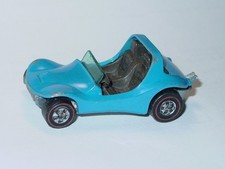 HOT WHEELS REDLINE DUNE DADDY -Blue Enamel, NICE!
5 bids $5.50
Seller: gphwheels 100.0 %
Shipping: FIXED $6.95
Ends: 7 days left