1974 Hot Wheels Redline Winnipeg Collector Guide
Quick Value Snapshot
| Condition |
Estimated Price Range |
| Loose: Poor / Playworn |
$15 - $35 |
| Loose: Good / Fine |
$40 - $85 |
| Loose: Near Mint / Mint |
$100 - $175+ |
| On Original Blister Card |
$350 - $600+ |
Collector Summary
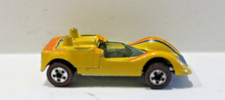
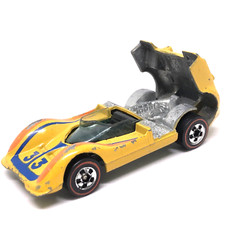
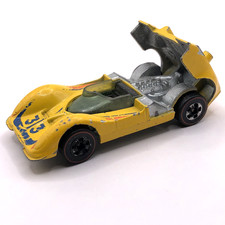
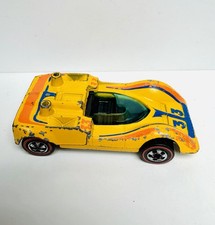
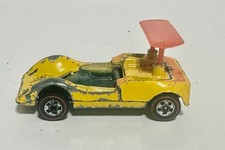
The Winnipeg is a 1974 "Flying Colors" era reissue of the 1969 Chaparral 2G. Produced exclusively in Hong Kong during the 1974 production run, this casting reflects Mattel's transition from the Spectraflame era to enamel paints with graphic tampos. Collectors value the Winnipeg for its aggressive racing profile and its status as a single-year release under this specific nameplate.
Known Variations and Details
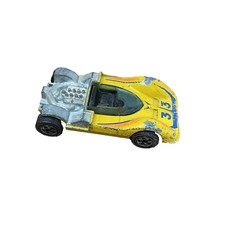
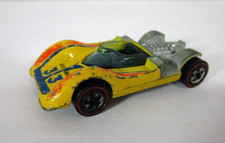
- Chassis: The name on the base was officially changed from "Chaparral 2G" to "Winnipeg." The base is typically a chrome-plated or unpolished metal Hong Kong casting.
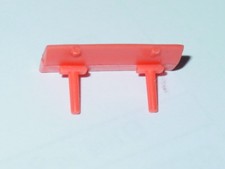
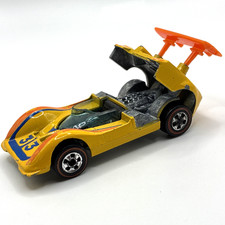
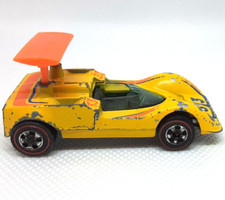
- Wing: Unlike the 1969 version which featured a white plastic wing, the 1974 Winnipeg features a distinct orange plastic wing.
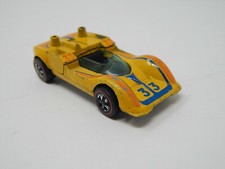
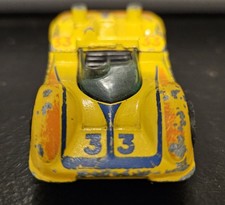
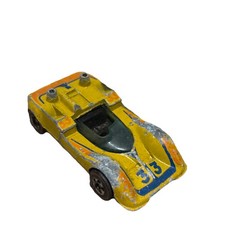
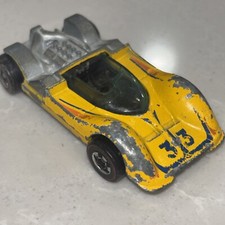
- Graphics: The car features blue and orange stripes on the front and rear, accompanied by the number "33" in a circle. These are tampos (printed), not stickers.
- Body Color: Standard production is found in Enamel White.
- Wheels: Standard through-hole Redline wheels.
Color and Desirability Notes
Because the Winnipeg was only produced in white enamel for the 1974 Flying Colors line, desirability is driven almost entirely by condition rather than color rarity. The most sought-after examples are those with perfectly centered tampos and a bright, non-yellowed white finish. The contrast between the white body and the bright orange wing makes for a striking display piece.
Condition Factors That Affect Value
- Tampo Integrity: The "33" and the stripes are prone to chipping and "snowflaking." Complete, crisp graphics significantly increase the car's value.
- The Wing: The orange wing is fragile. Stress marks at the pivot points, cracks, or missing wings drastically reduce the value. A loose or "floppy" wing is common but less desirable than one that holds its position.
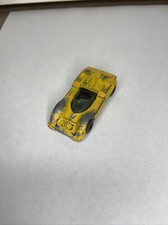
- Paint Chips: Enamel paint from this era is prone to chipping, especially on the sharp edges of the fender wells and the rear spoiler area.
- Base Oxidation: Hong Kong bases are susceptible to "tarnish" or "toning," where the metal turns dark or grey. High-shine bases are preferred.
Restorer Notes
Restorers should note that original orange wings are specific to this release. While reproduction wings are available, they often differ in color saturation or plastic density. Because this car uses enamel white, it is a common candidate for "tribute" restorations of the 1969 Chaparral, but for Redline collectors, an original Winnipeg should always retain its unique orange wing and "33" graphics.
Buyer Cautions
Watch for 1969 Chaparral 2G bodies that have been fitted with reproduction orange wings to pass them off as Winnipegs. The definitive check is the chassis name; a true Winnipeg must say "Winnipeg" on the base. Conversely, do not pay Winnipeg prices for a car with a 1969 base just because someone added an orange wing.
Seller Notes
When listing a Winnipeg, high-resolution photos of the "33" tampos are essential. Sellers should also clearly state if the wing is original, if it stays up on its own, and if there are any stress marks at the attachment points. If the base has significant oxidation, this should be noted as it affects the "eye appeal" for high-end collectors.
Pricing Analysis
Market confidence for the Winnipeg is moderate to high for loose examples, as they appear frequently on the secondary market. However, sold prices remain steady while asking prices on auction sites often feature significant markups that do not reflect actual realized value.
- Actual Sold Prices: Most "average" condition Winnipegs sell in the $45-$70 range.
- Active Asking Prices: It is common to see sellers asking $150+ for cars with visible tampo wear; these listings often sit for long periods without selling.
Listings to Exclude or Treat Carefully
- Missing Wings: Cars missing the orange wing should be valued as "parts cars" only, typically under $20.
- Reproduction Wings: Listings that do not specify if the wing is original should be approached with caution, as reproduction parts are common.
- Customs: "Code 3" or custom-painted Winnipegs do not follow standard Redline pricing and should be evaluated as art/customs rather than collector pieces.
New Collector Advice
The Winnipeg is an excellent entry point for collectors interested in the 1974 "Flying Colors" transition. It is more affordable than its 1969 Spectraflame predecessor but offers the same iconic racing silhouette. Look for an example with a strong wing first, as the wing is the most difficult part to replace with an authentic original.
Advanced Collector Notes
For the completionist, the goal is finding a "dead mint" example where the white enamel hasn't "toned" toward cream or yellow. Rare "blister pull" examples with perfectly aligned tampos and zero "flea bites" in the paint are the ceiling for this casting. Pay close attention to the chrome on the wheels; many 1974 Hong Kong releases suffered from poor chrome adhesion.
Short Page Blurb
The 1974 Hot Wheels Winnipeg is the vibrant, Flying Colors successor to the Chaparral 2G. Featuring a unique orange wing and "33" racing graphics, this one-year-only nameplate is a must-have for fans of vintage Redline racing castings.
Disclaimer
Value estimates are based on historical market trends and are not a guarantee of future value. Condition is subjective; collectors should inspect all photos and descriptions carefully before purchasing. RedlinePriceGuide.com does not treat asking prices as market value.

 Total results 5