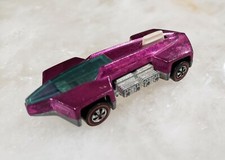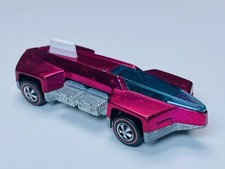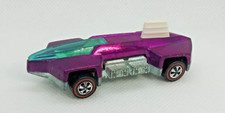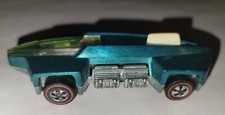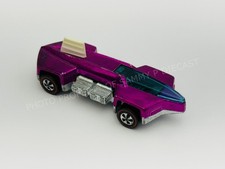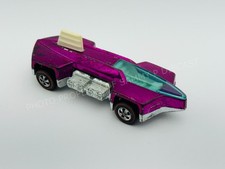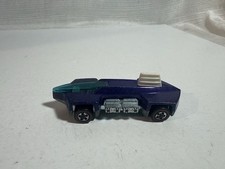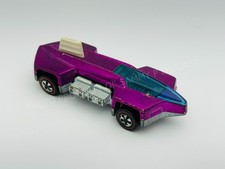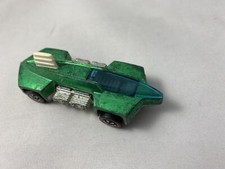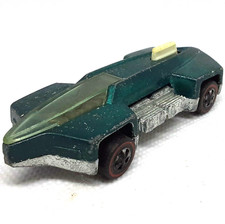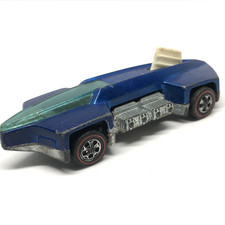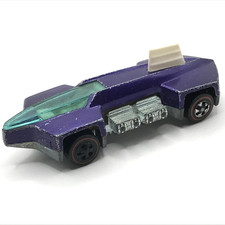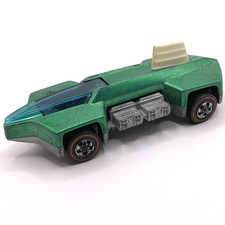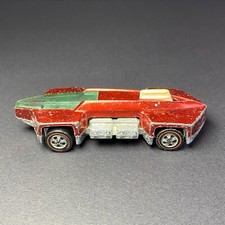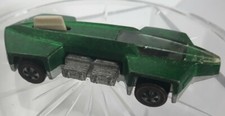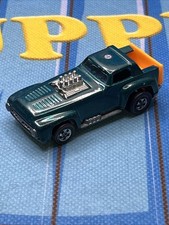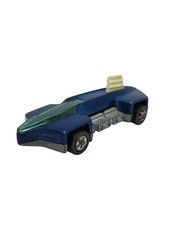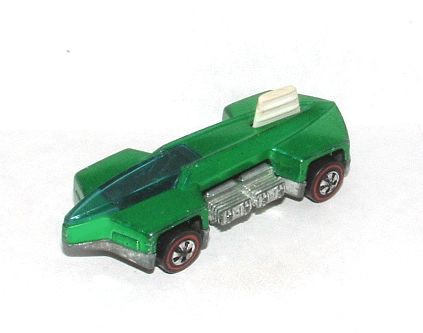
Casting #: 6001
What-4
Designer: Bob Lovejoy
Production Run: 1971-1972
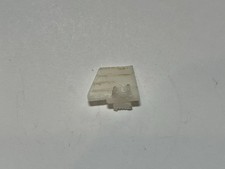
Note: Produced only in Hong Kong. Model has a moveable white plastic fin, and an interior that was available in assorted colors. This model is susceptible to "crumbling", rendering it value-less if applicable.
Picture and description thanx to NCHWA.comOpenAI/ChatGPT Collector Guide
1971 Hot Wheels Redline What-4 Collector Guide
Quick Value Snapshot
| Category |
Collector Impact |
| Verified original, loose, clean example |
Most useful comparison point for normal collector value. |
| Mint or near-mint with strong originality |
Can sell above average examples, especially with intact plastic fin and no crumbling. |
| Original blister card or very high-grade packaging |
Should be evaluated separately from loose cars. |
| Repainted, restored, customized, or reproduction-part example |
Do not use as a normal price comparison for an original car. |
| Crumbling or die-cast fatigue present |
Severely reduces value; advanced collectors generally treat these as damaged or parts-only examples. |
No verified sold-price dataset was supplied for this page, so pricing confidence is limited. Active asking prices should be recorded separately from actual sold prices and should not be treated as market value by themselves.
Collector Summary
The 1971 Hot Wheels Redline What-4 was designed by Bob Lovejoy and was produced during the 1971-1972 production period. It is a Hong Kong-only Redline casting. The model is known for its futuristic body shape, moveable white plastic fin, and interiors that were produced in assorted colors.
For collectors, the What-4 is a casting where originality and condition matter heavily. The white plastic fin is a key feature, and the casting is specifically known to be susceptible to crumbling, also called die-cast fatigue or metal deterioration. A car with crumbling should not be valued the same way as a stable, undamaged original example.
Known Variations and Details
- Designer: Bob Lovejoy.
- Production run: 1971-1972.
- Country of production: Hong Kong only.
- Wheels: Four medium Redline wheels.
- Base type: Hong Kong base.
- Fin: Moveable white plastic fin.
- Interior: Produced with assorted interior colors.
- Major condition concern: Susceptible to crumbling, which can make the car effectively value-less as a collectible example if severe.
Color and Desirability Notes
Body color, interior color, and overall originality all affect desirability. Because the supplied listing data does not include a confirmed color hierarchy, this page should not assign exact premiums to specific colors without verified sold comparisons.
Collectors should evaluate the What-4 as a complete combination: original paint, original Hong Kong base, correct medium Redline wheels, original moveable white fin, and interior color. Unusual color or interior combinations should be documented carefully and compared against trusted Redline references before being priced at a premium.
Condition Factors That Affect Value
- Crumbling: This is the most important condition issue for the What-4. Look for cracking, swelling, distortion, metal flaking, splitting around posts or body edges, and body deformation. Severe crumbling generally removes normal collector value.
- Original fin: The moveable white plastic fin is a defining feature. Missing, broken, glued, yellowed, or replaced fins reduce desirability.
- Paint condition: Chips, toning, dullness, edge wear, and corrosion reduce value. Clean original paint is preferred over restored paint for original collectors.
- Wheel condition: Four matching medium Redline wheels are expected. Bent axles, broken hubs, missing chrome, or swapped wheels should be disclosed.
- Base condition: Check for Hong Kong base details, corrosion, post damage, drilled rivets, and evidence of reassembly.
- Interior condition: Because interiors were made in assorted colors, the color should be noted. Cracks, warping, discoloration, or signs of disassembly affect value.
Restorer Notes
The What-4 can be restored cosmetically, but restorations should always be represented as restored. Restored examples should not be used as price comparisons for undamaged original Redline cars.
The moveable white fin is especially important. If the fin has been replaced with a reproduction or donor part, that should be disclosed. Drilled rivets, repainted bodies, polished bases, replacement wheels, and swapped interiors should also be disclosed clearly.
Crumbling cannot be reliably reversed through normal restoration. A crumbling body may continue to deteriorate even if repainted or stabilized cosmetically. Restorers should avoid presenting a structurally compromised body as a normal collectible example.
Buyer Cautions
- Do not rely on active asking prices alone. Confirm actual sold prices for comparable original examples.
- Ask for clear photos of the fin, base, rivets, wheels, interior, and all body edges.
- Inspect for crumbling before paying original-condition prices.
- A missing or reproduction fin should reduce value compared with a complete original example.
- Be cautious with listings that do not show the Hong Kong base.
- Avoid comparing loose original cars to carded cars, restored cars, customs, lots, or parts listings.
- Descriptions such as “rare” or “mint” should be supported by detailed photos and verifiable condition.
Seller Notes
For the best buyer confidence, describe the What-4 by production origin, condition, and completeness. State that it is a Hong Kong casting, note the interior color, confirm whether the white plastic fin is present and moveable, and disclose any crumbling or cracks.
Include photos of the top, sides, front, rear, base, fin, wheels, and rivets. If the car has been restored, drilled, fitted with reproduction parts, or repaired, state that clearly. Honest disclosure helps prevent returns and protects the credibility of the listing.
Pricing Analysis
Because no verified sold-price data was supplied, this page cannot assign a firm current value. Pricing confidence is limited and should be updated using verified sold examples only.
When researching value, separate these categories:
- Actual sold prices: Completed sales of original, comparable What-4 examples are the best market evidence.
- Active asking prices: These show seller expectations only. They do not prove market value unless the item actually sells.
- Outliers: Exceptional condition, carded examples, unusual verified combinations, or unusually poor damaged examples should be treated separately.
- Excluded comparisons: Repaints, restorations, customs, reproduction-fin cars, parts cars, lots, and wrong-casting listings should not be used as normal value references.
The biggest pricing divider for this casting is structural condition. A stable, original, complete car is in a different value category from a crumbling example, even if the crumbling car appears visually complete at first glance.
Listings to Exclude or Treat Carefully
- Cars with visible crumbling, cracking, swelling, or metal fatigue.
- Examples with missing, broken, glued, or reproduction fins.
- Restored, repainted, or customized examples.
- Cars with drilled rivets or signs of reassembly unless sold clearly as restored or repaired.
- Parts lots or mixed Redline lots where the individual car value cannot be isolated.
- Listings with unclear photos of the base, wheels, or fin.
- Wrong-casting listings or listings using the What-4 name incorrectly.
- Active asking prices that have not resulted in a completed sale.
New Collector Advice
If you are new to Redlines, focus first on originality and structural condition. For the What-4, make sure the car is Hong Kong-made, has four medium Redline wheels, has its moveable white plastic fin, and shows no signs of crumbling.
Do not overpay for a car simply because the asking price is high or the description uses strong language. Compare to completed sold listings of similar original examples, and avoid using restored or damaged cars as price guides.
Advanced Collector Notes
Advanced collectors should document interior color, body color, wheel condition, base condition, fin originality, and any signs of die-cast fatigue. Because the What-4 is known for crumbling, long-term stability is a meaningful part of condition assessment.
For higher-grade examples, provenance, undrilled rivets, intact original fin, clean Hong Kong base, and confirmed original paint are especially important. Unusual body or interior combinations should be verified against reliable Redline references before being treated as premium variations.
Short Page Blurb
The 1971 Hot Wheels Redline What-4 is a Hong Kong-only Bob Lovejoy design produced from 1971-1972. It features four medium Redline wheels, a moveable white plastic fin, and assorted interior colors. Collectors should pay close attention to fin originality and die-cast crumbling, as crumbling can severely reduce or eliminate normal collector value.
Disclaimer
Values for vintage Hot Wheels Redlines vary by condition, originality, color, completeness, timing, and buyer demand. This guide does not guarantee exact values. Active asking prices are not the same as actual sold prices. Repaints, restorations, customs, reproduction parts, damaged examples, lots, and incorrect listings should not be treated as normal market comparisons for an original 1971 Hot Wheels Redline What-4.
Gemini/Google AI Collector Guide
1971 Hot Wheels Redline What-4 Collector Guide
Quick Value Snapshot
| Condition |
Estimated Value Range |
| Beater / Heavy Play |
$15 - $35 |
| Good / Average Play |
$40 - $85 |
| Excellent / Near Mint |
$100 - $225 |
| Blister Pack / Rare Color |
$350 - $600+ |
Collector Summary
The What-4 was released in 1971 as part of the "Heavyweights" era of Hot Wheels, though it is a sleek, futuristic racing casting rather than a utility vehicle. Designed by Bob Lovejoy, the model was produced exclusively at the Hong Kong plant. It is characterized by its wide, low-profile stance, exposed engine detail, and a distinctive moveable white plastic rear fin. Because it was only produced for two years (1971-1972) and in a single factory, variations are primarily limited to paint color and interior color.
Known Variations and Details
- Production Location: Hong Kong only. (Blue-tinted glass, silver-painted base, and deep-dish wheel styling are standard).
- Fin: Moveable white plastic fin attached to the rear.
- Interior Colors: Assorted colors including White (most common), Black, Brown, Champagne, and Grey.
- Wheels: Four Medium Redline wheels.
- Base: Typically painted silver/grey; features the "What-4" name and Hong Kong branding.
Color and Desirability Notes
The What-4 was released in a variety of Spectraflame colors. Common colors include Blue, Green, Aqua, and Red. Mid-range colors include Lime, Yellow, and Magenta. The most difficult colors to locate—and consequently the most desirable for master set collectors—include Pink, Orange, and Purple. Unlike some other castings, the interior color can occasionally command a premium, specifically the darker shades like Black or dark Brown when paired with a contrasting body color.
Condition Factors That Affect Value
Condition is the primary driver of value for the What-4, with three specific areas of concern:
- The Fin: The white plastic fin is often missing, broken at the hinge, or severely yellowed from UV exposure. A missing or broken fin reduces the value of the car by 50% or more.
- Zinc Pest ("Crumbling"): This casting is notoriously susceptible to "zinc pest," a chemical impurity in the alloy used at the Hong Kong plant. This causes the metal to expand, crack, and eventually crumble into pieces. A car showing signs of "webbing" or hairline cracks in the casting is often considered value-less to serious collectors as the process cannot be stopped.
- Engine Chrome: The exposed engine is a high point for play wear. Rubbed-off chrome significantly affects the "eye appeal" and value.
Restorer Notes
Because the What-4 is prone to crumbling, restorers often look for "solid" castings with bad paint to use as donors. Reproduction fins are widely available, but they are usually a brighter, "newer" white than the original 1971 plastic. Note that the fin is held in by a small plastic tab that is easily snapped during disassembly. If the metal has started to "bloom" (white powder or cracks), the car is generally not a candidate for restoration as the metal will continue to degrade under the new paint.
Buyer Cautions
Inspect the casting closely for any signs of swelling or spider-web cracks, particularly around the wheel wells and the rear fin housing. Avoid listings where the fin is described as "frozen" or "stuck," as this often indicates the metal has expanded due to zinc pest, pinning the plastic fin in place. If the fin does not move freely, the casting is likely failing internally.
Seller Notes
When listing a What-4, sellers should explicitly state if the fin is original and if it moves freely. High-resolution photos of the underside and the sides are necessary to prove the casting is "solid" and not suffering from crumbling. Always identify the interior color, as some collectors specifically seek out rarer black or brown interiors.
Pricing Analysis
The market for the What-4 is stable for high-quality, "solid" examples. Because so many of these cars have succumbed to zinc pest over the last 50 years, the supply of high-grade, un-cracked survivors is dwindling. Confidence in pricing for common colors is high. However, for rare colors like Pink or Purple, confidence is lower as these appear infrequently and prices can fluctuate wildly based on the participation of two or more high-end bidders.
Listings to Exclude or Treat Carefully
- "Crumblers": Cars with visible cracks or missing chunks of metal should be priced as parts-only, regardless of how "shiny" the remaining paint is.
- Repainted/Restored: Unless explicitly stated, a car with a "perfect" white fin and no engine wear is often a restoration and should not be valued as an original Mint example.
- Missing Fins: These should be treated as "filler" pieces or "beaters" and generally sell for under $20.
New Collector Advice
For a first What-4, prioritize "structural integrity" over paint color. It is better to own a slightly scuffed Blue What-4 with a solid body and an original moving fin than a beautiful Magenta one that is starting to show the hairline cracks of zinc pest. Always ask the seller: "Are there any hairline cracks in the metal, and does the fin move?"
Advanced Collector Notes
Advanced collectors look for the "Inter-Office" or "Transitional" variations, though these are extremely rare for this casting. The focus for the high-end What-4 collector is usually on finding the "cleanest" possible example of the tough colors (Pink, Orange, Purple) with a perfectly white, non-yellowed fin and a rare interior color combination.
Short Page Blurb
The 1971 What-4 is a Bob Lovejoy-designed Hong Kong exclusive known for its moveable rear fin and futuristic profile. While a favorite among Spectraflame enthusiasts, collectors must be wary of "zinc pest" crumbling that plagues this specific casting. A solid, crack-free example remains a staple of any early 70s Redline collection.
Disclaimer
Value ranges provided are estimates based on historical market trends and are not guarantees of future sale prices. RedlinePriceGuide.com does not provide appraisals. Condition and authenticity should be verified by the buyer prior to purchase. Asking prices on auction sites do not represent current market value; only completed, sold transactions should be used for valuation purposes.
Online Redline Guide / Color Reference
NCHWA.com Ratings
MINT Loose pricing below probably. Check ebay for blister pricing.
Note that these values are very old. Typical selling prices can be significantly higher now. Check the AI summaries for more info or ebay listings here.
Please see NCHWA.com Grading Page to reduce value due to condition.
| Color | US
Rating | US
Value | HK
Rating | HK
Value |
|---|
| Aqua | -- | . | 3 | $63 |
| Green | -- | . | 3 | $63 |
| Blue | -- | . | 3+ | $75 |
| Lime | -- | . | 5 | $113 |
| Yellow | -- | . | 6 | $138 |
| Magenta | -- | . | 9 | $213 |
| Purple | -- | . | 11 | $263 |
| Red | -- | . | 13 | $326 |
| Light Green | -- | . | 13+ | $350 |
| | . | | . |
Looking for reproduction redline parts?

Total results 2
Average price for this page is $22