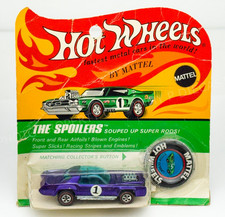
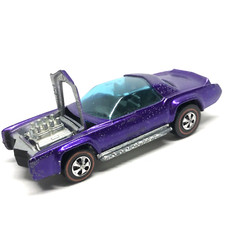
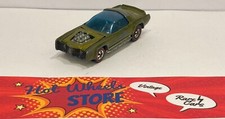
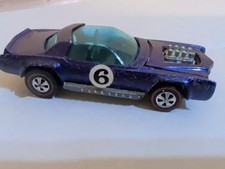
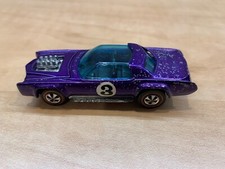
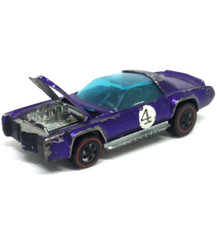
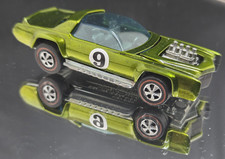
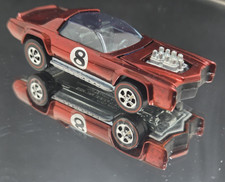
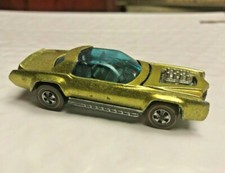
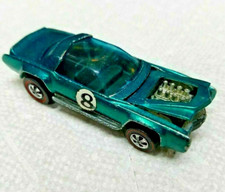
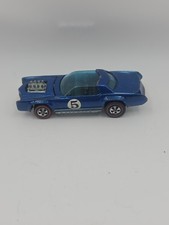
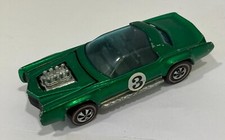
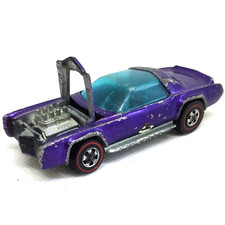
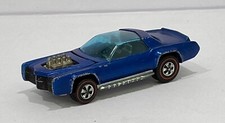
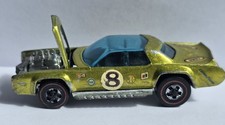
1971 Hot Wheels Redline Sugar Caddy Collector Guide
Quick Value Snapshot
| Item |
Collector Notes |
| Model |
1971 Hot Wheels Redline Sugar Caddy |
| Series |
Spoilers Series |
| Designer |
Ira Gilford |
| Production |
1971 only |
| Country of production |
Hong Kong only |
| Interior |
Usually black; white interior variations are harder to find and can command a premium |
| Most desirable noted interiors |
White interior examples, especially red and blue cars with white interiors |
| Wheels |
2 medium redline wheels and 2 large redline wheels |
| Decals |
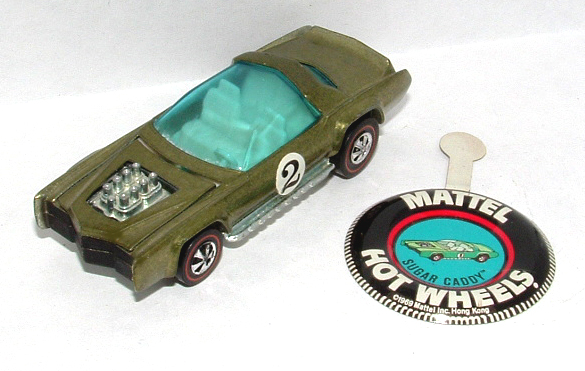
Door number decals from 1 through 9; originally came with a sheet of assorted sponsor logos |
| Pricing confidence |
Limited without verified recent sold-price data; active asking prices should not be treated as market value |
Collector Summary
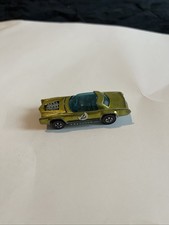
The 1971 Hot Wheels Redline Sugar Caddy is a one-year-only Spoilers Series casting designed by Ira Gilford and produced only in Hong Kong. It is a specialized Redline-era casting with a strong collector following because of its short production run, Hong Kong-only origin, racing theme, staggered wheel setup, and decal variations.
Most Sugar Caddy examples are found with a black interior. White interior examples are harder to find and generally receive more collector attention. Among the white interior cars, red and blue body color examples are especially noted as more desirable by collectors.
Because the car originally used door number decals and came with an additional sponsor decal sheet, originality and decal condition matter significantly. A car with clean original paint, correct wheels, intact original decals, good glass, and no reproduction parts will usually be viewed more favorably than a cleaner-looking example that has been restored or re-decaled.
Known Variations and Details
| Feature |
Known Detail |
| Designer |
Ira Gilford |
| Production run |
1971 only |
| Series |
Spoilers Series |
| Production location |
Hong Kong only |
| Interior color |
Black is standard; white interior variations exist and are harder to find |
| Door decals |
Known with number decals ranging from 1 to 9 |
| Additional decals |
Originally included a decal sheet with assorted sponsor logos |
| Wheel layout |
Two medium redline wheels and two large redline wheels |
Collectors should pay close attention to the interior color, decal originality, wheel sizes, and overall originality. Since this model was produced only in Hong Kong, a correct Sugar Caddy should be consistent with Hong Kong Redline construction and finish characteristics.
Color and Desirability Notes
The supplied collector notes specifically identify red and blue Sugar Caddy examples with white interiors as worth more than typical examples with black interiors. White interior cars in general are harder to find and usually bring a premium when otherwise comparable in condition and originality.
As with other Redline-era Hot Wheels, body color desirability is affected by more than color name alone. Paint brightness, evenness, fading, toning, edge wear, and whether the finish is original are all important. A rare interior combination with poor paint, missing decals, or incorrect parts may be less desirable than a more common version in strong original condition.
Collectors should avoid assuming that every white interior Sugar Caddy is automatically a top-value example. The strongest cars are typically those with confirmed original interiors, original decals, correct wheels, clean base, strong paint, and no signs of restoration or parts swapping.
Condition Factors That Affect Value
- Original paint: Original Spectraflame-era finish is a major value factor. Chips, toning, fading, oxidation, and heavy edge wear reduce desirability.
- Interior color and originality: White interiors are harder to find, but collectors should confirm the interior is original and not swapped.
- Decal condition: Door number decals and sponsor decals are important. Missing, damaged, crooked, replaced, or reproduction decals affect value.
- Correct wheels: The Sugar Caddy uses two medium and two large redline wheels. Wrong wheel sizes, replacement wheels, or non-redline wheels should be treated carefully.
- Wheel condition: Redline stripe wear, chrome loss, bent axles, cracked hubs, or poor rolling condition can reduce value.
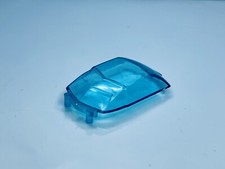
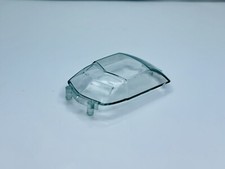
- Glass condition: Scratches, cracks, clouding, and stress marks lower collector appeal.
- Base condition: Tarnish, corrosion, polishing, tool marks, and drilled posts are important to inspect.
- Rivets/posts: Original undrilled posts are preferred. Drilled or altered posts usually indicate restoration, repair, or parts swapping.
- Completeness: Missing or replaced components reduce originality and should be disclosed.
- Packaging: Original packaging, if present, should be evaluated separately and carefully for authenticity and condition.
Restorer Notes
The Sugar Caddy is a model where restoration details matter because decals, interiors, and wheels all strongly influence collector interest. A restored example can be attractive as a display piece, but it should not be priced or represented as an untouched original.
Restorers should document any work performed, including repainting, re-decaling, wheel replacement, axle work, interior replacement, glass replacement, base polishing, or post repair. Reproduction decal sheets and replacement parts may be useful for restoration, but they should always be disclosed when the car is sold or traded.
White interior examples require special care. Because white interiors are more desirable, an interior swap can materially change how a car appears to collectors. Any suspected or confirmed interior swap should be clearly stated. Advanced buyers will often inspect posts, fit, wear patterns, and overall consistency to determine whether the car has been opened or altered.
Buyer Cautions
- Do not rely on asking prices alone: Active listings show seller expectations, not confirmed market value.
- Separate originals from restorations: Repainted, re-decaled, customized, or rebuilt cars should not be compared directly to original examples.
- Check for drilled posts: Opened cars may have swapped interiors, replaced glass, replaced wheels, or reproduction decals.
- Verify white interiors carefully: Because white interiors carry a premium, they deserve extra inspection for originality.
- Inspect decals: Original door numbers and sponsor decals can be missing or replaced. Reproduction decals may look clean but are not the same as original decals.
- Confirm the wheel setup: The correct setup is two medium and two large redline wheels.
- Avoid wrong-casting comparisons: Do not use listings for other Spoilers Series cars, customs, or similar-looking castings as price references.
- Be cautious with vague listings: Terms such as “rare,” “mint,” or “all original” should be supported by clear photos and details.
Seller Notes
When selling a 1971 Sugar Caddy, provide clear photos of the top, sides, front, rear, base, wheels, rivets/posts, glass, interior, and decals. If the car has a white interior, include well-lit photos that show the interior clearly and allow buyers to evaluate whether the car appears original.
Disclose any restoration, wheel replacement, decal replacement, interior swap, axle repair, base cleaning, or post work. If you do not know whether the decals or parts are original, say so rather than presenting the car as confirmed original.
For pricing, separate active asking prices from actual sold prices. A high asking price does not establish market value. Strong original examples, especially red or blue cars with white interiors, may justify stronger pricing than common black-interior examples, but exact value depends heavily on condition, originality, and buyer demand at the time of sale.
Pricing Analysis
No verified individual sold-price records were supplied for this page, so pricing confidence is limited. The Sugar Caddy should be evaluated using confirmed sold examples whenever possible, not active asking prices alone.
Active asking prices: These represent what sellers hope to receive. They can be useful for seeing availability, color/interior combinations being offered, and how sellers describe condition, but they should not be treated as market value.
Actual sold prices: These are more useful for market analysis, but only when the sold item is a comparable original Sugar Caddy. Comparable examples should match as closely as possible by interior color, body color, condition, decal originality, wheel correctness, and whether the car is loose or packaged.
Premium factors: White interior examples generally command a premium because they are harder to find. Red and blue Sugar Caddy examples with white interiors are noted as especially desirable. Strong original paint, clean decals, correct wheels, and unopened construction can further support higher prices.
Outliers: Unusually high prices may reflect exceptional condition, a harder interior/color combination, original packaging, unusually strong photos, or competitive bidding. They may also reflect overpricing if they are only active asks. Unusually low prices may involve damage, missing decals, restoration, incorrect parts, poor photos, incomplete descriptions, or mixed lots. Outliers should be reviewed separately and not used as normal value benchmarks without context.
Listings to Exclude or Treat Carefully
- Active listings with no confirmed sale
- Mixed lots where the Sugar Caddy’s individual value cannot be separated
- Repainted or restored cars
- Custom builds or fantasy color examples
- Cars with reproduction decals unless clearly valued as restored examples
- Cars with replacement interiors, especially white interior swaps
- Examples with drilled posts or repaired bases unless fully disclosed
- Cars with wrong wheels, wrong wheel sizes, or missing redline wheels
- Damaged examples with broken glass, heavy corrosion, missing parts, or severe paint loss
- Wrong-casting listings or listings that confuse the Sugar Caddy with another Spoilers Series model
- Listings using “rare” or “mint” without clear photos to support the claim
New Collector Advice
If you are new to Redline collecting, focus first on originality and condition. A clean original black-interior Sugar Caddy can be a better first purchase than a questionable white-interior example with unclear history.
Learn the correct wheel setup, study original decal placement, and compare multiple examples before buying. Ask for base and rivet/post photos. If a seller claims the car has a white interior, ask whether the car has been opened or restored. If the answer is unknown, price the car with caution.
Do not assume a high asking price means the car is worth that amount. Look for confirmed sold examples that are truly comparable, and remember that restored cars, customs, damaged cars, and lots should not be used as normal price references.
Advanced Collector Notes
Advanced collectors will usually place the most emphasis on originality, interior verification, decal authenticity, and condition consistency. Since white interiors bring a premium, examine whether the interior wear, post condition, glass fit, and overall assembly are consistent with an unopened original car.
Door number decals from 1 through 9 add an additional collecting dimension. Some collectors may pursue specific door numbers or decal layouts, but decal originality remains more important than decal presence alone. A car with reproduction sponsor decals should be documented as such.
For high-end examples, especially red or blue cars with white interiors, careful documentation is valuable. Clear photos, provenance if available, and honest condition descriptions help distinguish a premium original from a cosmetically improved example.
Short Page Blurb
The 1971 Hot Wheels Redline Sugar Caddy is a one-year-only Spoilers Series casting designed by Ira Gilford and produced only in Hong Kong. Most examples have black interiors, while white interior cars are harder to find and more desirable, especially red and blue examples. Correct cars use two medium and two large redline wheels and may have door number decals from 1 to 9 along with sponsor decals.
Disclaimer
Values for the 1971 Hot Wheels Redline Sugar Caddy vary by condition, originality, color, interior, decals, wheels, packaging, and current buyer demand. Active asking prices are not the same as actual sold prices. Restored cars, customs, reproduction parts, mixed lots, damaged examples, and wrong-casting listings should not be treated as normal market comparables. This guide is for collector reference and does not guarantee exact values.
 Total results 5