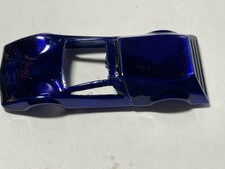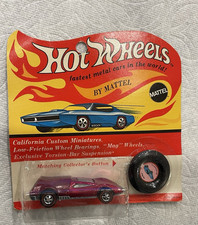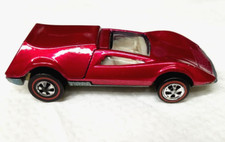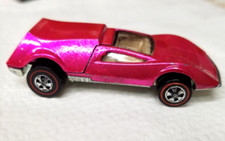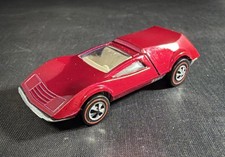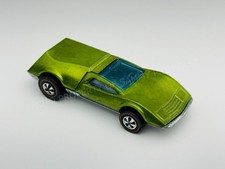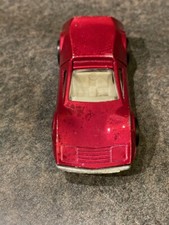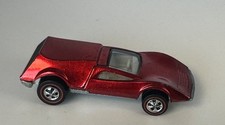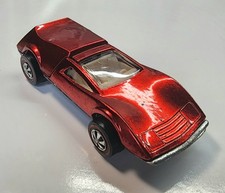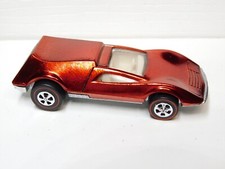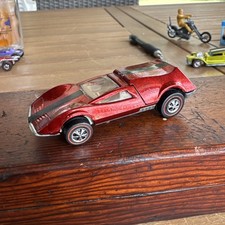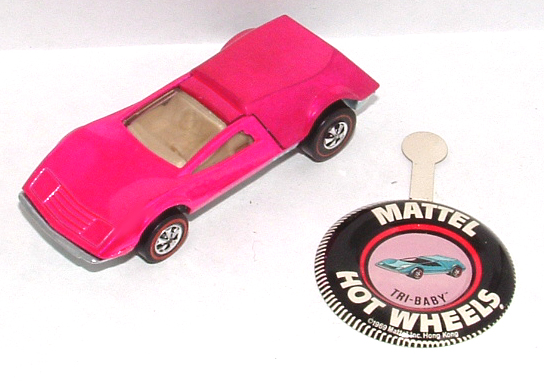
Casting #: 6424
Tri Baby
Designer: Larry Wood
Production Run: 1970-1971
Note: The first design from Larry Wood that made it into production! U.S. interiors were white, while Hong Kong interiors were dark. A Hong Kong casting with a white interior will command a slight premium.
Picture and description thanx to NCHWA.comOpenAI/ChatGPT Collector Guide
1970 Hot Wheels Redline Tri Baby Collector Guide
Quick Value Snapshot
| Category |
Collector Takeaway |
| Model |
1970 Hot Wheels Redline Tri Baby |
| Designer |
Larry Wood |
| Production Run |
1970-1971 |
| Collector Importance |
Notable as the first Larry Wood design to make it into Hot Wheels production. |
| Wheel Setup |
2 medium redline wheels and 2 large redline wheels. |
| Interior Notes |
U.S. versions are normally found with white interiors. Hong Kong versions are normally found with dark interiors. |
| Premium Variation |
A Hong Kong casting with a white interior is a recognized variation and may bring a slight premium when original. |
| Value Confidence |
Limited without verified recent sold examples. Active asking prices should not be treated as market value. |
Collector Summary
The 1970 Hot Wheels Redline Tri Baby is an important casting for Redline collectors because it was the first Larry Wood design to reach production. Larry Wood became one of the most important names in Hot Wheels design, making this casting historically meaningful even when found in ordinary loose condition.
The Tri Baby was produced during the original Redline era from 1970 to 1971. It uses a staggered wheel setup with 2 medium and 2 large redline wheels. Collectors should pay close attention to the country of origin, interior color, wheel sizes, and overall originality when evaluating an example.
For value purposes, the strongest examples are original, unrestored cars with clean paint, correct wheels, correct interior, bright finish, and minimal play wear. Restored, repainted, customized, damaged, or parts-swapped cars should be evaluated separately from original examples.
Known Variations and Details
| Feature |
Known Detail |
Collector Note |
| Designer |
Larry Wood |
Historically important because it was his first design to make it into production. |
| Production Years |
1970-1971 |
Falls within the original Redline collecting period. |
| U.S. Interior |
White interior |
Standard expected interior for U.S. examples. |
| Hong Kong Interior |
Dark interior |
Standard expected interior for Hong Kong examples. |
| Hong Kong with White Interior |
Known premium variation |
Can command a slight premium if the car is original and not parts-swapped. |
| Wheels |
2 medium, 2 large |
Verify correct wheel sizes before assigning full original value. |
Color and Desirability Notes
The Tri Baby was issued in the Redline era with bright Spectraflame-style finishes. As with many original Redlines, desirability depends heavily on color quality, paint preservation, toning, fading, edge wear, and whether the color appears original to the casting.
Collectors generally favor examples with strong, even color and minimal darkening or oxidation. Cars with clean original paint, bright shine, and sharp body lines are more desirable than dull, toned, heavily worn, or polished examples. Less commonly encountered colors may attract stronger interest, but color rarity should be confirmed against reliable Redline references and actual sold results rather than active asking prices alone.
When evaluating color, check protected areas of the casting, such as under body overhangs or areas near interior edges, where the original shade may be less affected by handling, sunlight, or polishing. Be cautious with cars that appear unusually bright but show signs of repainting or restoration.
Condition Factors That Affect Value
- Original paint: Original finish is a major value factor. Repainted or restored examples should not be valued like untouched originals.
- Paint wear: Nose wear, high-point wear, edge chips, roof or body rubs, and base-edge wear reduce desirability.
- Interior correctness: U.S. examples are expected with white interiors, while Hong Kong examples are expected with dark interiors. A Hong Kong casting with a white interior may be more desirable if confirmed original.
- Wheel correctness: The correct setup is 2 medium and 2 large redline wheels. Incorrect wheel sizes, reproduction wheels, or swapped axles reduce originality.
- Base condition: Clean, unaltered base plates are preferred. Heavy toning, corrosion, bent axles, tool marks, or signs of disassembly affect value.
- Axle condition: Straight axles and smooth-rolling original wheels are preferred. Bent axles, loose wheels, or replaced axles should be disclosed.
- Play wear: Light play wear is common. Heavy play wear, missing parts, cracks, and damage should place the car in a lower condition category.
- Packaging: Carded or packaged examples must be evaluated separately from loose cars. Packaging condition, authenticity, and blister integrity can create large value differences.
Restorer Notes
The Tri Baby is often encountered with play wear, wheel wear, and paint loss, making it a candidate for restoration when originality is already compromised. However, restored examples should be clearly identified as restored and should not be represented as original Redline condition.
- Match the correct interior type to the casting origin when restoring: U.S. examples are associated with white interiors, while Hong Kong examples are associated with dark interiors.
- Do not create a Hong Kong white-interior example and present it as an original premium variation unless originality can be proven.
- Use the correct staggered wheel setup: 2 medium and 2 large redline wheels.
- Document any replacement wheels, replacement interiors, paint work, polishing, axle work, or base work.
- Restored cars can be attractive display pieces, but they should be priced and described separately from original examples.
Buyer Cautions
- Separate asking prices from sold prices: Active listings show what a seller wants, not what the market has proven.
- Watch for parts-swapping: Interior color is important on this casting. A Hong Kong casting with a white interior should be checked carefully for originality.
- Check wheel sizes: The correct setup is 2 medium and 2 large redline wheels. Incorrect wheels may indicate repair, customization, or parts replacement.
- Avoid valuing customs as originals: Repaints, polished cars, customs, restored cars, and reproduction parts should not be used as normal original-condition value examples.
- Inspect photos closely: Look for chips, cracks, base wear, axle bends, wheel damage, interior damage, and signs of disassembly.
- Be careful with unusually clean examples: Very bright paint, perfect wheels, and unusually sharp details can be legitimate, but they also warrant a closer look for restoration.
- Confirm casting origin: U.S. and Hong Kong examples should be evaluated according to their correct interior expectations.
Seller Notes
When selling a Tri Baby, clear identification and honest condition notes will help buyers evaluate the car correctly. Because the casting has important interior differences, sellers should include photos of the base, interior, wheels, and all sides of the body.
- State whether the casting is U.S. or Hong Kong.
- State the interior color.
- Confirm whether the wheels are the correct 2 medium and 2 large setup.
- Disclose any restoration, repainting, wheel replacement, axle repair, polishing, or parts replacement.
- Use sold listings, not active asking prices, when estimating market range.
- If offering a Hong Kong casting with a white interior, provide extra photos and disclose whether you can verify originality.
- Avoid describing a car as rare solely because similar active listings are priced high.
Pricing Analysis
No verified individual sold results are provided here, so exact value confidence is limited. The Tri Baby’s value depends on originality, casting origin, interior color, color desirability, paint condition, wheel correctness, and whether the car is loose, carded, restored, or damaged.
Active asking prices: Active listings should be treated only as seller expectations. They can help identify what sellers are attempting to get, but they do not establish market value unless buyers actually complete purchases at those levels.
Actual sold prices: Actual sold results are the better indicator of market value, especially when comparing cars with the same casting origin, interior color, wheel setup, color, and condition. A clean original loose example should be compared to other clean original loose examples, not to restored cars, customs, incomplete cars, or carded examples.
Outliers: Strong outliers may include unusually clean original examples, verified Hong Kong white-interior examples, scarce color examples, and authentic carded examples. These should be analyzed separately and should not be used to price average loose cars.
| Pricing Source |
How to Use It |
Limitations |
| Active Asking Prices |
Useful for seeing current seller expectations. |
Not proof of value. High asking prices may remain unsold. |
| Recent Sold Prices |
Best available indicator when examples are comparable. |
Must exclude restored, damaged, custom, wrong-casting, or lot listings. |
| Carded Examples |
Useful only when comparing to other carded examples. |
Packaging condition and authenticity can dominate value. |
| Restored Examples |
Useful for restoration and display-car pricing. |
Should not be used to value original unrestored cars. |
Listings to Exclude or Treat Carefully
- Repainted cars listed without clear restoration disclosure.
- Custom builds or fantasy color combinations.
- Cars with reproduction redline wheels represented as original.
- Cars with swapped interiors, especially Hong Kong castings with white interiors that are not verified as original.
- Damaged cars with cracked, missing, or heavily altered parts.
- Large mixed lots where the Tri Baby’s individual condition cannot be evaluated.
- Wrong-casting listings or listings using incorrect model names.
- Listings with poor photos that do not show the base, wheels, interior, and body condition.
- Carded listings with questionable blister, card, or reseal issues.
- High active asking prices with no supporting sold results.
New Collector Advice
If you are new to Redlines, the Tri Baby is a useful casting to study because it has clear production details that affect collectibility. Start by learning the difference between U.S. and Hong Kong examples, then check the interior color and wheel setup.
- Look for an original loose example with honest light wear before paying a premium for a near-mint car.
- Do not pay extra for a Hong Kong white-interior example unless the originality appears credible.
- Compare sold prices, not active asking prices.
- Learn to identify reproduction wheels and repainted bodies.
- Condition matters more than a seller’s description. Study the photos carefully.
Advanced Collector Notes
Advanced collectors should pay close attention to casting origin, interior color, wheel size correctness, and signs of factory-original assembly. The Hong Kong white-interior variation is the key detail to scrutinize, because it can bring a slight premium but is also vulnerable to parts-swapping.
When evaluating a higher-grade or premium example, inspect the base rivets or posts, axle alignment, wheel wear, interior fit, and consistency between body wear and component wear. A car with near-perfect wheels, unusually fresh interior, and worn paint may indicate replacement parts. Conversely, a clean original car should show consistent aging across paint, wheels, base, and interior.
For research purposes, record the casting origin, color, interior color, wheel type and size, base condition, and any packaging information. Because pricing data can be thin or inconsistent, well-documented examples are more useful than vague listings.
Short Page Blurb
The 1970 Hot Wheels Redline Tri Baby was produced from 1970 to 1971 and is historically important as the first Larry Wood design to reach production. U.S. examples normally have white interiors, while Hong Kong examples normally have dark interiors. A Hong Kong casting with a white interior may bring a slight premium if original. Correct examples use 2 medium and 2 large redline wheels.
Disclaimer
Values for the 1970 Hot Wheels Redline Tri Baby vary by condition, originality, casting origin, interior color, wheel correctness, color desirability, and current buyer demand. Active asking prices are not the same as actual sold prices. Restored cars, customs, repaints, reproduction parts, damaged examples, mixed lots, and wrong-casting listings should not be treated as normal market examples. No exact value is guaranteed, and pricing confidence is limited without verified comparable sold results.
Gemini/Google AI Collector Guide
1970 Hot Wheels Redline Tri Baby Collector Guide
Quick Value Snapshot
Prices for the 1970 Tri Baby vary significantly based on paint color and manufacturing origin. Common colors in average, played-with condition typically range from $25 to $60. High-grade Spectraflame examples in desirable colors can reach $150 to $350+. Rare color variations or Hong Kong models with "crossover" interior colors often command the highest premiums.
Collector Summary
The Tri Baby holds a significant place in Hot Wheels history as the very first design by legendary designer Larry Wood to reach production. Released during the 1970 "Series 2" era, it features a sleek, futuristic three-wheeled aerodynamic body (though the toy technically has four wheels for stability). It was produced in both United States and Hong Kong plants between 1970 and 1971. Its distinctive raked stance and exposed rear engine make it a favorite for "Era 1" collectors.
Known Variations and Details
Collectors primarily distinguish Tri Baby examples by their country of origin and interior color:
- United States (U.S.) Production: These models typically feature white interiors and clear windshields. The paint is generally smoother with a more consistent Spectraflame finish.
- Hong Kong (H.K.) Production: These models standardly feature dark (black or charcoal) interiors and blue-tinted windshields. The base often includes more detailed casting marks.
- HK White Interior Transition: A notable variation exists where a Hong Kong-cast car features a white interior. This is considered a "crossover" or transitional piece and carries a price premium.
- Wheels: The Tri Baby uses a staggered setup consisting of two Medium Redline wheels in the front and two Large Redline wheels in the rear to achieve its signature raked look.
Color and Desirability Notes
The Tri Baby was released in a wide variety of Spectraflame colors. Desirability is often tied directly to the rarity of the hue:
- Common Colors: Lime Yellow, Antifreeze, Aqua, and Blue are the most frequently encountered.
- Uncommon/Harder to Find: Red, Orange, Green, and Purple.
- Rare/Premium Colors: Rose, Magenta, Salmon, and Creamy Pink are highly sought after by advanced collectors and command significant markups over common colors.
Condition Factors That Affect Value
- Spectraflame Integrity: Collectors look for "pop" in the paint. Significant "toning" (darkening of the paint over time) or "flea bites" (tiny chips) will reduce the value.
- The "Rake": Because of the thin front axles and the medium/large wheel combo, the front end can become bent or sag. A straight, high-sitting stance is preferred.
- Glass Clarity: HK blue-tinted glass is prone to scratching; clear glass in U.S. models can show "smoking" or cloudiness.
- Chrome Loss: Wear on the silver paint of the engine and the chrome foil on the Redline wheels heavily impacts eye appeal.
Restorer Notes
When restoring a Tri Baby, it is vital to match the correct wheel sizes (2 Medium, 2 Large). Using four wheels of the same size will ruin the profile of the car. Additionally, because the interior colors are specific to the casting origin (White for U.S., Dark for H.K.), swapping interiors between castings is frowned upon unless noted as a custom, as it can be used to fabricate "rare" variations.
Buyer Cautions
Buyers should be wary of "blister pull" claims on cars that show signs of light play. Check the base for "zinkal" (zinc pest) or heavy oxidation, which appears as grey or white powder; this can eventually compromise the structural integrity of the casting. Ensure the rear engine detail hasn't been filed down or excessively polished to hide corrosion.
Seller Notes
When listing a Tri Baby, clear photography of the interior color and the base is essential. Because the HK white interior variation is a known premium item, sellers should explicitly state the country of manufacture found on the base and the color of the plastic interior to attract the right buyers.
Pricing Analysis
| Condition Level |
Estimated Price Range |
Market Confidence |
| Poor / Heavy Play (Paint loss, bent axles) |
$15 - $30 |
High |
| Good / Fair (Visible wear, some toning) |
$35 - $65 |
High |
| Excellent / Near Mint (Bright paint, minimal chips) |
$85 - $175 |
Medium |
| Rare Color / HK White Interior (High Grade) |
$200 - $450+ |
Limited |
Listings to Exclude or Treat Carefully
- Repainted/Restored: Values for restored cars do not reflect the market for original survivor cars. These usually sell for $20-$40 regardless of color.
- Customs: Modified Tri Babys with modern wheels or non-Spectraflame paint should be valued as art pieces, not collector Redlines.
- "Mint" in Baggy: Be careful with unverified baggies; ensure the car inside hasn't developed toning from the plastic.
New Collector Advice
The Tri Baby is an excellent entry point into 1970-era collecting. Because it was widely produced, "Good" condition examples in Lime or Aqua are relatively affordable. Focus on finding an example with straight axles first, as the "stance" of the Tri Baby is its most defining feature.
Advanced Collector Notes
Serious researchers often look for specific shades of Magenta or the elusive Salmon. The "HK White Interior" remains the primary "chase" variation for the Tri Baby. Advanced collectors also prioritize "un-toned" cars—those that have kept their original brilliance without the darkening effect caused by the oxidation of the metal under the translucent paint.
Short Page Blurb
The 1970 Tri Baby marks the production debut of designer Larry Wood. Featuring a unique three-wheel body style and a staggered wheel setup, this Spectraflame classic is a cornerstone of any early Redline collection. Whether you are hunting for the rare Hong Kong white interior variation or a brilliant Rose-colored U.S. casting, the Tri Baby remains an iconic piece of Hot Wheels history.
Disclaimer
Value guides are based on historical market trends and collector data. Real-world prices fluctuate based on platform, demand, and individual bidder interest. Never treat asking prices as confirmed market value. Historical sales are the only reliable indicator of current worth.
Online Redline Guide / Color Reference
NCHWA.com Ratings
MINT Loose pricing below probably. Check ebay for blister pricing.
Note that these values are very old. Typical selling prices can be significantly higher now. Check the AI summaries for more info or ebay listings here.
Please see NCHWA.com Grading Page to reduce value due to condition.
| Color | US
Rating | US
Value | HK
Rating | HK
Value |
|---|
| Light Green | 2- | $31 | 2 | $41 |
| Yellow | 2- | $31 | 2 | $41 |
| Red | 2 | $41 | 2+ | $50 |
| Green | 2 | $41 | 2+ | $50 |
| Rose | 2 | $41 | . | . |
| Blue | 2+ | $50 | 3 | $63 |
| Magenta | 3 | $63 | 4- | $76 |
| Salmon | 3+ | $75 | . | . |
| Hot Pink | 4 | $88 | . | . |
| Aqua | 4+ | $100 | 3 | $63 |
| | . | | . |
Looking for reproduction redline parts?

Total results 3
Average price for this page is $12