1970 Hot Wheels Redline Seasider Collector Guide
Quick Value Snapshot
| Factor |
Collector Impact |
| Completeness |
High impact. The removable boat must be present for the Seasider to be considered complete. |
| Boat condition and originality |
High impact. Original boats are important, and reproduction or mismatched boats should be disclosed. |
| Paint color |
Important. Some colors are more desirable than others, and early or unusual colors can bring stronger collector interest. |
| Interior |
Most standard examples have black interiors. A white interior should be examined carefully because it is associated with the very rare orange prototype-type version. |
| Chassis exhaust detail |
Important on rare examples. The orange version with white interior and single exhaust pipes is considered a prototype-type piece by collectors. |
| Condition |
Very important. Toning, edge wear, chips, wheel damage, axle issues, and base corrosion all affect value. |
| Packaging |
Original blisterpack examples generally bring stronger interest, but the very rare orange white-interior single-pipe version is not known to have been found in blisterpack. |
Pricing confidence: limited without a current set of verified sold prices. Active asking prices should not be treated as market value. For this model, the best pricing references are recent completed sales of original, complete, correctly identified examples in similar condition.
Collector Summary
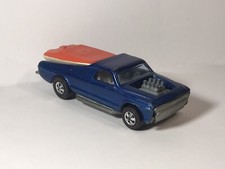
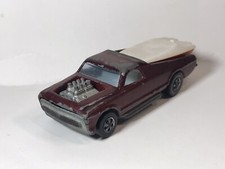
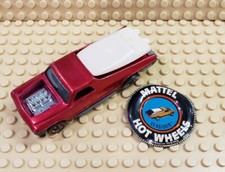
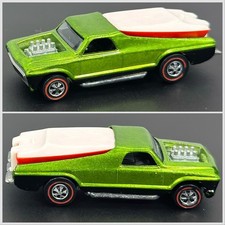
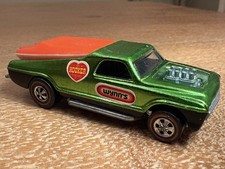
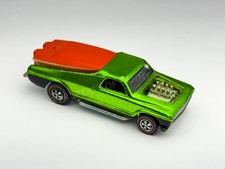
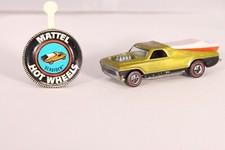
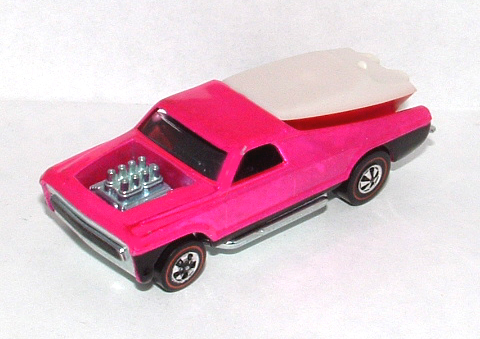
The 1970 Hot Wheels Redline Seasider was designed by Howard Rees and was produced for the 1970-1971 Redline era. It was produced only in the United States. The casting is distinctive because it includes a removable boat accessory, making completeness especially important for collectors.
Standard production Seasiders are expected to have black interiors. The major exception is the very rare orange version with a white interior and single exhaust pipes on the chassis. That orange version is generally believed to be a prototype because it has not been found in blisterpack. Some rare early lime-colored examples may also have the single-pipe chassis detail.
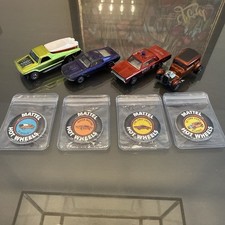
The Seasider uses two medium and two large Redline wheels. As with other original Redline-era cars, wheel condition, axle straightness, base condition, and original Spectraflame paint quality are key factors in desirability.
Known Variations and Details
- Designer: Howard Rees.
- Production run: 1970-1971.
- Country of production: United States only.
- Interior: Standard production examples have black interiors.
- Rare exception: Orange body with white interior and single exhaust pipes, believed by collectors to be a prototype-type piece.
- Early chassis detail: Some rare early lime-colored examples may also have single exhaust pipes.
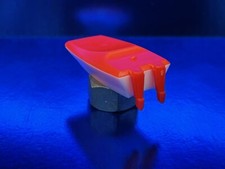
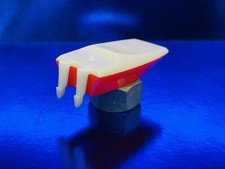
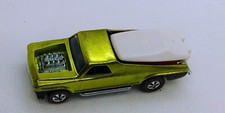
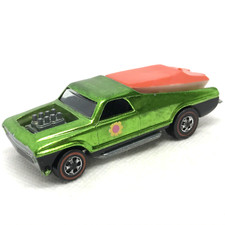
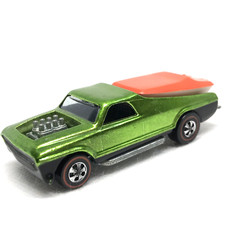
- Boat accessory: The boat may have an orange top with white bottom or a white top with orange bottom.
- Completeness: The boat must be present for the car to be considered complete.
- Wheel setup: Two medium and two large Redline wheels.
Color and Desirability Notes
Color matters on the Seasider, but it should be evaluated together with originality, condition, completeness, and correct details. Bright, clean Spectraflame paint with minimal toning and strong shine is typically more desirable than dull, heavily toned, or chipped paint.
The orange Seasider with white interior and single exhaust pipes should be treated separately from normal production examples. It is widely regarded as a prototype-type variation and should not be priced or compared directly against ordinary black-interior production cars.
Early lime examples with single exhaust pipes also deserve careful review. Because this detail is uncommon, sellers should provide clear chassis photos, and buyers should compare the base, interior, rivets, and overall originality before relying on the variation claim.
Condition Factors That Affect Value
- Original boat present: A missing boat significantly reduces desirability because the car is incomplete.
- Boat fit and condition: Cracks, stress marks, discoloration, broken tabs, or a reproduction boat affect value.
- Paint wear: Edge chips, roof wear, bed wear, nose wear, and rear corner wear are common areas to inspect.
- Spectraflame quality: Toning, fading, haziness, and darkening reduce visual appeal.
- Interior condition: Check for cracks, warping, discoloration, or evidence of parts swapping.
- Glass: Scratches, cracks, cloudiness, or replacement glass should be noted.
- Base condition: Look for corrosion, oxidation, scratches, and signs of cleaning or polishing.
- Wheels: Redline wheels should roll properly and should be checked for wear, bent axles, wheel melt, missing chrome, or replacement wheels.
- Rivets: Factory rivets are important. Drilled, spun, or altered rivets indicate restoration, repair, or parts swapping.
- Packaging: If blisterpacked, verify that the package is correct, untampered, and appropriate for the model.
Restorer Notes
The Seasider is often missing its boat, so restorers commonly look for replacement accessories. Replacement boats may improve display value, but they should be disclosed clearly as reproduction or replacement parts. A car with a reproduction boat should not be represented as a complete original example.
Because the boat is a key part of the casting, restoration decisions should be conservative. Cleaning original parts is usually preferable to repainting or modifying them. Repainted bodies, swapped interiors, replaced wheels, and reproduction boats all place the car in a different value category from an original survivor.
Special care should be taken with any orange white-interior single-pipe car or early lime single-pipe example. These should not be restored casually. Before any work is done, the car should be documented with clear photos of the body, base, interior, rivets, and boat.
Buyer Cautions
- Do not value an incomplete Seasider the same as a complete example with its boat.
- Ask whether the boat is original, reproduction, repaired, or borrowed from another car.
- Do not use active asking prices as proof of market value.
- Compare only against actual sold prices for original examples in similar condition.
- Be cautious with listings that use rare-color language without clear photos.
- Verify the interior color. Standard production examples should have black interiors.
- For orange white-interior examples, verify the single exhaust pipes and inspect the rivets closely.
- For claimed early lime single-pipe examples, require clear base photos.
- Avoid comparing restored, repainted, customized, or reproduction-part examples to original cars.
- Check that the wheel sizes and stance look correct for the casting.
Seller Notes
When selling a Seasider, include clear photos of the front, rear, both sides, top, base, wheels, interior, rivets, and boat. Photograph the boat separately and installed on the car. If the boat is reproduction, repaired, or not original to the car, disclose that plainly.
Describe the car by what can be verified: body color, interior color, base detail, wheel condition, boat color combination, and whether the car is original, restored, or incomplete. For unusual examples, especially orange white-interior single-pipe cars or early lime single-pipe cars, provide close-up photos of the chassis exhaust detail and rivets.
If using price references, separate current asking prices from actual completed sales. Asking prices can show what sellers hope to receive, but they do not establish market value unless the item sells.
Pricing Analysis
No specific verified sold-price dataset was supplied for this page, so exact value ranges should be treated with caution. The Seasider’s value depends heavily on originality, completeness, color, paint quality, and the presence and originality of the boat.
Active asking prices: These should be treated only as seller expectations. High asking prices may reflect optimism, rarity claims, or condition claims that have not been proven by a sale.
Actual sold prices: These are the better guide, but only when the sold example is comparable. A complete original Seasider with an original boat should not be compared directly to a missing-boat car, a restored car, a repaint, a custom, or a listing with reproduction parts.
Strong outliers: Prototype-type or unusual-detail examples, especially the orange white-interior single-pipe version, should be separated from normal production sales. These are not standard value comps for ordinary black-interior Seasiders.
Confidence level: limited without recent verified completed sales. Collectors should review multiple sold examples and adjust for condition, originality, completeness, and variation before estimating value.
Listings to Exclude or Treat Carefully
- Cars missing the boat, unless pricing specifically as incomplete.
- Cars with reproduction boats being priced as fully original.
- Repainted, restored, or customized examples.
- Cars with drilled or altered rivets.
- Listings with swapped interiors, replaced wheels, or mixed parts.
- Damaged examples with broken glass, cracked interiors, bent axles, or heavy corrosion.
- Wrong-casting listings or lots where the Seasider condition cannot be evaluated clearly.
- Group lots where the price cannot be assigned accurately to the Seasider alone.
- Listings that claim prototype status without clear evidence of the correct interior and chassis details.
- Active listings with high asking prices but no completed sale.
New Collector Advice
If you are buying your first Seasider, start with a complete black-interior example with its boat present. Focus on originality, clean paint, good wheels, and an undamaged boat. A slightly worn original car is often a better learning piece than a shiny repaint with reproduction parts.
Before buying, compare several examples and learn how the boat should look and fit. Always check the base and rivets. If a seller claims the car is rare because of color, interior, or exhaust detail, ask for clear photos before making a decision.
Advanced Collector Notes
Advanced collectors should pay close attention to the orange white-interior single-pipe variation and any early lime examples with single-pipe chassis detail. These require careful authentication and should be evaluated separately from regular production cars.
Because the orange white-interior single-pipe Seasider is believed to be a prototype-type example and has not been found in blisterpack, provenance, originality, and physical verification are especially important. Clear documentation of rivets, base, interior, wheels, and boat should accompany any serious evaluation.
For high-grade examples, small details matter: untouched rivets, original wheel chrome, clean axle alignment, correct boat, minimal paint toning, and undisturbed interior fit can separate a premium collector piece from an average one.
Short Page Blurb
The 1970 Hot Wheels Redline Seasider, designed by Howard Rees, is a U.S.-made 1970-1971 casting known for its removable boat accessory. Standard examples have black interiors, while the very rare orange white-interior single-pipe version is considered a prototype-type piece. Completeness, original boat, paint quality, and chassis details are the key value factors.
Disclaimer
This guide is for collector reference only. Values can change over time and depend on condition, originality, completeness, color, documentation, and buyer demand. Active asking prices are not the same as sold prices. Repaints, restorations, customs, reproduction parts, damaged cars, lots, and wrong-casting listings should not be used as normal market comparisons.
 Total results 5