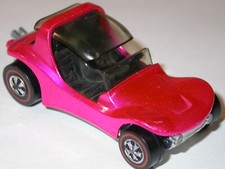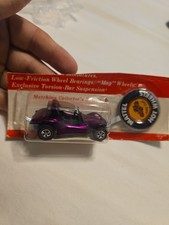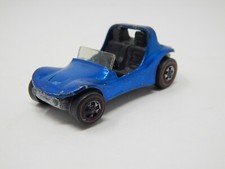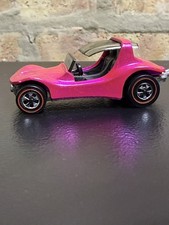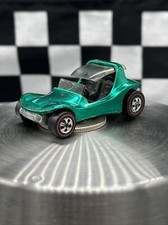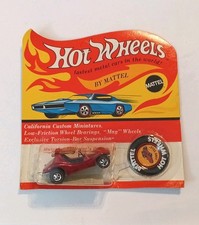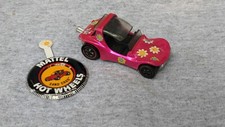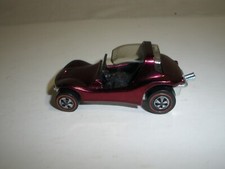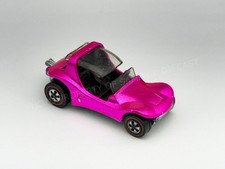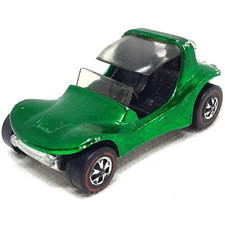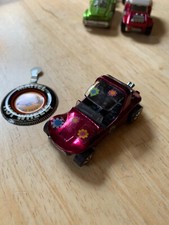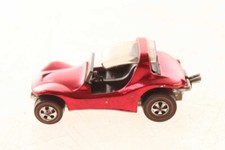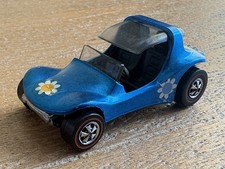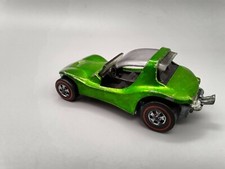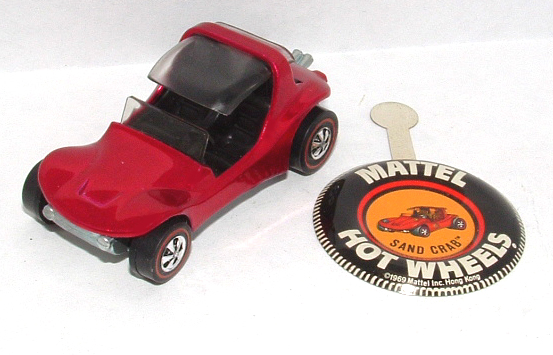
Casting #: 6403
Sand Crab
Designer: Tom Daniel
Production Run: 1970-1971
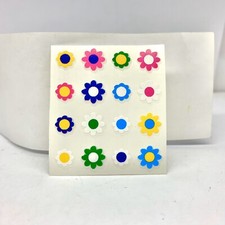
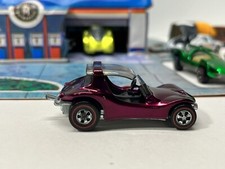
Note: U.S. interiors came in black, while Hong Kong versions could be found in white. The clear plastic canopy must be present in order to consider this model complete. Came with a decal sheet with assorted flowers.
Picture and description thanx to NCHWA.comOpenAI/ChatGPT Collector Guide
1970 Hot Wheels Redline Sand Crab Collector Guide
Quick Value Snapshot
| Factor |
Collector Impact |
| Completeness |
The clear plastic canopy is required for a complete example. Missing canopies reduce desirability and value. |
| Interior variation |
U.S. examples are associated with black interiors. Hong Kong examples may be found with white interiors. |
| Decal sheet |
The Sand Crab originally came with a decal sheet featuring assorted flowers. Original unused decals add collector appeal. |
| Wheels |
Correct wheel setup is 2 medium and 2 large Redline wheels. |
| Pricing confidence |
Limited without verified sold-price data. Active asking prices should not be treated as confirmed market value. |
Collector Summary
The 1970 Hot Wheels Redline Sand Crab is a Tom Daniel-designed casting produced during the 1970-1971 Redline era. It is a fantasy dune-buggy-style model with a clear plastic canopy and a mixed wheel setup of two medium and two large Redline wheels.
For collectors, the most important points are originality, canopy presence, correct interior for the country of origin, clean paint, straight axles, and correct wheels. A Sand Crab without its clear canopy should be viewed as incomplete unless the seller clearly states otherwise.
This casting is relevant to new collectors because it is visually distinctive and has a few easy-to-learn authenticity points. It is also relevant to advanced collectors because interior type, country of manufacture, canopy originality, decals, and condition can make a meaningful difference.
Known Variations and Details
- Designer: Tom Daniel.
- Production run: 1970-1971.
- Interior: U.S. versions are noted with black interiors.
- Hong Kong variation: Hong Kong versions could be found with white interiors.
- Canopy: The clear plastic canopy must be present to consider the model complete.
- Decals: Originally came with a decal sheet with assorted flowers.
- Wheel setup: 2 medium Redline wheels and 2 large Redline wheels.
Color and Desirability Notes
As with most original Redline-era Hot Wheels, bright original Spectraflame paint with strong shine, minimal toning, and limited edge wear is more desirable than dull, heavily worn, or oxidized paint. The most collectible examples are original, complete, and clearly not repainted or restored.
Color desirability can vary by collector preference, condition, and confirmed scarcity. Without verified sold examples for this specific page, exact color ranking should be treated carefully. Do not assume that a high active asking price for a particular color represents its actual market value.
Examples with original decals, especially unused original decal sheets or cleanly applied original decals, may attract additional interest. Reproduction decals should be disclosed and should not be valued the same as original period decals.
Condition Factors That Affect Value
- Clear canopy present: A missing canopy is one of the most important value deductions for this casting.
- Canopy condition: Cracks, heavy scratches, yellowing, glue residue, or replaced plastic can reduce collector appeal.
- Paint originality: Original Spectraflame finish is preferred. Repainted or over-polished examples should be treated separately.
- Base condition: Look for corrosion, pitting, excessive dullness, or signs that the car has been opened.
- Wheel condition: Correct Redline wheels should roll properly and match the intended 2 medium, 2 large setup.
- Axles: Bent or replaced axles reduce value, especially for advanced collectors.
- Interior accuracy: Confirm black interior for U.S. examples and white interior for Hong Kong examples where applicable.
- Decals: Original flower decals or an original decal sheet can add appeal, but damaged or reproduction decals should be identified.
- Toning and oxidation: Spectraflame paint that has darkened or lost brilliance is usually less desirable than bright original paint.
Restorer Notes
The Sand Crab is a restoration candidate only when the original example is already incomplete, heavily worn, or damaged. A clean original example should generally be preserved rather than restored.
- Replacement clear canopies are common in restored or repaired examples and should be disclosed.
- Reproduction decals should not be represented as original decals.
- Repainted Spectraflame finishes should be sold as restored or custom, not as original Redline paint.
- Wheel swaps can improve display appearance but should be disclosed if the wheels are not original to the car.
- Opening the car or altering rivets will usually reduce value for original collectors.
Buyer Cautions
- Do not price from asking prices alone. Active asking prices are only seller expectations, not confirmed market value.
- Confirm the canopy. Many incomplete Sand Crabs are missing the clear plastic canopy.
- Check for reproduction parts. Canopies and decals may be replacements.
- Watch for repaints. Fresh paint, unusual gloss, incorrect finish, or altered rivets may indicate restoration.
- Verify wheel sizes. The correct setup is 2 medium and 2 large Redline wheels.
- Separate originals from customs. Customs, restorations, and fantasy color repaints should not be compared to original examples for pricing.
- Be cautious with lots. Multi-car lots can obscure the true value of a single Sand Crab.
- Ask for clear photos. Request top, side, base, canopy, wheel, and rivet photos before buying.
Seller Notes
When selling a 1970 Redline Sand Crab, clearly identify whether the car is original, restored, customized, or incomplete. Accurate disclosure will attract better-informed buyers and reduce disputes.
- State whether the clear canopy is present and whether it is original or replaced.
- Identify the interior color and country of manufacture if visible.
- Mention whether decals are present, missing, original, reproduction, applied, or unused.
- Photograph the base, rivets, wheels, canopy, and any flaws.
- Do not describe an asking price as a confirmed value unless you have comparable verified sold results.
- If the car has reproduction parts, replacement wheels, touched-up paint, or restored paint, say so directly.
Pricing Analysis
No verified sold-price dataset was supplied for this page, so pricing confidence is limited. The safest approach is to separate three different kinds of information:
- Actual sold prices: Completed sales for original, complete, correctly identified Sand Crabs are the best evidence of market value.
- Active asking prices: Current listings show what sellers hope to receive, but they do not prove value.
- Non-comparable listings: Lots, customs, repaints, restorations, reproduction-part examples, damaged cars, and wrong-casting listings should not be used as normal pricing examples.
For value comparisons, match examples by originality, canopy presence, paint condition, wheel correctness, interior type, country of manufacture, and decal status. A complete original car with a clean canopy and strong paint should not be compared directly with an incomplete car missing its canopy or a restored example with reproduction parts.
If a very high price appears in active listings, treat it as an outlier unless it is supported by multiple confirmed sold examples of similar condition and specification. Strong outliers may reflect exceptional condition, rare color appeal, original packaging, original decals, seller overpricing, or simple misidentification.
Listings to Exclude or Treat Carefully
- Cars missing the clear canopy.
- Examples with reproduction or replacement canopies unless disclosed and valued accordingly.
- Repainted, restored, or customized Sand Crabs.
- Cars with reproduction decals presented as original.
- Examples with swapped or incorrect wheels.
- Multi-car lots where the individual value of the Sand Crab is unclear.
- Damaged examples with broken plastic, heavy corrosion, bent axles, or altered rivets.
- Listings using active asking prices as proof of value.
- Wrong-casting listings or listings with unclear photos.
New Collector Advice
For a first Sand Crab, look for a complete original example with the clear canopy still in place, correct Redline wheels, and honest photos. Do not worry first about chasing the rarest color or highest-grade example. Learn the casting by studying the canopy, interior, base, wheel setup, and decals.
If the price seems high, ask whether the seller is using actual sold examples or only current asking prices. A complete original car is usually preferable to a cheaper incomplete one, especially because the canopy is essential to the model’s complete appearance.
Advanced Collector Notes
Advanced collectors should document interior color, country of manufacture, canopy originality, decal status, wheel correctness, and base condition. U.S. black-interior examples and Hong Kong white-interior examples should be cataloged separately where possible.
For high-grade examples, small differences matter. Canopy clarity, rivet originality, paint toning, axle straightness, wheel chrome, and decal authenticity can separate an average display car from a premium collector example. Original packaging or an original unused flower decal sheet should be evaluated separately from the loose car itself.
Short Page Blurb
The 1970 Hot Wheels Redline Sand Crab is a Tom Daniel-designed Redline casting produced from 1970-1971. U.S. examples are noted with black interiors, while Hong Kong versions could have white interiors. A complete Sand Crab must include its clear plastic canopy and uses a 2 medium, 2 large Redline wheel setup.
Disclaimer
This guide is for collector reference only. Values can change based on condition, originality, color, completeness, packaging, and current buyer demand. Active asking prices are not the same as actual sold prices. Repaints, customs, restored cars, reproduction parts, damaged examples, lots, and misidentified listings should not be treated as normal price examples for an original 1970 Hot Wheels Redline Sand Crab.
Gemini/Google AI Collector Guide
1970 Hot Wheels Redline Sand Crab Collector Guide
Quick Value Snapshot
The 1970 Sand Crab is a staple of the Spectraflame era. Values fluctuate based on color rarity and the presence of the original canopy. Generally, common colors in "Play-Worn" condition range from $30 – $60, while "Excellent to Near-Mint" examples in common colors often fetch $100 – $225. Rare colors (such as Pink or Salmon) in high-grade condition can significantly exceed these figures.
Collector Summary
Designed by the legendary Tom Daniel, the Sand Crab was introduced in 1970 and produced through 1971. It is a stylistically aggressive dune buggy featuring an exposed engine, a wide stance, and a signature clear plastic canopy. This model is highly sought after because it represents the "California Custom" culture that defined early Hot Wheels. It was produced in both United States and Hong Kong facilities, with notable differences between the two.
Known Variations and Details
Identification of the Sand Crab relies heavily on the origin of manufacture:
- U.S. Production: These models typically feature a black interior. The paint is usually more vibrant Spectraflame.
- Hong Kong Production: Most often found with a white interior, though black interiors have been documented. The glass (canopy) may have a slightly different tint compared to U.S. versions.
- Wheel Configuration: Standard production uses two medium wheels in the front and two large wheels in the rear, giving the car its characteristic "raked" look.
- Decals: Original kits included a decal sheet featuring assorted flower patterns, a nod to the "Flower Power" era.
Color and Desirability Notes
The Sand Crab was released in a wide variety of Spectraflame colors. While commonality can vary by region, the following general tiers apply:
- Common Colors: Green, Aqua, Blue, and Red.
- Mid-Tier Colors: Orange, Yellow, Apple Green, and Magenta.
- High-Tier/Rare Colors: Pink, Salmon, Light Blue, and Brown.
- Desirability: Collectors often pay a premium for "Bright" examples with minimal "toning" (darkening of the paint due to oxidation of the zinc alloy underneath).
Condition Factors That Affect Value
- The Canopy: This is the most critical factor. The clear plastic canopy is fragile and frequently missing, cracked, or scratched. A Sand Crab without an original canopy is considered incomplete by most serious collectors.
- The Engine: The exposed engine should have clean, shiny plating. Wear to the chrome significantly reduces the "shelf appeal."
- Decal Presence: While original decals are a plus, they are often missing or partially peeled. Unapplied, original decal sheets are extremely rare and valuable.
- Paint Chips: Because of the car's open design and sharp edges, it is prone to edge wear and "flea bites."
Restorer Notes
The Sand Crab is a popular candidate for restoration due to the availability of reproduction canopies. However, restorers should note that original canopies have a specific clarity and fitment that reproduction parts often lack. When replacing an interior, ensure it matches the base origin (Black for U.S., White for HK) to maintain historical accuracy.
Buyer Cautions
- Reproduction Canopies: Many "Mint" looking Sand Crabs on the market feature reproduction glass. While acceptable for a personal display, these should be priced lower than 100% original examples. Check for the specific thickness and "snap" of the plastic.
- "Put-Together" Cars: Some sellers may pair a Hong Kong base with a U.S. interior. Verify that the interior color and base origin align with known production standards.
- Hidden Cracks: The canopy often cracks at the rear hinge points. Ask for high-resolution photos of these specific areas.
Seller Notes
When listing a Sand Crab, the most important photos are the canopy (from multiple angles) and the underside of the base to show the country of origin. If the car has original flower decals, highlight them, as they are a major selling point for "survivor" enthusiasts. Clearly state if the canopy is original or a modern replacement.
Pricing Analysis
| Condition Level |
Estimated Sold Price Range |
Market Confidence |
| Poor / Missing Parts |
$15 - $30 |
High |
| Good / Fair (Original) |
$40 - $85 |
High |
| Excellent / Near-Mint |
$110 - $250 |
Moderate |
| Rare Color / Mint |
$300 - $600+ |
Limited (Highly variable) |
Note: Active asking prices on secondary markets are frequently 30% to 50% higher than actual completed "Sold" prices. Collectors should base their valuations on confirmed sales rather than current listings.
Listings to Exclude or Treat Carefully
- Restored/Repainted Cars: These do not represent original market value and should be priced as "customs."
- Missing Canopy: These listings should be treated as "parts cars" or placeholders, as the cost of sourcing an original canopy can be high.
- Toned Cars: Cars that have turned a dark, murky color due to oxidation should not be compared to "Brilliant" Spectraflame examples.
New Collector Advice
If you are just starting, look for a common color like Green or Blue with a clear, crack-free canopy. It is better to have a common color in great condition than a rare color with a missing canopy or heavy paint loss. Ensure the wheels are straight and the "Redline" circles are still visible on the tires.
Advanced Collector Notes
Advanced collectors focus on "crossover" variations, such as rare interior/base combinations or cars that have retained their original flower decals in a specific, aesthetic pattern. Finding a Sand Crab with a perfectly clear canopy that has not "yellowed" over the decades is the hallmark of a top-tier collection.
Short Page Blurb
The 1970 Hot Wheels Sand Crab is a Tom Daniel masterpiece. Known for its clear canopy and flower decals, it is a quintessential Redline era dune buggy. Whether you are looking for the U.S. version with a black interior or the Hong Kong version with a white interior, the Sand Crab remains a high-priority addition for any serious Hot Wheels researcher or collector.
Disclaimer
Values for vintage Hot Wheels are highly subjective and can change rapidly based on market demand and auction trends. This guide provides estimates based on historical data and does not guarantee future value. Always conduct thorough research before buying or selling.
Online Redline Guide / Color Reference
Wheels: 2 Med, 2 Lg
US Colors
| Color | Comments |
|---|
| Color US HK | unknown |
| Aqua | Rare |
| Blue | Common |
| Green | Common |
| Light Green | Common |
| Lime | Common |
| Magenta | Uncommon |
| Orange | Rare |
| Hot Pink | Hard to Find |
| Salmon Pink | Hard to Find |
| Red | Common |
| Rose Red | Uncommon |
| Yellow | Common |
NCHWA.com Ratings
MINT Loose pricing below probably. Check ebay for blister pricing.
Note that these values are very old. Typical selling prices can be significantly higher now. Check the AI summaries for more info or ebay listings here.
Please see NCHWA.com Grading Page to reduce value due to condition.
| Color | US
Rating | US
Value | HK
Rating | HK
Value |
|---|
| Light Green | 2 | $41 | 10 | $238 |
| Lime | 2 | $41 | 11- | $251 |
| Blue | 2+ | $50 | 9 | $213 |
| Yellow | 2+ | $50 | . | . |
| Red | 2+ | $50 | 12 | $288 |
| Green | 2+ | $50 | 9 | $213 |
| Rose | 3- | $51 | . | . |
| Magenta | 3- | $51 | 10 | $238 |
| Aqua | 3 | $63 | 9 | $213 |
| Salmon | 3+ | $75 | . | . |
| Hot Pink | 4- | $76 | . | . |
| Orange | 26 | $1,201 | . | . |
| | . | | . |
Looking for reproduction redline parts?

Total results 5
Average price for this page is $13