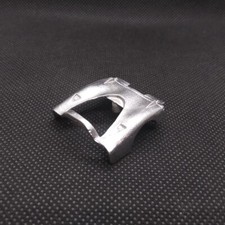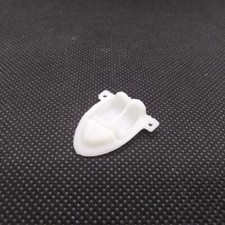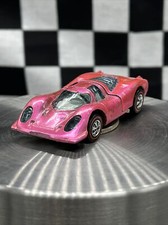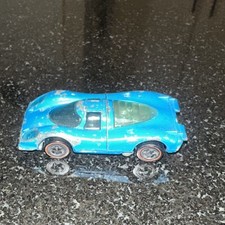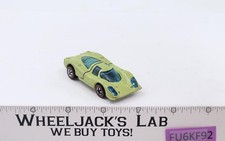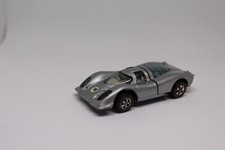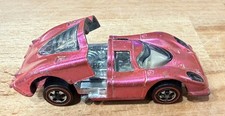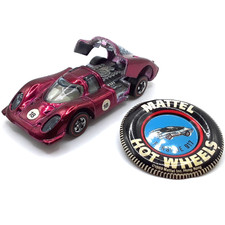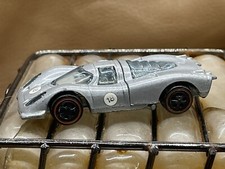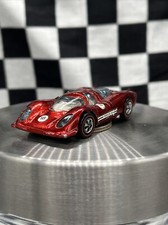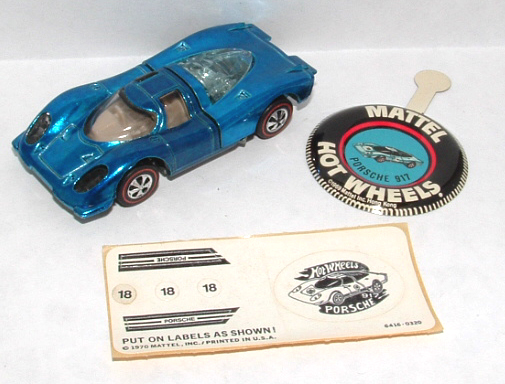
Casting #: 6416
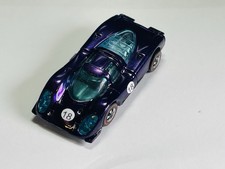
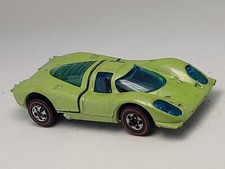
Porsche 917
Designer: Existing Design
Production Run: 1970-1971
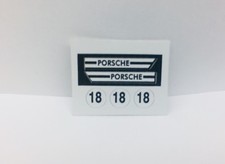
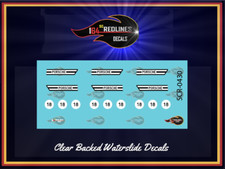
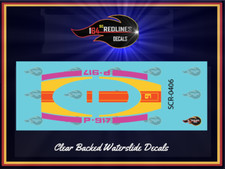
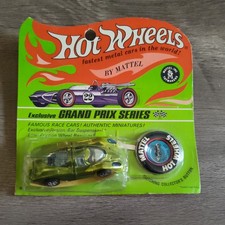
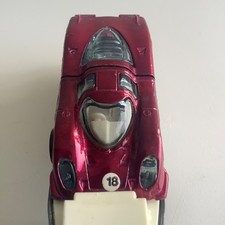
Note: Grand Prix Series. Came with a decal sheet with #18 and rocker panel stickers that said "Porsche." The real model is infamous for killing a British driver at the track, as it suffered severe handling problems. It would later go through major rear end modifications, which stabilized it.
Picture and description thanx to NCHWA.comOpenAI/ChatGPT Collector Guide
1970 Hot Wheels Redline Porsche 917 Collector Guide
Quick Value Snapshot
| Category |
Collector Guidance |
| Model |
1970 Hot Wheels Redline Porsche 917 |
| Production Run |
1970-1971 |
| Series |
Grand Prix Series |
| Wheel Setup |
Four medium redline wheels |
| Value Drivers |
Original paint, original decals or decal sheet, wheel condition, base condition, complete and undamaged body, and verified originality |
| Actual Sold Prices |
No specific verified sold-price dataset was supplied for this page. Use completed sales only, and separate original examples from restored, repainted, damaged, or incomplete cars. |
| Active Asking Prices |
Asking prices may show availability, but they should not be treated as market value unless supported by comparable completed sales. |
| Pricing Confidence |
Limited without current verified sold-price data. Condition and originality have a large effect on value. |
Collector Summary
The 1970 Hot Wheels Redline Porsche 917 is a Grand Prix Series casting produced during the original Redline era. It represents the Porsche 917 endurance racing car, one of the notable real-world racing designs of the period. The Hot Wheels version was issued with a decal sheet that included number 18 markings and rocker panel stickers reading “Porsche.”
For collectors, the Porsche 917 is important because it combines an early 1970s racing subject, Redline-era construction, and decal-based presentation. Originality is especially important. Many surviving examples are missing decals, have reproduction decals, show wheel wear, or have been restored. These cars can still be collectible, but they should not be valued the same as clean, original examples.
The real Porsche 917 had a difficult early racing history, including serious handling instability before later rear-end and aerodynamic changes improved the design. That background adds context for researchers, but the value of the Hot Wheels model should still be judged by the toy’s originality, condition, variation, and documented market sales.
Known Variations and Details
| Feature |
Known Detail |
| Casting Name |
Porsche 917 |
| Designer |
Existing design |
| Production Years |
1970-1971 |
| Series |
Grand Prix Series |
| Wheels |
Four medium redline wheels |
| Decals |
Originally supplied with a decal sheet including number 18 markings and rocker panel “Porsche” stickers |
| Collector Focus |
Original paint, original wheels, intact glass, clean base, and original decal status |
Color names and exact scarcity rankings should be verified against trusted Redline references and confirmed examples. The supplied listing data does not include a full color chart, so color-based value claims should be treated carefully unless supported by verified sales and recognized variation documentation.
Color and Desirability Notes
Desirability is strongly affected by condition and originality. A clean original car with strong paint, correct redline wheels, and documented original decals will generally be more desirable than a worn example, even if the worn car is in a less common color.
- Original color matters: Redline collectors place a premium on factory-original paint. Repaints should be clearly disclosed.
- Decal status matters: Applied original decals, unused original decal sheets, missing decals, and reproduction decals are different value categories.
- Rarity claims need proof: Do not rely only on seller descriptions such as “rare color” or “hard to find” without comparison to accepted Redline references and completed sales.
- Condition can outweigh color: A high-grade common-color example may outperform a rough example in a scarcer color.
Condition Factors That Affect Value
- Paint: Look for chips, edge wear, toning, dullness, scratches, and signs of repainting. Nose, roofline, rear edges, and wheel arch areas often show wear.
- Decals: Original decals add appeal when intact and properly aged. Missing decals are common. Reproduction decals should be disclosed and valued separately.
- Wheels: Correct medium redline wheels are important. Check for wheel chrome loss, bent axles, missing redlines, wheel swaps, and uneven rolling.
- Base: Examine for oxidation, scratches, heavy playwear, drilled rivets, or signs that the car has been opened.
- Glass and interior: Cracks, clouding, warping, or missing parts reduce desirability.
- Body integrity: Check for crushed posts, bent body lines, loose parts, or damage from prior restoration attempts.
- Packaging: Carded or blistered examples must be evaluated separately from loose cars. Repackaged or resealed items should not be priced as original sealed examples.
Restorer Notes
The Porsche 917 is a reasonable restoration candidate when the original finish is already heavily damaged, but restored cars should always be identified as restored. Restoration work can make a car display well, but it does not place the car in the same value category as an untouched original.
- Use correct-size medium redline wheels if replacing damaged wheels, and disclose replacements.
- Reproduction decals should be described as reproduction decals, not original decals.
- A repaint should never be sold as original factory paint.
- If rivets have been drilled, disclose that the car has been opened.
- Keep photos of the car before restoration if resale is possible.
- Do not over-polish the base or body in a way that removes original surface character.
Buyer Cautions
- Separate asking from selling: An active listing price is not proof of value. Compare only to actual completed sales of similar original examples.
- Watch for reproduction decals: New decals can look clean and attractive but should not be priced as original decals unless proven.
- Check for wheel swaps: Correct redline wheels are essential to original Redline value.
- Avoid wrong comparables: Do not compare this car directly to later non-Redline issues, customs, anniversary reproductions, or different Porsche castings.
- Inspect rivets: Drilled or altered rivets usually indicate restoration, repair, repainting, or wheel replacement.
- Be careful with lots: Multi-car lots can hide condition problems and make it difficult to assign a true value to the Porsche 917 alone.
- Demand clear photos: Ask for side, top, front, rear, base, wheel, and decal closeups before buying a higher-grade example.
Seller Notes
- State whether the paint is original, restored, touched up, or uncertain.
- Identify decals as original, reproduction, missing, partially present, or unapplied if applicable.
- Photograph all four wheels and the base clearly.
- Do not describe an active asking price as “market value” unless supported by completed sales.
- Separate the Porsche 917’s value from unrelated cars if selling in a lot.
- If the car has been opened, drilled, restored, or fitted with replacement parts, disclose it clearly.
- For carded examples, show the blister edges, card front and back, and any cracks, lifting, resealing, or repairs.
Pricing Analysis
Pricing confidence is limited because no specific verified sold-price records were supplied for this page. For this model, the safest pricing method is to compare against actual completed sales of the same casting in similar condition, with the same originality status.
| Example Type |
How to Treat in Pricing |
| Original loose car, no restoration |
Best baseline for market comparison when condition, color, wheels, and decals are clearly documented. |
| Original car with strong decals or original decal sheet |
Should be evaluated separately from examples with missing or reproduction decals. |
| Restored or repainted car |
Do not use as a normal price comparable for original examples. |
| Custom or modified car |
Value depends on custom appeal, not original Redline collector value. |
| Damaged or parts car |
Useful only as a low-grade or restoration-project reference. |
| Carded or blistered example |
Separate category. Packaging originality, blister integrity, and card condition can dominate price. |
Strong outliers should be reviewed carefully. A very high result may reflect exceptional condition, original packaging, a desirable color, original decal sheet, or two determined bidders. A very low result may reflect damage, poor photos, missing parts, restoration, incorrect listing title, or a lot where the Porsche 917 was not clearly described.
Listings to Exclude or Treat Carefully
- Repainted cars listed without disclosure
- Restored cars compared to original examples
- Cars with reproduction decals presented as original
- Wheel-swapped or axle-repaired examples
- Cars with drilled rivets or opened bases unless clearly sold as restored or repaired
- Customs, fantasy repaints, or tribute builds
- Later non-Redline Porsche releases or wrong Porsche castings
- Damaged examples used as normal value benchmarks
- Multi-car lots where the Porsche 917 condition cannot be isolated
- Active asking prices with no completed-sale support
- Resealed or repaired packaging represented as factory sealed
New Collector Advice
If you are new to Redlines, focus first on originality. A clean original Porsche 917 with honest wear is usually more desirable to Redline collectors than a shiny repaint with reproduction decals. Learn how original redline wheels, rivets, bases, and aged decals look before paying a premium.
When comparing prices, look only at completed sales of similar cars. A car with missing decals should not be compared directly to one with original decals, and a loose car should not be compared directly to a sealed carded example. If photos are unclear, assume there may be condition issues until proven otherwise.
Advanced Collector Notes
Advanced collectors should document color, wheel condition, decal status, base condition, and any packaging details when cataloging a Porsche 917. Because decal originality can significantly affect desirability, close inspection is important. Original decals should show age consistent with the car, while reproduction decals may appear too fresh, too glossy, or incorrectly cut.
For high-grade examples, provenance and photo documentation are helpful. If a car is claimed to have rare color status, original decals, or unopened packaging, the claim should be supported by clear images and comparison to established Redline references. Outlier prices should be archived separately rather than folded into average loose-car pricing.
Short Page Blurb
The 1970 Hot Wheels Redline Porsche 917 is a Grand Prix Series casting produced from 1970 to 1971. It came with a decal sheet including number 18 and “Porsche” rocker panel decals and uses four medium redline wheels. Collector value depends heavily on original paint, decal status, wheel condition, and whether the car is unrestored.
Disclaimer
This guide is for collector reference only. Values can change over time and vary by condition, color, originality, packaging, and buyer demand. Active asking prices are not the same as actual sold prices. Restored, repainted, damaged, customized, incomplete, reproduction-part, and wrong-casting listings should not be treated as standard market examples for an original 1970 Hot Wheels Redline Porsche 917.
Gemini/Google AI Collector Guide
1970 Hot Wheels Redline Porsche 917 Collector Guide
Quick Value Snapshot
Values for the 1970 Porsche 917 vary significantly based on paint brilliance and the presence of original decals. Typical play-worn examples often sell between $35 and $75. High-condition Spectraflame examples with original decals intact can command $150 to $400+, while rare colors like Magenta or Pink in mint condition represent the top of the market.
Collector Summary
The Porsche 917 was introduced in 1970 as part of the Grand Prix Series. Unlike many Hot Wheels of the era designed in-house, this casting was based on the "Existing Design" of the real-world endurance racer. The 917 is famous for its performance at Le Mans, though early versions of the real car were notoriously dangerous due to aerodynamic instability. The Hot Wheels version features an opening rear engine cover and was originally packaged with a decal sheet containing the number "18" and "Porsche" rocker panel stickers. It was produced from 1970 to 1971.
Known Variations and Details
The Porsche 917 was primarily a Hong Kong production casting. Collectors should look for the following features:
- Wheel Info: Equipped with four medium "capped" Redline wheels.
- Interior/Glass: Typically features a plastic interior and blue-tinted windows, characteristic of Hong Kong manufacturing.
- Rear Hatch: A hinged rear section that opens to reveal the engine.
- Base Info: Usually a silver-painted or unpainted metal base featuring the car name and manufacturing details.
Color and Desirability Notes
The Porsche 917 was released in a wide variety of Spectraflame colors. The desirability of a specific car is often tied to the rarity of the hue and how well the paint has resisted "toning" (darkening of the zinc alloy underneath the paint).
- Common Colors: Blue, Aqua, Green, and Red.
- Harder to Find: Orange, Yellow, and Olive.
- Rare/High Desirability: Magenta, Pink, and Salmon.
Condition Factors That Affect Value
- The Rear Hatch: The hinge on the opening rear engine cover is a known weak point. Examples with a broken or loose hatch are significantly less valuable.
- Original Decals: Because these cars came with a separate decal sheet, finding one with perfectly applied, original period decals is a major value driver. Missing or peeling decals are common.
- Paint Brillance: Spectraflame paint is prone to "foxing" (dark spots) or "toning." A "Pop" color that remains bright and mirror-like will always command a premium.
- Wheel Chrome: The silver chrome on the Redline wheels often wears off due to play. High-shine wheels indicate a well-preserved or "case-kept" car.
Restorer Notes
The Porsche 917 is a popular candidate for restoration, but collectors should be aware that many "mint" looking cars on the market may be restored. Replacement decals are widely available, but they are often printed on thicker film than the 1970 originals. When repairing the rear hatch, original hinges are difficult to fix if snapped; often, a donor car is required.
Buyer Cautions
Buyers should be wary of listings claiming "original decals" when the stickers appear too bright, thick, or perfectly aligned, as high-quality reproductions are common. Always inspect the rear hinge area for cracks or glue repairs. Because this is a Grand Prix Series car, ensure the wheels are the correct medium-sized capped versions; swapped wheels from later eras are a red flag for authenticity.
Seller Notes
When selling a Porsche 917, clear photography of the engine bay and the underside of the hatch is essential. If the decals are original, state this clearly, but be prepared for scrutiny from advanced collectors. Note any "toning" in the paint honestly, as Spectraflame colors can look different under various lighting conditions.
Pricing Analysis
Market confidence for the Porsche 917 is high due to steady demand for Grand Prix Series castings. However, there is a distinct gap between asking prices and sold prices.
| Condition |
Estimated Sold Price Range |
Notes |
| Poor / Beater |
$15 - $30 |
Heavy paint loss, missing hatch, or bent axles. |
| Good / Fair |
$40 - $85 |
Visible play wear, some decal loss, intact hatch. |
| Excellent / Near Mint |
$100 - $225 |
Strong paint, minimal chips, original decals present. |
| Museum Quality / Rare Color |
$300 - $600+ |
Perfect paint, no toning, rare colors (Pink/Magenta). |
Listings to Exclude or Treat Carefully
- Repainted/Restored: These should not be compared to original finish cars. A restored 917 typically sells for $40-$60 regardless of the color's original rarity.
- Customs: Cars with non-period-correct wheels or fantasy paint schemes.
- Missing Parts: Listings missing the rear engine cover should be valued only as "parts cars."
- Aggressive Asking Prices: Ignore "Buy It Now" listings at $500+ for common colors like Blue or Green unless the car is absolutely flawless/carded.
New Collector Advice
The Porsche 917 is an excellent entry point into the Grand Prix Series. If you are on a budget, look for a "clean" common color like Aqua or Blue with a functioning hatch. Don't worry too much about missing decals, as these were user-applied and many kids chose not to use them. Focus on paint quality and "straightness" of the axles first.
Advanced Collector Notes
For the completionist, the goal is to find "un-toned" examples in the transition colors. Additionally, finding an original, unapplied decal sheet to accompany a mint car is considered a "holy grail" find for this casting. Pay close attention to the difference between US and Hong Kong base variations if any transitional pieces are discovered, though the 917 is almost exclusively documented as a Hong Kong casting.
Short Page Blurb
The 1970 Hot Wheels Porsche 917 brings the drama of Le Mans to the Redline era. Part of the Grand Prix Series, this casting features a detailed opening engine cover and a sleek aerodynamic profile. Whether you are hunting for a rare Magenta variant or a clean racer for your display case, the 917 remains a cornerstone of early Hot Wheels collecting.
Disclaimer
While this guide provides a snapshot of the current market based on historical data, the Hot Wheels market is volatile. Prices can change based on platform, venue, and buyer interest. This guide does not guarantee specific sale prices.
Online Redline Guide / Color Reference
Wheels: 4 Med
US Colors
| Color | Comments |
|---|
| Color US HK | unknown |
| Grey Enamel | Most Common |
| Blue | Uncommon |
| Light Green | Common |
| Lime Yellow | Common |
| Yellow | Common |
| Green | Less Common |
| Red | Uncommon |
| Magenta | Common |
| Salmon Pink | Uncommon |
| Hot Pink | Uncommon |
| Aqua | Hard to Find |
| Purple | - |
NCHWA.com Ratings
MINT Loose pricing below probably. Check ebay for blister pricing.
Note that these values are very old. Typical selling prices can be significantly higher now. Check the AI summaries for more info or ebay listings here.
Please see NCHWA.com Grading Page to reduce value due to condition.
| Color | US
Rating | US
Value | HK
Rating | HK
Value |
|---|
| Grey Enamel | 1+ | $30 | 2+ | $50 |
| Lime | 2 | $41 | 3- | $51 |
| Light Green | 2+ | $50 | 3- | $51 |
| Yellow | 2+ | $50 | 3+ | $75 |
| Red | 3 | $63 | 6 | $138 |
| Magenta | 3 | $63 | . | . |
| Rose | 3+ | $75 | . | . |
| Blue | 3+ | $75 | 2+ | $50 |
| Green | 4- | $76 | 3 | $63 |
| Hot Pink | 5+ | $125 | 5+ | $125 |
| Salmon | 6+ | $150 | . | . |
| Aqua | 13+ | $350 | 8+ | $200 |
| Purple | . | . | 14+ | $400 |
| | . | | . |
Looking for reproduction redline parts?

Total results 20
Average price for this page is $14