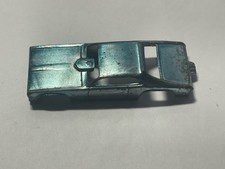
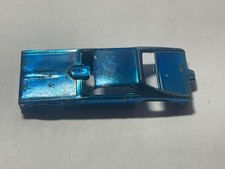
1970 Hot Wheels Redline Mongoose Collector Guide
Quick Value Snapshot
| Category |
Collector Interpretation |
| Model |
1970 Hot Wheels Redline Mongoose |
| Designer |
Larry Wood |
| Production run |
1970-1971 |
| Wheel setup |
2 medium redline wheels and 2 large redline wheels |
| Completeness factor |
Stickers are critical. The model is not considered complete unless the required graphics are present. |
| Pricing confidence |
Limited without verified recent sold examples. Active asking prices should not be treated as market value. |
Collector Summary
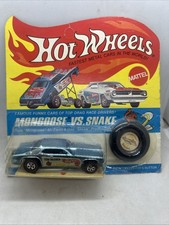
The 1970 Hot Wheels Redline Mongoose is part of the early Redline-era drag racing group and is closely associated with the period Snake and Mongoose rivalry. It was designed by Larry Wood and produced during the 1970-1971 production period.
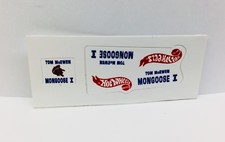
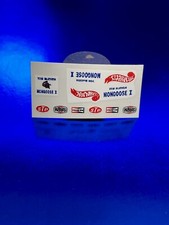
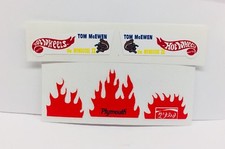
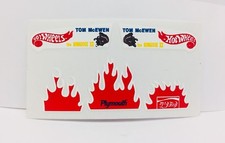
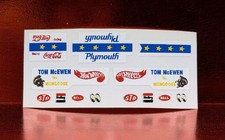
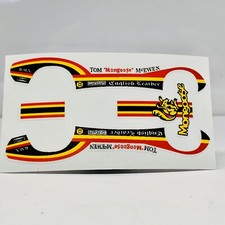
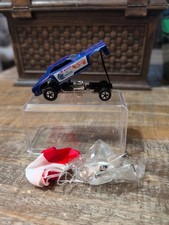
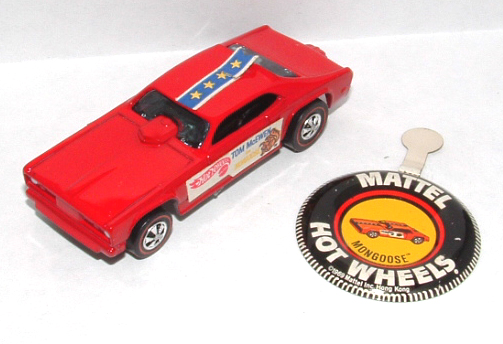
For collectors, the most important issue with this casting is sticker completeness and originality. The Mongoose came with a sticker sheet that included a side graphic and hood, roof, and trunk graphics. The side sticker was already applied to the right side from the factory. Because the graphics are a major part of the model’s identity, the stickers must be present for the car to be considered complete.
Condition, originality, correct wheels, and complete graphics have a major effect on value. Loose examples with missing, damaged, replaced, or poorly applied stickers should be evaluated separately from complete original examples.
Known Variations and Details
- Designer: Larry Wood.
- Production run: 1970-1971.
- Wheel configuration: 2 medium redline wheels and 2 large redline wheels.
- Sticker equipment: The model was issued with graphics for the side, hood, roof, and trunk.
- Factory-applied detail: The right-side graphic was already applied at the factory.
- Completeness standard: The stickers must be present to consider the model complete.
Collectors should document whether the graphics are original, reproduction, factory-applied, collector-applied, damaged, missing, or still present on an original sheet. That distinction matters when comparing examples.
Color and Desirability Notes
As with many Redline-era Hot Wheels, color desirability depends on originality, paint condition, eye appeal, and relative availability. A clean original color with strong gloss and matching wear patterns is more desirable than a repainted example, even if the repaint uses an attractive or uncommon-looking color.
Color claims should be checked carefully. Lighting, camera settings, fading, toning, polishing, and repainting can all make a common color appear unusual in photos. Advanced buyers should compare the body color in multiple views and look for paint consistency around exposed edges, panel lines, the base, and areas protected from handling.
Because no verified sales dataset is supplied here, this guide does not assign exact premiums to individual colors. Treat color premiums cautiously unless they are supported by confirmed sold prices for original, complete examples.
Condition Factors That Affect Value
- Original stickers: Complete original graphics are a major value factor. Missing hood, roof, trunk, or side graphics reduce desirability.
- Sticker condition: Lifting, curling, staining, tearing, fading, misalignment, or replacement stickers should be disclosed.
- Paint: Chips, edge wear, scratches, toning, fading, and repainting affect value.
- Wheels: The correct 2 medium and 2 large redline wheel setup should be present. Bent axles, tire wear, missing redlines, wheel swaps, or incorrect wheel sizes reduce collector confidence.
- Base condition: Scratches, oxidation, corrosion, tool marks, or evidence of disassembly should be inspected.
- Originality: Original paint and original parts are valued differently from restored, customized, or repaired examples.
- Packaging: Carded or blisterpack examples should be authenticated carefully. Packaging condition and originality can change the value category entirely.
Restorer Notes
The Mongoose is a restoration candidate when the original car has heavy paint loss, missing graphics, or wheel damage. However, restored examples should never be represented as original. Reproduction stickers, repainted bodies, replaced wheels, polished bases, and repaired axles must be disclosed.
Restorers should take extra care with the sticker layout. Since the factory-applied right-side graphic is an important detail, a restored car with incorrectly placed graphics may be less convincing to experienced collectors. If using reproduction graphics, note that they may look cleaner, brighter, or differently cut than original stickers.
For preservation-minded collectors, the best approach is often minimal intervention: remove dirt carefully, avoid harsh polishing, preserve original stickers when possible, and do not alter paint or wheels unless the car is clearly being restored and will be sold or displayed as restored.
Buyer Cautions
- Do not price from active asking prices alone. Asking prices show what sellers hope to receive, not necessarily what buyers are paying.
- Separate sold prices from listed prices. Use actual sold listings only when comparing value, and make sure the sold item is truly comparable.
- Confirm sticker completeness. A Mongoose with missing or reproduction graphics is not the same value category as a complete original example.
- Watch for reproduction stickers. Newer stickers may be sharper, brighter, glossier, or cleaner than the surrounding car.
- Check wheel sizes. The correct setup is 2 medium and 2 large redline wheels.
- Avoid wrong comparisons. Lots, customs, restored cars, damaged cars, and wrong-casting listings should not be used as normal price examples.
- Use caution with “rare color” claims. Verify originality before paying a premium.
- Inspect packaging claims carefully. Blisterpack and carded examples require stronger authentication than loose cars.
Seller Notes
Sellers should photograph the car from all sides, including the right-side factory-applied graphic area, hood, roof, trunk, base, wheels, axles, and any damaged or missing stickers. Good photos help buyers separate original examples from restored or incomplete ones.
Describe the graphics clearly. State whether the stickers are original, reproduction, missing, damaged, partially lifted, or believed to be factory-applied. If the car has been restored, repainted, re-wheeled, or fitted with reproduction decals, disclose that directly.
When setting a price, compare only to actual sold examples that match the same category: loose original complete, loose original incomplete, restored, custom, damaged, or packaged. Do not use high active asking prices as proof of market value.
Pricing Analysis
No verified recent sold-price dataset is supplied for this page, so exact value confidence is limited. The safest pricing approach is to separate examples into condition and originality categories before comparing sales.
| Example Type |
Pricing Treatment |
| Complete original loose car with correct stickers |
Best loose-car comparison category. Should be compared only to other original complete examples in similar condition. |
| Original loose car with missing or damaged stickers |
Lower comparison category. Sticker loss is a major condition issue for this model. |
| Restored or reproduction-sticker example |
Do not compare directly to original examples. Restoration appeal and accuracy matter, but originality is different. |
| Damaged, wheel-swapped, or heavily worn car |
Use only as a lower-grade or parts/restoration comparison. |
| Carded or blisterpack example |
Separate category. Packaging authenticity and condition must be verified before using as a pricing reference. |
| Active asking price |
Not market value by itself. It should be treated as a seller’s asking position only. |
Strong outliers should be reviewed separately. A very high price may reflect packaging, exceptional condition, a highly desirable color, or a seller’s unrealistic ask. A very low price may reflect missing stickers, restoration, damage, incorrect parts, poor photos, or a mixed lot. Neither should be treated as a normal market example without verification.
Listings to Exclude or Treat Carefully
- Active listings with no sale confirmation.
- Mixed lots where the Mongoose value cannot be separated clearly.
- Repaints, customs, or restored cars described as original.
- Cars with reproduction stickers unless priced as restored or upgraded examples.
- Examples missing hood, roof, trunk, or side graphics.
- Cars with swapped wheels, incorrect wheel sizes, bent axles, or missing redlines.
- Wrong-casting listings or listings confusing the Mongoose with a related Snake model.
- Heavily damaged cars used as if they represent average market value.
- Questionable carded or blisterpack examples without sufficient authentication.
New Collector Advice
If you are new to Redlines, focus first on originality and completeness. For the Mongoose, the stickers are not a minor detail; they are central to the model. A shiny car with reproduction decals may look attractive, but it should not be priced the same as a complete original example.
Before buying, confirm the wheel setup, check the stickers, look closely at the paint, and ask for clear photos of the base and both sides. If the seller cannot show the hood, roof, trunk, right side, wheels, and base, wait for better information or treat the purchase as higher risk.
Advanced Collector Notes
Advanced collectors should document sticker originality, placement, aging, and surface interaction with the paint. The factory-applied right-side graphic is an important reference point, and mismatched aging between stickers can indicate replacement or partial restoration.
When researching prices, build separate comparison groups for original complete cars, original incomplete cars, restored cars, and packaged examples. This is especially important for the Mongoose because missing or replaced graphics can create large differences between two cars that look similar at first glance.
For high-grade examples, inspect for subtle restoration signs: unusually fresh decals, paint in axle channels, inconsistent wear around raised edges, polished base surfaces, wheel replacement, and decal edges that do not match expected age.
Short Page Blurb
The 1970 Hot Wheels Redline Mongoose, designed by Larry Wood, was produced from 1970-1971 and uses a 2 medium, 2 large redline wheel setup. Sticker completeness is essential: the model included side, hood, roof, and trunk graphics, with the right-side graphic factory-applied. Original complete examples should be evaluated separately from restored, reproduction-sticker, damaged, or incomplete cars.
Disclaimer
Values for Hot Wheels Redlines can change over time and depend on condition, originality, completeness, color, packaging, and buyer demand. This guide does not guarantee exact values. Active asking prices are not the same as actual sold prices. Use verified sold examples whenever possible, and compare only to cars in the same condition and originality category.
 Total results 21