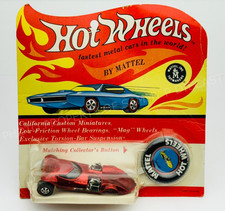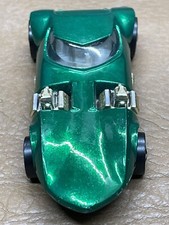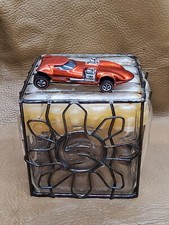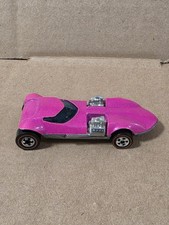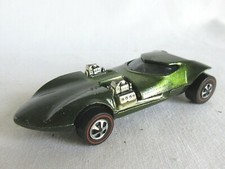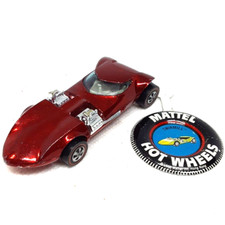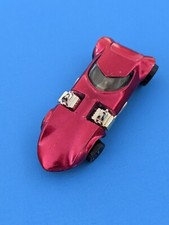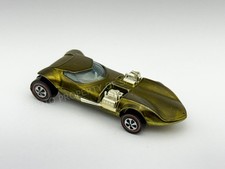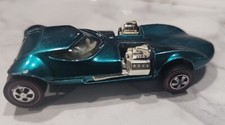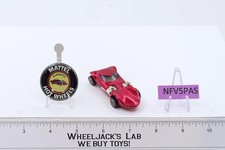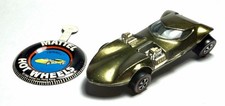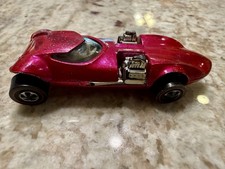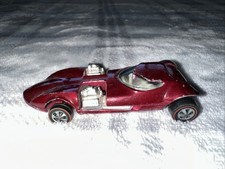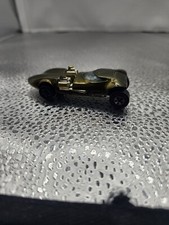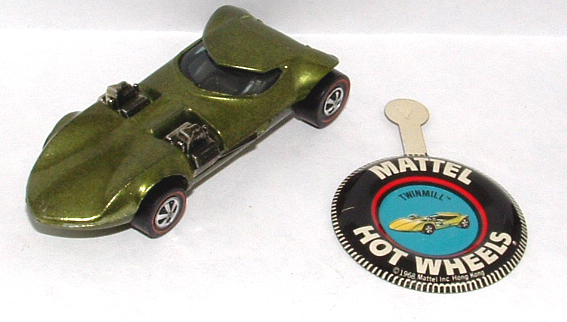
Casting #: 6258
Twin Mill
Designer: Ira Gilford
Production Run: 1969-1971
Note: Produced only in the U.S. The rarest variation of the Twin Mill has "cut" rear fenders, where they're closer to the body, and not covering the tires at all. These are very difficult to find, and can add a high-dollar premium ($300-500), if you have one!
Picture and description thanx to NCHWA.comOpenAI/ChatGPT Collector Guide
1969 Hot Wheels Redline TwinMill Collector Guide
Quick Value Snapshot
| Category |
Collector Impact |
Notes |
| Standard original TwinMill |
Desirable Redline casting |
Value depends heavily on originality, paint condition, wheels, base condition, glass, and visible wear. |
| Cut rear fender variation |
High premium when authentic |
The rarest known variation has rear fenders cut closer to the body so they do not cover the rear tires. Supplied collector notes indicate this can add a premium of about $300-$500, but exact value is not guaranteed. |
| Restored, repainted, customized, or reproduction-part examples |
Not comparable to untouched originals |
These should be priced separately and clearly disclosed. |
| Pricing confidence |
Limited without verified sold data |
Active asking prices should not be treated as market value. Confirmed sold prices for original examples are the best guide. |
Collector Summary
The 1969 Hot Wheels Redline TwinMill is one of the signature original-era fantasy castings from Mattel’s Redline period. It was designed by Ira Gilford and produced from 1969 through 1971. According to the supplied database notes, the TwinMill was produced only in the United States.
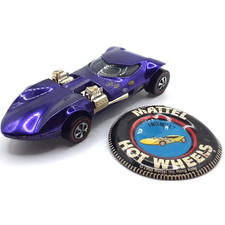
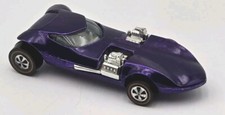
The car is known for its twin-engine design, low profile, exposed performance styling, and staggered wheel setup. The listed wheel information is 2 medium wheels and 2 small wheels. For collectors, originality is especially important because the TwinMill is a popular casting for restorations, customs, and display builds.
The most important variation noted in the supplied data is the rare cut rear fender version. On this variation, the rear fenders are cut closer to the body and do not cover the rear tires. Authentic examples are difficult to find and can command a substantial premium over a standard TwinMill.
Known Variations and Details
| Feature |
Known Detail |
Collector Note |
| Designer |
Ira Gilford |
Important designer attribution for Redline-era research. |
| Production run |
1969-1971 |
Original Redline-era production. |
| Country of production |
United States only |
Do not expect a legitimate Hong Kong production version based on the supplied notes. |
| Wheel setup |
2 medium wheels, 2 small wheels |
Correct wheel sizing is important when evaluating originality. |
| Rarest noted variation |
Cut rear fenders |
Rear fenders are closer to the body and do not cover the tires. Authentication is important because this feature affects value. |
Color and Desirability Notes
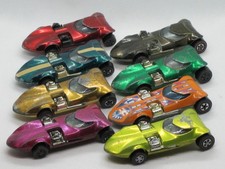
The TwinMill was issued in Redline-era Spectraflame finishes. As with other original Redlines, color desirability can vary by shade, condition, and collector demand. Strong, clean Spectraflame color with minimal toning, no heavy edge wear, and bright underlying finish is generally more desirable than dull, heavily oxidized, or worn paint.
Because no verified color-by-color sold-price dataset was supplied, this page does not assign exact color rankings or fixed values. New collectors should be cautious when relying on active listings that describe a color as rare without supporting evidence. Advanced collectors should compare color, casting details, wheel type, base, and originality before assigning a premium.
Condition Factors That Affect Value
- Original paint: Untouched factory paint is generally preferred over repainting, even when the original has some wear.
- Paint wear: Edge wear, roof wear, nose wear, chipped fenders, and dull Spectraflame finish reduce value.
- Glass: Cracks, fogging, scratches, or replacement glass affect desirability.
- Chrome engine pieces: Heavy chrome loss, broken parts, or replaced components should be disclosed.
- Wheels: Correct Redline wheels, proper front and rear sizing, straight axles, and smooth rolling matter.
- Base: Corrosion, heavy toning, axle damage, tool marks, or drilled rivets reduce originality and value.
- Rivets: Factory rivets are important. Drilled, altered, or replaced rivets usually indicate restoration, repair, or customization.
- Cut rear fenders: If present, this feature should be inspected carefully to determine whether it is a legitimate casting variation rather than later alteration.
Restorer Notes
The TwinMill is a popular restoration candidate because of its recognizable shape and exposed-engine design. Restorers should clearly distinguish restored examples from original Redline cars. A clean restoration can be attractive as a display piece, but it should not be priced or represented as an untouched original.
Key restoration concerns include matching the correct wheel setup, preserving or accurately replacing engine and glass components, and avoiding undisclosed rivet work. Reproduction parts, reproduction wheels, polished bases, and repainting should be fully disclosed when selling or documenting the car.
For the cut rear fender variation, restorers and buyers should be especially cautious. A standard casting modified after production is not the same as an authentic cut rear fender variation.
Buyer Cautions
- Do not treat asking prices as market value. Active listings often reflect seller expectations, not confirmed demand.
- Separate sold prices from asking prices. Verified sold prices for comparable original examples are more useful than unsold listings.
- Watch for repaints. Fresh-looking paint, unusually perfect color, drilled rivets, or incorrect finish may indicate restoration.
- Check wheel correctness. The supplied wheel information is 2 medium wheels and 2 small wheels. Incorrect sizing may indicate repair or parts swapping.
- Inspect rear fenders carefully. The cut rear fender variation can add significant value only if authentic.
- Avoid wrong comparisons. Do not compare originals to customs, restorations, lots, damaged cars, or incomplete examples.
- Confirm U.S. production details. The supplied notes state the TwinMill was produced only in the U.S.
Seller Notes
- Photograph the car clearly. Include top, sides, front, rear, base, wheels, rivets, glass, engine area, and rear fenders.
- Disclose condition honestly. Mention paint wear, wheel problems, base toning, glass damage, missing parts, or repairs.
- State originality carefully. If the car has been restored, repainted, drilled, or fitted with reproduction parts, say so clearly.
- Do not overstate value based on asking prices. Use actual sold prices for similar original examples when available.
- Document cut rear fenders if present. Provide close-up photos and avoid claiming the rare variation unless the feature is clear and credible.
- Separate loose and packaged examples. A packaged example should be evaluated differently from a loose car, especially if blister, card, or originality issues are present.
Pricing Analysis
Pricing for the 1969 Redline TwinMill depends on originality, condition, color, wheels, base condition, and whether the car has the rare cut rear fender variation. The supplied database notes identify the cut rear fender version as the rarest variation and indicate that it can add a high-dollar premium of approximately $300-$500. That premium should be treated as a collector guideline, not a guaranteed value.
Active asking prices should be separated from actual sold prices. An unsold listing may be too high, may describe the car incorrectly, or may not reflect current buyer demand. Actual sold prices are more useful only when the example is comparable: original paint, correct casting, correct wheels, similar condition, and no hidden restoration or damage.
Confidence is limited without a current set of verified sold results. Strong outliers should be evaluated separately. A very high result may reflect rare variation status, exceptional condition, packaging, color desirability, or competitive bidding. A very low result may reflect damage, repainting, missing parts, poor photos, wrong identification, or inclusion in a mixed lot.
Listings to Exclude or Treat Carefully
- Repainted cars listed as original without proof.
- Restored cars compared directly to untouched Redline examples.
- Custom builds, fantasy modifications, or altered rear fenders.
- Cars with drilled or replaced rivets unless clearly disclosed.
- Listings with reproduction wheels, reproduction glass, or reproduction engine parts.
- Damaged examples with broken parts, severe corrosion, or missing components.
- Mixed lots where the value of the TwinMill cannot be separated accurately.
- Wrong-casting listings or later Twin Mill releases being confused with the 1969 Redline TwinMill.
- Active asking prices used as proof of value without confirmed sale data.
New Collector Advice
If you are new to Redlines, focus first on learning what an original TwinMill should look like before chasing rare variations. Check the rivets, wheels, paint, base, and exposed engine details. A moderately worn original car is often a better learning piece than an expensive car with unclear restoration history.
Be especially careful with the cut rear fender variation. Because it can add a significant premium, it is important to verify that the rear fender shape is a legitimate casting variation and not a later alteration. When in doubt, compare with known original examples or seek opinions from experienced Redline collectors.
Advanced Collector Notes
Advanced collectors should evaluate the TwinMill by combining casting detail, wheel correctness, production traits, paint quality, and provenance. Since the supplied notes state U.S. production only, country-of-origin claims should be checked carefully. Variation research should pay close attention to the rear fender area, because the cut rear fender version is the key premium variation identified for this casting.
For high-grade examples, small differences in paint brightness, wheel condition, axle straightness, base cleanliness, and glass clarity can produce meaningful value differences. For rare-variation examples, documentation and clear photography are especially important.
Short Page Blurb
The 1969 Hot Wheels Redline TwinMill is a U.S.-produced Ira Gilford design made from 1969 to 1971. It is a popular original Redline casting with staggered wheels and strong collector recognition. The key rare variation is the cut rear fender version, where the rear fenders sit closer to the body and do not cover the rear tires. Originality, condition, correct wheels, and authentication are critical to value.
Disclaimer
Values for Redline Hot Wheels change with condition, originality, buyer demand, and available comparable sales. This guide does not guarantee exact prices. Active asking prices are not the same as market value, and restored, repainted, damaged, customized, reproduction-part, lot-based, or wrong-casting listings should not be treated as normal price examples. When pricing a 1969 Redline TwinMill, use verified sold prices for comparable original examples whenever possible.
Gemini/Google AI Collector Guide
1969 Hot Wheels Redline TwinMill Collector Guide
Quick Value Snapshot
The Twin Mill is one of the most iconic Hot Wheels designs of all time. Values vary significantly based on paint color and the presence of rare casting variations.
| Condition |
Estimated Price Range (Common Colors) |
Estimated Price Range (Rare Colors/Variations) |
| Poor / Play-Worn |
$15 – $40 |
$50 – $150 |
| Good / Fair |
$45 – $85 |
$150 – $300 |
| Near Mint (High Gloss) |
$100 – $250 |
$400 – $1,200+ |
| Carded / Blister Pack |
$400 – $800 |
$1,500 – $3,500+ |
Collector Summary
Designed by Ira Gilford, the Twin Mill debuted in 1969 and remained in production through 1971. It is a quintessential "Hot Wheels original" design, featuring two large exposed engines and a sleek, futuristic body. All original Redline-era Twin Mills were produced exclusively in the United States. This casting is a cornerstone for any Redline collection.
Known Variations and Details
- The "Cut" Rear Fender: This is the rarest and most sought-after variation. On these early models, the rear wheel wells are cut closer to the body and do not cover the tops of the tires at all. This variation carries a significant premium, often adding $300 to $500 to the value of the car depending on condition.
- Standard Fenders: The common version features rear fenders that partially shroud the tops of the rear wheels.
- Wheels: The standard configuration uses two medium wheels in the rear and two small wheels in the front (2 Med, 2 Sm).
- Interior Colors: Typically found with white or dark (black/dark brown) interiors. White interiors are generally preferred by collectors for their visual "pop" against the Spectraflame paint.
Color and Desirability Notes
The Twin Mill was released in a wide variety of Spectraflame colors. The rarity of the color is a primary driver of market value.
- Common Colors: Antifreeze, Green, Blue, Red, and Lime.
- Harder to Find: Aqua, Copper, Orange, and Purple.
- Rare/High Premium: Magenta, Rose, Brown, and the extremely rare Creamy Pink.
Condition Factors That Affect Value
- Engine Chrome: Because the engines are exposed, the chrome plating is prone to "rub" or wear. Pristine, shiny engines are essential for Top-Tier pricing.
- Windshield Integrity: The wraparound windshield is susceptible to cracking or "fogging." Clear, crack-free glass is highly valued.
- Toning: Like all Spectraflame cars, the Twin Mill can suffer from "toning," where the zinc alloy base reacts with the paint, causing it to darken or appear cloudy.
- Wheel Chrome: Shiny chrome "mag" wheels command a premium over wheels where the chrome has worn off to the black plastic.
Restorer Notes
The Twin Mill is a popular candidate for restoration, but collectors should be aware that replacement engines are common. While these can make a display piece look beautiful, they must be disclosed during a sale. The "Cut Fender" variation is nearly impossible to replicate accurately from a standard casting without obvious Tooling marks, so authentic "Cut" fenders are rarely successfully faked.
Buyer Cautions
When purchasing a "Cut Fender" variation, inspect the edges of the wheel wells carefully under magnification. Ensure the paint is original and that the metal has not been filed down or modified by a third party. Additionally, watch for "orphaned" bodies that have been placed on newer bases; an original 1969-1971 Twin Mill must have the correct US base markings.
Seller Notes
To maximize value, sellers should provide clear, macro-photography of the following areas:
- The Rear Fenders: Profile shots to prove if the car is a "Cut Fender" variation.
|- The Engines: Direct overhead shots to show the level of chrome wear.
- The Underside: To confirm the US manufacturing stamp and the condition of the torsion bars.
Pricing Analysis
The market for the Twin Mill is robust but stable. Actual Sold Prices for common colors in "played with" condition typically hover between $30 and $60. High-condition examples in desirable colors like Purple or Magenta frequently see realized prices exceeding $400. Active Asking Prices on auction sites are often inflated by 20-40% above actual market value; collectors should rely on "Sold" listings rather than "Buy It Now" prices to determine current liquid value.
Listings to Exclude or Treat Carefully
- Restored/Repainted Cars: These should not be compared to original paint prices. A restored Twin Mill usually sells for the cost of a "beater" plus a small premium for the labor ($40-$70).
- Customs: Modern custom builds using original parts are artistic pieces but do not represent the Redline collector market.
- Missing Parts: Listings missing one or both engines or the windshield should be treated as "parts cars" only.
New Collector Advice
The Twin Mill is an excellent entry point into Redline collecting because it was mass-produced, making common colors affordable. If you are just starting, look for a clean "Antifreeze" or "Blue" example with good wheels. This allows you to own a piece of Hot Wheels history without the massive financial commitment of the rarer variations.
Advanced Collector Notes
For the completionist, the goal is the "Cut Fender" Twin Mill in a rare Spectraflame color like Magenta or Brown. Because these were transition pieces, finding a "Cut Fender" in a late-run color is an exceptional rarity. Verification of original paint via UV light (Blacklight) is recommended for high-dollar acquisitions to ensure no "touch-ups" have been performed on the fender edges.
Short Page Blurb
The 1969 Twin Mill is the definitive Hot Wheels original. Featuring Ira Gilford's twin-engine design and produced only in the U.S., it remains a top priority for collectors. Look for the rare "cut" rear fender variation for a true centerpiece find.
Disclaimer
Values provided are estimates based on historical market trends and are not guarantees. The Redline market fluctuates based on demand, platform, and individual bidder interest. Always perform your own due diligence before buying or selling vintage collectibles.
Online Redline Guide / Color Reference
NCHWA.com Ratings
MINT Loose pricing below probably. Check ebay for blister pricing.
Note that these values are very old. Typical selling prices can be significantly higher now. Check the AI summaries for more info or ebay listings here.
Please see NCHWA.com Grading Page to reduce value due to condition.
| Color | US
Rating | US
Value | HK
Rating | HK
Value |
|---|
| Green | 1 | $23 | . | . |
| Blue | 1 | $23 | . | . |
| Aqua | 1 | $23 | . | . |
| Red | 1 | $23 | . | . |
| Lime | 1 | $23 | . | . |
| Gold | 1 | $23 | . | . |
| Orange | 1 | $23 | . | . |
| Rose | 2 | $41 | . | . |
| Olive | 2 | $41 | . | . |
| Purple | 2 | $41 | . | . |
| Antifreeze | 2+ | $50 | . | . |
| Magenta | 3 | $63 | . | . |
| Light Blue | 3 | $63 | . | . |
| Light Green | 4+ | $100 | . | . |
| Yellow | 5 | $113 | . | . |
| Creamy Pink | 6 | $138 | . | . |
| Hot Pink | 8 | $188 | . | . |
| Brown | 13+ | $350 | . | . |
| | . | | . |
Looking for reproduction redline parts?

Total results 7
Average price for this page is $25