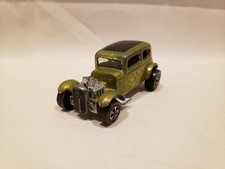
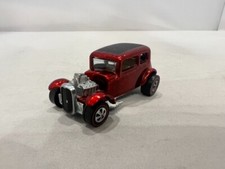
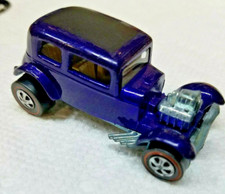
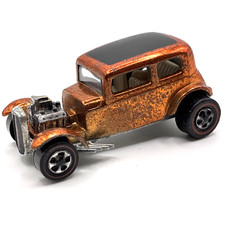
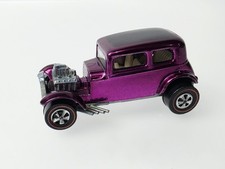
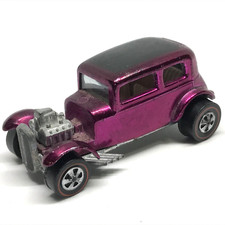
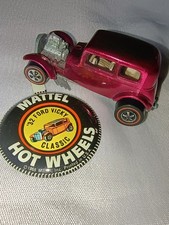
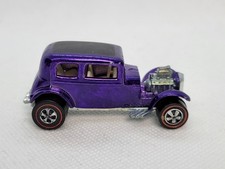
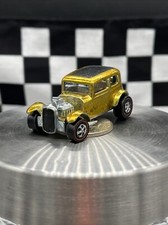
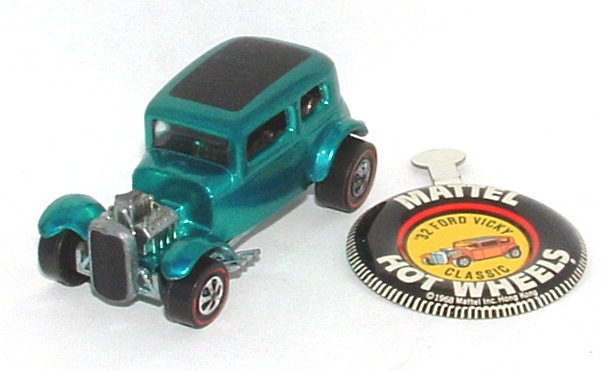
1969 Hot Wheels Redline Classic 32 Ford Vicky Collector Guide
Quick Value Snapshot
| Model |
Production |
Designer |
Origin |
Wheel Setup |
Value Confidence |
| Classic '32 Ford Vicky |
1969-1971 |
Ira Gilford |
U.S. production only |
2 medium, 2 small Redline wheels |
Limited without verified sold-price data |
General value guidance: Values depend heavily on originality, paint color, condition, wheel quality, roof type, casting details, and whether the car is loose or packaged. Early “open shock” castings and verified textured-roof examples can bring a premium over normal examples, but exact value should be based on recent confirmed sold prices, not active asking prices.
Collector Summary
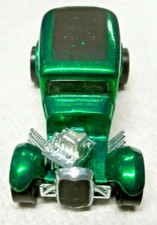
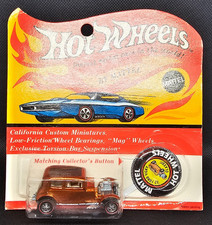
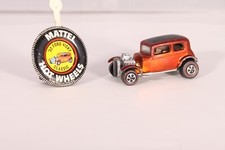
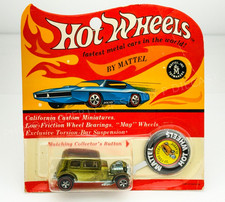
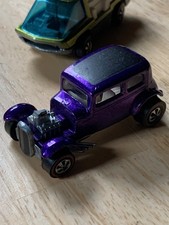
The 1969 Hot Wheels Redline Classic '32 Ford Vicky is a U.S.-made Redline era casting designed by Ira Gilford and produced from 1969 through 1971. It represents a customized 1932 Ford Victoria hot rod and is part of the early Mattel Redline lineup that appeals to both condition-focused collectors and variation specialists.
For new collectors, this is a recognizable Redline casting with clear points to inspect: original Spectraflame-style paint, black roof treatment, redline wheels, base condition, and correct casting details. For advanced collectors, the important areas are early casting features, roof texture variation, paint color, and originality.
Known Variations and Details
- Designer: Ira Gilford.
- Production run: 1969-1971.
- Country of production: Produced only in the United States.
- Wheel setup: Two medium Redline wheels and two small Redline wheels.
- Open shock casting: Early-run examples may have “open shock” front shock areas where the shocks are not filled in. These are scarcer and can add a premium when verified.
- Roof variation: Most examples have a flat black roof. A textured roof variation has been found in red and lime.
Color and Desirability Notes
Color desirability on Redline-era cars is affected by a combination of rarity, paint condition, brightness, toning, and collector demand. Strong, glossy, original paint with minimal edge wear is preferred. Cars with heavy toning, dull paint, corrosion under the paint, or mismatched parts generally sell for less than clean original examples.
The supplied collector notes specifically call out textured-roof examples found in red and lime. These should be treated as variation pieces and compared against confirmed examples, not against standard flat-roof cars. A textured roof should be examined carefully to confirm that it is original and not the result of later paint work, surface damage, or restoration.
Condition Factors That Affect Value
- Original paint: Factory paint is a major value factor. Repainted or restored cars should not be priced the same as original cars.
- Roof condition: The roof should be inspected for wear, repainting, texture differences, and originality.
- Wheel condition: Redline wheels should be correct for the casting, with two medium and two small wheels. Bent axles, missing redlines, replaced wheels, and wheel melt reduce value.
- Base condition: Look for corrosion, heavy scratches, tool marks, axle damage, or signs the car has been opened.
- Glass and interior: Cracks, warping, discoloration, or missing pieces lower desirability.
- Casting integrity: Check for chips, cracks, casting damage, and altered shock areas.
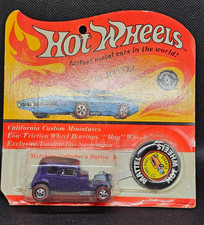
- Packaging: A correct blister card, if present, can significantly affect value, but packaging must be authenticated separately from the car.
Restorer Notes
The Classic '32 Ford Vicky is often found with paint wear, wheel issues, or roof wear, making it a common restoration candidate. Restorations can be attractive display pieces, but they should be clearly disclosed when sold. Restored cars, repaints, re-wheeled examples, and cars using reproduction parts should not be used as normal price comparisons for original Redline examples.
Restorers should document all work performed, including paint stripping, repainting, wheel replacement, axle work, roof repainting, glass replacement, or reproduction parts. For collectors, an undisclosed restoration can create a major difference between asking price and fair collectible value.
Buyer Cautions
- Do not rely on asking prices alone. Active listings often reflect seller expectations, not actual market value.
- Confirm originality. Check paint, wheels, axles, base, roof, and casting details before paying a premium.
- Be careful with “rare” claims. Open shock and textured-roof examples can be desirable, but they should be verified with clear photos and comparison to known originals.
- Avoid bad comparisons. Lots, customs, restored cars, repaints, reproduction-parts cars, damaged examples, and wrong-casting listings should not be treated as normal value examples.
- Inspect photos closely. Look for roof repainting, polished bases, wheel swaps, axle tool marks, and paint that appears too new for an original Redline.
Seller Notes
When selling a Classic '32 Ford Vicky, provide clear photos of the front, rear, sides, roof, base, wheels, interior, glass, and any casting details. If the car has the open shock feature or a textured roof, include close-up photos and describe the feature accurately.
Separate condition from rarity. A scarce variation in poor condition may not sell like a clean standard example. If the car has been restored, repainted, detailed, polished, re-wheeled, or repaired, disclose that clearly. Accurate disclosure helps attract serious buyers and reduces returns or disputes.
Pricing Analysis
For this page, specific price ranges are not stated because no verified sold-price dataset was supplied. Pricing confidence is therefore limited. A proper value estimate should be based on recent confirmed sold listings for the same casting, same condition level, same originality status, and comparable variation.
Actual sold prices: These are the most useful pricing references when they are clearly matched to the correct model and condition. Sold examples should be screened to remove restored cars, customs, repaints, lots, damaged examples, reproduction-parts cars, and misidentified listings.
Active asking prices: These should be treated as seller expectations only. An asking price does not prove market value, especially for Redline cars where condition, originality, and small casting variations can create large differences in value.
Premium factors: Early open shock castings and verified textured-roof examples can bring a premium, but the amount varies by condition, color, originality, and buyer demand at the time of sale.
Listings to Exclude or Treat Carefully
- Repainted or restored cars listed without clear disclosure.
- Custom builds or fantasy color examples.
- Cars with reproduction wheels, reproduction interiors, reproduction glass, or replacement parts.
- Mixed lots where the price cannot be assigned to the Classic '32 Ford Vicky alone.
- Wrong-casting listings or listings using incorrect model names.
- Damaged examples with broken glass, missing parts, crushed bodies, severe corrosion, or drilled bases.
- High active asking prices with no matching sold-price support.
- Claims of open shock or textured roof without clear close-up photos.
New Collector Advice
If you are new to Redlines, start by learning the difference between original paint and restoration work. The Classic '32 Ford Vicky can look very different depending on wear, lighting, and roof condition. Buy the best original example you can comfortably afford, and avoid paying a premium for a claimed variation unless the seller provides clear evidence.
Use confirmed sold prices as your guide, not unsold listings. Compare only similar examples: loose to loose, packaged to packaged, original to original, restored to restored, and standard roof to standard roof. Small differences in condition can change value significantly.
Advanced Collector Notes
Advanced collectors should pay close attention to the early open shock casting and the textured roof variation. The open shock feature is a casting detail associated with early production and should be evaluated carefully against known examples. Textured-roof examples, noted in red and lime, are variation-specific pieces and should be documented with clear roof photos.
Because the Classic '32 Ford Vicky was produced only in the U.S., country-of-origin confusion is less of a concern than on castings with both U.S. and Hong Kong production. However, originality remains critical. Wheel swaps, roof repainting, and restoration work can materially affect collectibility.
Short Page Blurb
The 1969 Hot Wheels Redline Classic '32 Ford Vicky is a U.S.-made Ira Gilford design produced from 1969 to 1971. Collectors look for original paint, correct two-medium/two-small Redline wheel setup, clean bases, and variation details such as the early open shock casting and the textured roof variation found in red and lime.
Disclaimer
This guide is for collector reference only. Values are not guaranteed and can change based on condition, originality, color, variation, timing, and buyer demand. Active asking prices should not be treated as market value. Use recent verified sold prices and carefully exclude lots, repaints, customs, restored cars, reproduction-parts examples, damaged cars, and misidentified listings when estimating value.
 Total results 5