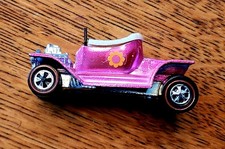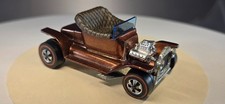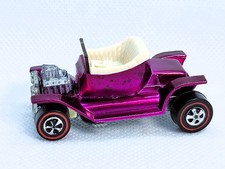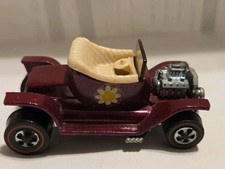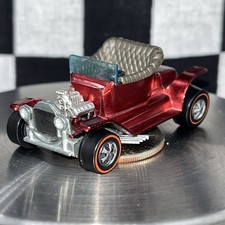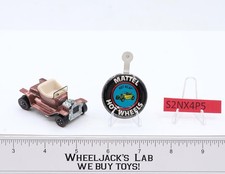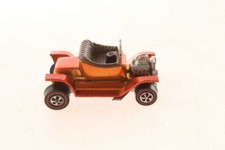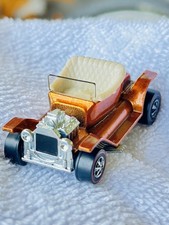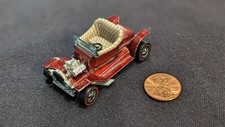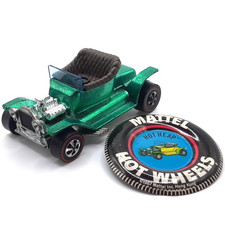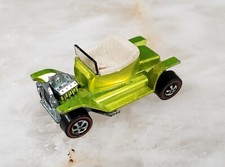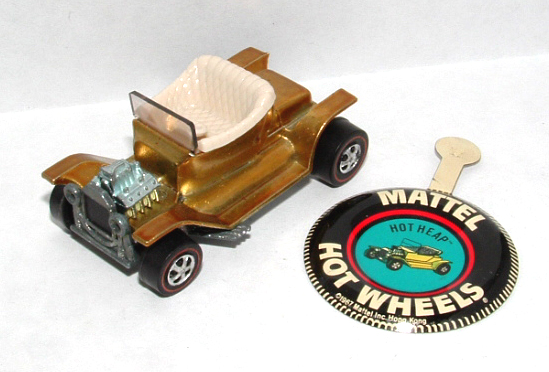
Casting #: 6219
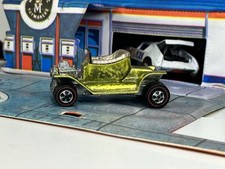
Hot Heap
Designer: Harry Bradley
Production Run: 1968-1971
Note: There are rear end and motor differences between the US and HK versions, as well as changes in the motor cast..
Picture and description thanx to NCHWA.comOpenAI/ChatGPT Collector Guide
1968 Hot Wheels Redline Hot Heap Collector Guide
Quick Value Snapshot
Model: 1968 Hot Wheels Redline Hot Heap
Designer: Harry Bradley
Production run: 1968-1971
Wheel setup: 2 large rear Redline wheels and 2 medium front Redline wheels
Value confidence: Limited without verified recent sold-price data. The Hot Heap is a desirable Original 16-era casting, but exact value depends heavily on color, originality, condition, U.S. versus Hong Kong casting details, and whether the car is loose or carded.
| Category |
Collector Value Signal |
Pricing Confidence |
| Loose, played-with original |
Collectible if complete and not repainted, but wear, bent axles, wheel damage, and missing parts reduce value. |
Moderate when supported by sold listings |
| Loose, high-grade original |
Strong interest, especially with bright original Spectraflame paint, clean base, good glass, and correct wheels. |
Moderate to strong when comparable sales exist |
| Rare color or notable variation |
Can command a premium, but only when authenticity and condition are confirmed. |
Limited unless multiple verified sales are available |
| Original blister card |
Usually far above loose examples, depending on card condition, blister clarity, and originality. |
Limited; carded sales can be infrequent |
| Restored, repainted, custom, or reproduction-parts example |
Not comparable to original collector-grade examples. |
Should be priced separately |
Collector Summary
The Hot Heap is one of the early Hot Wheels Redline-era castings designed by Harry Bradley and produced from 1968 through 1971. It is a hot rod-style model with staggered Redline wheels, using larger rear wheels and medium front wheels. As an early casting, it appeals to Original 16 collectors, Redline variation collectors, restoration hobbyists, and buyers looking for display-quality Spectraflame-era cars.
Collectors should evaluate this model by originality first, then condition, then color and variation. U.S. and Hong Kong versions are both collectible, but they have casting and component differences that should be identified before comparing prices.
Known Variations and Details
- Designer: Harry Bradley.
- Production years: 1968-1971.
- Wheel layout: Two large rear Redline wheels and two medium front Redline wheels.
- Manufacturing versions: U.S. and Hong Kong versions are known.
- Rear end differences: The supplied reference notes indicate differences between U.S. and Hong Kong rear-end details.
- Motor differences: The supplied reference notes indicate U.S. and Hong Kong motor differences, along with changes in the motor casting over time.
- Base and casting review: Collectors should inspect the base, engine area, rear detail, rivets, wheels, and body casting before assigning a variation.
Because the Hot Heap has multiple production-year and production-location details, collectors should avoid assuming that two examples are directly comparable unless the casting, base, motor, wheels, and condition are all similar.
Color and Desirability Notes
Like other early Redline models, the Hot Heap was issued in Spectraflame finishes. Color has a major effect on desirability, but color names can be misidentified in listings due to toning, fading, lighting, and camera settings. A toned or faded car should not be valued the same way as a bright, clean example in the same apparent color.
- Bright original Spectraflame paint is generally more desirable than darkened, heavily toned, cloudy, or oxidized paint.
- Harder-to-find colors may bring premiums, but the premium depends on authentication and condition.
- Common colors in excellent condition can still be valuable because many loose Hot Heap examples show playwear.
- Color mislabeling is common. Compare under neutral light and examine hidden areas, door lines, and edges when possible.
- Repainted examples should not be treated as original color examples, even if the repaint matches a known Redline color.
Condition Factors That Affect Value
- Original paint: Chips, edge wear, toning, scratches, and repainting strongly affect value.
- Wheels: Correct Redline wheels matter. Bent axles, wheel chrome loss, split tires, or swapped wheels reduce value.
- Axles: Check for straightness, correct stance, and whether the car rolls properly.
- Base: Heavy base wear, corrosion, scratches, or signs of disassembly reduce collector value.
- Engine detail: Because motor casting differences are known, the engine area should be inspected carefully for originality and correct variation.
- Rivets: Drilled, altered, replaced, or suspicious rivets are major warning signs unless the car is being sold clearly as restored or custom.
- Glass and interior: Cracks, clouding, missing parts, or incorrect replacement parts affect value.
- Overall originality: An honest played-with original is usually more comparable to other originals than a shiny restored example.
Restorer Notes
The Hot Heap is a popular restoration candidate because many original loose examples have paint wear, wheel issues, or damaged parts. Restorers should document all replacement parts and paintwork clearly. A restored Hot Heap can be attractive for display, but it should not be priced or described as an untouched original.
- Before restoration, identify whether the car is a U.S. or Hong Kong version.
- Document the original motor, rear-end, base, and wheel configuration before disassembly.
- Use correct wheel sizes: large rear wheels and medium front wheels.
- Do not mix components from different versions without disclosure.
- Reproduction parts should be disclosed in any sale listing.
- Restored cars should be valued separately from original survivor examples.
Buyer Cautions
- Do not treat asking prices as market value. Active listings show what sellers hope to receive, not what buyers are paying.
- Use sold prices when possible. Actual completed sales are more useful than active listings, especially for color and condition comparisons.
- Watch for repaints. Fresh-looking paint, filled chips, incorrect shine, or drilled rivets can indicate restoration.
- Confirm the casting. Avoid listings with poor photos, wrong-casting confusion, or vague descriptions.
- Check wheel sizes. The correct setup is two large rear wheels and two medium front wheels.
- Separate U.S. and Hong Kong versions. Rear-end and motor differences mean they should not always be priced as identical examples.
- Be cautious with lots. Multi-car lots can hide condition issues and should not be used as clean single-car price examples.
- Inspect rivets and base photos. Missing base photos make it harder to confirm originality.
Seller Notes
Clear identification and honest condition reporting usually help a Hot Heap listing perform better. Sellers should avoid broad claims unless they can support them with photos and details.
- State whether the car is believed to be U.S. or Hong Kong production.
- Photograph the front, rear, sides, top, base, wheels, engine area, and rivets.
- Disclose repainting, restoration, wheel swaps, axle work, reproduction parts, or drilled rivets.
- Describe the color carefully and mention any toning or fading.
- Do not price a restored or custom example by comparing it to high-grade original examples.
- If the car is carded, show the card front, card back, blister edges, blister cracks, and any lifting or resealing concerns.
Pricing Analysis
No verified specific auction results were supplied for this page, so exact value confidence is limited. For this model, pricing should be based on confirmed sold listings that match the example being evaluated as closely as possible.
Active asking prices: Active asking prices can be useful for understanding seller expectations, but they should not be treated as market value. Unsold listings may be priced too high, may have condition problems, or may reflect rare-color claims that are not verified.
Actual sold prices: Completed sales are more useful, but only when the listing shows a comparable car. A valid comparison should match originality, color, condition, U.S. or Hong Kong version, wheel condition, base condition, and whether the car is loose or carded.
| Pricing Source |
How to Use It |
Common Problem |
| Active asking listings |
Use only as a rough reference for seller expectations. |
Asking prices may be inflated and do not prove value. |
| Completed sold listings |
Best available evidence when the example is clearly original and comparable. |
Photos or descriptions may be incomplete. |
| Lots |
Useful only with caution if the Hot Heap can be isolated and assessed. |
Lot pricing does not cleanly represent one car. |
| Restored or custom sales |
Use only for restored/custom value, not original value. |
Often confused with original examples by new buyers. |
| Carded sales |
Compare only with other carded examples of similar packaging condition. |
Blister and card condition can dominate the price. |
Strong outliers should be reviewed separately. A very high sale may reflect an unusually scarce color, exceptional condition, original packaging, or two determined bidders. A very low sale may reflect poor photos, damage, repainting, missing parts, incorrect components, or a seller who did not identify the car properly.
Listings to Exclude or Treat Carefully
- Repainted cars described as original.
- Restored cars used as comparisons for untouched originals.
- Custom builds with non-factory paint, wheels, or parts.
- Cars with reproduction parts unless clearly disclosed.
- Examples with drilled or altered rivets.
- Damaged cars with missing parts, broken glass, heavy corrosion, or major axle problems.
- Multi-car lots where the Hot Heap condition cannot be isolated.
- Wrong-casting listings or listings with unclear photos.
- Listings that rely only on rare-color claims without adequate evidence.
- Carded examples with possible reseals, blister lifting, or unverified packaging.
New Collector Advice
For a first Hot Heap, prioritize originality and honest condition over chasing the rarest color. A clean, complete, correctly wheeled example with clear photos is usually a better purchase than a questionable car advertised with aggressive rarity claims.
- Learn the correct wheel setup: large rear wheels and medium front wheels.
- Compare U.S. and Hong Kong versions before buying.
- Ask for base and rivet photos if they are not shown.
- Avoid paying original-car prices for restored cars.
- Use sold listings, not active asking prices, when estimating value.
Advanced Collector Notes
Advanced collectors should pay close attention to the U.S. versus Hong Kong production differences and the known motor casting changes. Because the supplied notes specifically identify rear-end and motor differences, those areas should be documented when building a variation set or evaluating a higher-priced example.
- Track examples by production location, motor casting, rear detail, color, and condition.
- Photograph and archive base and engine details for comparison.
- Separate early, later, U.S., and Hong Kong examples where applicable.
- Be cautious when comparing examples across different casting versions.
- For rare-color claims, require strong photos and, when possible, comparison to known authentic examples.
Short Page Blurb
The 1968 Hot Wheels Redline Hot Heap is an early Harry Bradley-designed casting produced from 1968 to 1971. It features a staggered Redline wheel setup with large rear wheels and medium front wheels. Collectors should evaluate U.S. versus Hong Kong differences, motor casting details, original Spectraflame paint, wheel condition, and overall originality before assigning value.
Disclaimer
This guide is for collector reference only. Values can change over time and depend on condition, originality, color, variation, packaging, and buyer demand. Active asking prices are not the same as actual sold prices. Restored, repainted, custom, damaged, reproduction-part, lot, or wrong-casting listings should not be treated as normal original-market price examples.
Gemini/Google AI Collector Guide
1968 Hot Wheels Redline Hot Heap Collector Guide
Quick Value Snapshot
Valuations for the Hot Heap vary significantly based on paint color rarity and country of origin. While common colors in average condition are accessible, high-grade examples in rare Spectraflame shades command significant premiums.
| Condition |
Typical Price Range (USD) |
| Play-Worn / Fair (Heavy paint loss, bent axles) |
$20 - $45 |
| Good / Very Good (Minor chips, intact windshield) |
$50 - $95 |
| Excellent / Near Mint (Strong luster, minimal wear) |
$110 - $275 |
| Carded / Blister Pack (Original packaging) |
$750 - $1,500+ |
Collector Summary
Designed by Harry Bradley, the Hot Heap is one of the "Original 16" Hot Wheels released in 1968. Based on a modified 1913 Ford Model T (T-Bucket style), it remains a favorite for its exposed engine and classic hot rod silhouette. It was produced from 1968 through 1971, appearing in both United States and Hong Kong versions.
Known Variations and Details
Collectors distinguish between US and Hong Kong (HK) releases, as well as specific casting changes over the production run:
- United States (US) Version: Features a clear windshield and a silver-painted engine. The interior is typically a single-piece molded plastic.
- Hong Kong (HK) Version: Features a blue-tinted windshield. The motor and rear-end details differ significantly from the US version, often showing more intricate molding. HK versions usually have four small holes in the steering wheel.
- Motor Casting Variations: Early production models feature the words "Hot Heap" embossed directly on the top of the motor. Later versions have a smooth motor surface.
- Wheel Info: The car utilizes 2 Medium wheels in the front and 2 Large wheels in the rear, contributing to its "raked" hot rod stance.
Color and Desirability Notes
The Hot Heap was produced in a wide variety of Spectraflame colors. Color rarity is a primary driver of market value.
- Common Colors: Blue, Aqua, Red, and Green are frequently seen and form the baseline for pricing.
- Mid-Tier Colors: Orange, Copper, Purple, and Antifreeze.
- Rare/Highly Desirable Colors: Pink, Rose, Gold (early HK), and Creamy Pink. Overchrome versions are exceptionally rare and exist primarily as prototypes or special runs.
Condition Factors That Affect Value
- The Windshield: The thin, upright windshield is prone to snapping or cracking. An original, crack-free windshield is essential for top-tier pricing.
- Engine Chrome: On the US version, the chrome or silver finish on the exposed engine often wears off from handling. Bright, reflective engine detail is preferred.
- Roof Wear: Because the roof is a high point of the casting, it is often the first place to show "high point" paint rub.
- Axle Straightness: Like all early Redlines, bent axles significantly reduce the desirability for collectors who prefer "track-ready" or "straight-sitting" examples.
Restorer Notes
The Hot Heap is a popular candidate for restoration due to its iconic status. However, restorers should note that the windshield and engine components are often replaced with modern reproduction parts. While these parts improve the look of a display piece, they must be disclosed during any sale, as they do not carry the value of original components.
Buyer Cautions
Buyers should be wary of "custom" paint jobs marketed as rare original colors. Some Spectraflame shades, like Rose or Pink, can be mimicked by modern airbrushing techniques. Always inspect the rivets on the base; unspun or drilled rivets usually indicate the car has been opened for repair or restoration. Additionally, ensure the windshield is original and not a plastic reproduction glued into place.
Seller Notes
When listing a Hot Heap, it is vital to identify whether it is the US or HK version. Clear photos of the motor (to show the "Hot Heap" text variation) and the base (to show the country of origin) will help attract serious collectors. Mentioning the condition of the windshield—specifically if it is original and free of cracks—is a major selling point.
Pricing Analysis
The market for the Hot Heap is stable due to its status as an Original 16 casting. Confidence in pricing for common colors is high due to the frequency of transactions. However, confidence for rare colors (like Pink or Rose) is limited because these examples appear on the market infrequently, often leading to competitive bidding that may result in outlier prices.
Listings to Exclude or Treat Carefully
When researching market value, do not use the following as representative examples:
- Restored/Repainted Cars: These should be valued significantly lower than original survivors, often closer to "play-worn" prices.
- Customs: Modified cars are art pieces and do not reflect the collector market for original Redlines.
- Reproduction Parts: Cars with replacement glass or wheels should be priced as "parts cars" or "restored" rather than "all original."
- Bulk Lots: The per-unit price in a large lot of cars is typically lower than a single, high-quality listing.
New Collector Advice
For those just starting, look for a clean US version in Blue or Aqua. These are beautiful examples of the Spectraflame era that can often be found for under $100 in decent condition. It allows you to appreciate the Harry Bradley design without the massive financial entry point of the rarer HK variations or "Hot Heap" embossed motor versions.
Advanced Collector Notes
Seasoned collectors often focus on the "Hot Heap" embossed motor variation or hunting for HK-specific colors that were not commonly released in the US. Finding a Hong Kong version with a perfectly intact, deep blue windshield and no "toning" (darkening of the paint) is considered a "grail" for many Original 16 enthusiasts.
Short Page Blurb
The 1968 Hot Heap is a cornerstone of the Hot Wheels Original 16. Designed by Harry Bradley, this T-Bucket inspired racer features a distinctive raked stance and exposed engine. Whether you are hunting for the rare "Hot Heap" embossed motor or a pristine HK blue-tinted windshield variant, this guide provides the essential data for navigating the Redline market.
Disclaimer
Historical price data is for educational purposes only. Market values fluctuate based on demand, platform, and individual bidder interest. RedlinePriceGuide.com does not guarantee that any specific vehicle will sell for the prices listed herein.
Online Redline Guide / Color Reference
Wheels: 2 Lg, 2 Med
US Colors
| Color | Comments |
|---|
| antifreeze | very common |
| green | very common |
| aqua | common |
| blue | common |
| gold | common |
| lime | common |
| orange | common |
| purple | common |
| red | common |
| copper | uncommon |
| hot pink | uncommon |
| olive green | uncommon |
| light green | hard to find |
| magenta | hard to find |
| rose | hard to find |
| creamy pink | very hard to find |
| light blue | very hard to find |
| olive gold | very hard to find |
| yellow | very hard to find |
| brown | very rare |
HK Colors
| Color | Comments |
|---|
| blue | very common |
| green | very common |
| red | very common |
| aqua | common |
| brown | uncommon |
| orange | uncommon |
| purple | uncommon |
| copper | hard to find |
| creamy pink | hard to find, esp. in the US |
NCHWA.com Ratings
MINT Loose pricing below probably. Check ebay for blister pricing.
Note that these values are very old. Typical selling prices can be significantly higher now. Check the AI summaries for more info or ebay listings here.
Please see NCHWA.com Grading Page to reduce value due to condition.
| Color | US
Rating | US
Value | HK
Rating | HK
Value |
|---|
| Blue | 2- | $31 | 2- | $31 |
| Green | 2- | $31 | 2- | $31 |
| Red | 2- | $31 | 2- | $31 |
| Gold | 2- | $31 | . | . |
| Aqua | 2 | $41 | 2 | $41 |
| Orange | 2 | $41 | 2 | $41 |
| Lime | 2+ | $50 | . | . |
| Antifreeze | 2+ | $50 | . | . |
| Olive | 2+ | $50 | . | . |
| Rose | 2+ | $50 | . | . |
| Purple | 3 | $63 | 3 | $63 |
| Creamy Pink | 3+ | $75 | 4 | $88 |
| Light Blue | 4 | $88 | . | . |
| Copper | 4 | $88 | 3 | $63 |
| Magenta | 5- | $101 | . | . |
| Light Green | 6 | $138 | . | . |
| Hot Pink | 7 | $163 | . | . |
| Yellow | 8 | $188 | . | . |
| Brown | 9 | $213 | 3 | $63 |
| | . | | . |
Looking for reproduction redline parts?

Total results 8
Average price for this page is $11