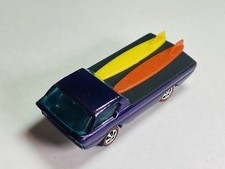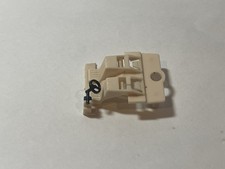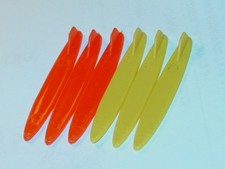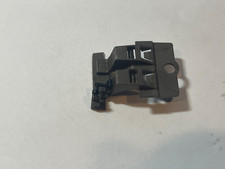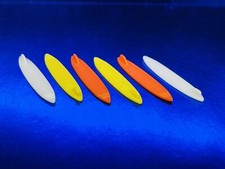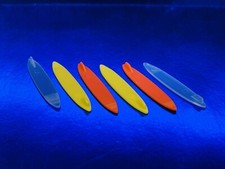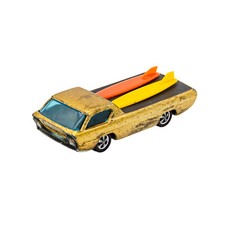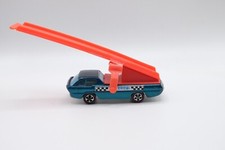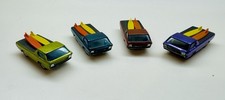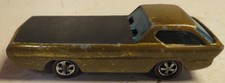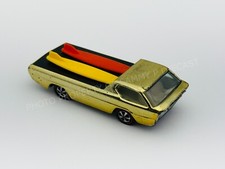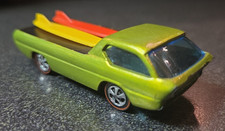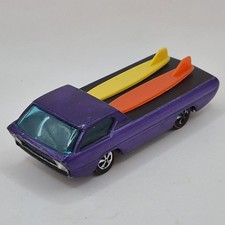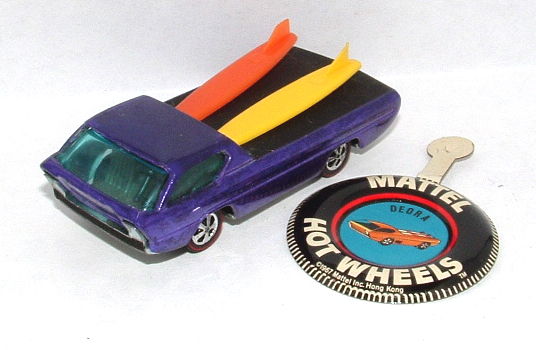
Casting #: 6210
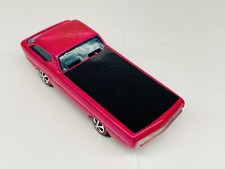
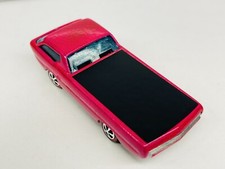
Deora
Designer: Harry Bradley
Production Run: 1968-1969
Note: Early HK runs can be found with 4 deep dish wheels. The wheel chrome on Deora models tends to sustain very well over the years, due to the wheels being sunken deep into the wheel wells.
Picture and description thanx to NCHWA.comOpenAI/ChatGPT Collector Guide
1968 Hot Wheels Redline Deora Collector Guide
Quick Value Snapshot
| Category |
Collector Impact |
| Complete original car with original surfboards |
Most desirable normal collector example, especially with clean paint, glass, base, and wheels. |
| Missing surfboards |
Common issue and a meaningful value deduction. |
| Early Hong Kong example with four deep dish wheels |
Important variation to document carefully; desirable to variation collectors. |
| Restored, repainted, customized, or reproduction-part example |
Should be valued separately from original examples and clearly disclosed. |
| Pricing confidence |
Limited without verified sold examples. Active asking prices should not be treated as market value. |
Collector Summary
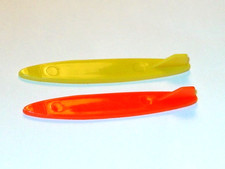
The 1968 Hot Wheels Redline Deora is one of the original-era Redline castings and was designed by Harry Bradley. It was produced during the 1968-1969 period. The casting represents the Deora show truck and is especially recognizable because of its removable surfboards.
For collectors, the Deora is a casting where completeness matters. A car with its correct original surfboards is more desirable than an otherwise similar example missing them. Paint condition, wheel condition, base condition, and originality are all important. The model normally uses four small Redline wheels, and early Hong Kong production examples can be found with four deep dish wheels.
Known Variations and Details
- Designer: Harry Bradley.
- Production run: 1968-1969.
- Wheel setup: Four small Redline wheels.
- Early Hong Kong detail: Some early Hong Kong runs can be found with four deep dish wheels.
- Accessory: The Deora should have its surfboards. Missing boards are common and affect desirability.
- Wheel preservation note: Deora wheel chrome often survives better than on some other Redlines because the wheels sit deeply inside the wheel wells.
Color and Desirability Notes
The Deora was issued in the standard Spectraflame-style Redline era finish. As with other 1968 Redlines, collector interest is affected by color, shade, toning, and overall eye appeal. Bright, even paint with minimal wear is preferred. Dark toning, heavy fading, corrosion under the paint, or mismatched color panels will reduce desirability.
Do not assume a high asking price is justified by color alone. Color desirability should be evaluated together with originality, completeness, wheel type, base condition, and whether the car has original surfboards.
Condition Factors That Affect Value
- Surfboards: Original boards are a major factor. Missing or reproduction boards should be disclosed and priced accordingly.
- Paint: Edge wear, roof wear, chips, toning, fading, and corrosion affect collector value.
- Wheels: Correct small Redline wheels are expected. Early Hong Kong deep dish wheel examples should be documented carefully.
- Wheel chrome: Deora wheels often retain chrome well, but dull, replaced, or mismatched wheels reduce appeal.
- Base: Look for clean original rivets, proper fit, and normal age-appropriate wear.
- Glass and interior: Cracks, clouding, heavy scratches, or incorrect replacement parts affect value.
- Originality: Repainted, restored, wheel-swapped, base-swapped, or customized examples are not comparable to original cars.
Restorer Notes
The Deora is a popular restoration candidate because many examples are found with missing surfboards or worn paint. Restorers should identify the car’s correct wheel setup before replacing wheels. An early Hong Kong example with four deep dish wheels should not be casually converted to standard wheels.
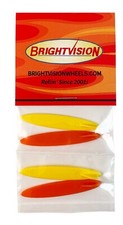
Replacement surfboards can make a display car look complete, but reproduction boards must be disclosed if the car is sold. A restored Deora can be attractive for display, but it should not be priced or represented as an original Redline example.
Buyer Cautions
- Separate active asking prices from actual sold prices. Asking prices are not proof of market value.
- Confirm that the car is a 1968-era Redline Deora and not a later reissue, tribute, custom, or wrong-casting listing.
- Check that the surfboards are present and determine whether they are original or reproduction.
- Inspect rivets for signs of base removal, repainting, or parts swapping.
- Look closely at wheel type, especially on claimed early Hong Kong deep dish wheel examples.
- Avoid using damaged lots, customs, repaints, restored cars, or incomplete examples as normal price references.
Seller Notes
- State whether the surfboards are original, reproduction, or missing.
- Photograph the top, sides, front, rear, base, wheels, and rivets clearly.
- Identify wheel type, especially if the car has four deep dish wheels.
- Disclose restoration, touch-up, replacement wheels, reproduction boards, or base work.
- Use actual sold prices from comparable original cars when estimating value, not unsold asking prices.
Pricing Analysis
No verified sold-price dataset was supplied for this page, so pricing confidence is limited. The safest method is to compare only confirmed sold examples that match the subject car in originality, completeness, color, wheel type, and condition.
Active listings often include ambitious prices, incomplete cars, restored cars, reproduction parts, or mixed lots. Those listings should not be treated as market value. A complete original Deora with original surfboards, clean paint, correct wheels, and a good base should be evaluated separately from a car with missing boards, repainting, replacement wheels, or reproduction accessories.
Strong outliers can occur when a listing involves unusual color, exceptional condition, early Hong Kong deep dish wheel configuration, rare packaging, or unusually strong buyer competition. Outliers should be noted, but not used alone to set a normal value.
Listings to Exclude or Treat Carefully
- Repainted or restored Deoras.
- Custom builds or modified examples.
- Cars with reproduction surfboards unless priced as such.
- Cars with missing surfboards when comparing against complete examples.
- Wheel-swapped or base-swapped cars.
- Damaged examples with broken glass, severe corrosion, or heavy play wear.
- Large lots where the individual Deora condition and originality are unclear.
- Later reissues or non-Redline Deora castings listed as original 1968 cars.
- Unsold active listings used as if they were confirmed sale prices.
New Collector Advice
If you are buying your first Redline Deora, prioritize originality and completeness. A clean original car with correct wheels and original surfboards is usually a better reference piece than a cheaper car that needs multiple replacement parts.
Learn to check the rivets, wheels, base, and surfboards before buying. If the listing does not show clear photos of these areas, ask for more images. Do not rely only on the front or top photo, because missing boards, wheel issues, and base work may not be obvious from one angle.
Advanced Collector Notes
Advanced collectors should document the car’s production origin, wheel type, color shade, toning, base condition, rivet condition, and surfboard originality. Early Hong Kong examples with four deep dish wheels are especially worth recording carefully because wheel configuration is a meaningful variation.
When comparing examples, separate true factory variation from later alteration. Wheel swaps and reproduction parts can make an example appear more significant than it is. Detailed photos and side-by-side comparison with known original cars are important for higher-end purchases.
Short Page Blurb
The 1968 Hot Wheels Redline Deora, designed by Harry Bradley and produced from 1968-1969, is a key early Redline casting known for its removable surfboards. Collectors should focus on originality, correct small Redline wheels, surfboard authenticity, and the early Hong Kong deep dish wheel variation.
Disclaimer
This guide is for collector reference only. Values can change over time and depend on condition, originality, color, completeness, wheel type, and buyer demand. Active asking prices are not the same as actual sold prices. Restored cars, repaints, customs, reproduction parts, damaged examples, lots, and incorrect castings should not be used as normal price comparisons for original Redline Deoras.
Gemini/Google AI Collector Guide
1968 Hot Wheels Redline Deora Collector Guide
Quick Value Snapshot
The 1968 Deora is a staple of the "Original 16" Hot Wheels. Values vary significantly based on the presence of original surfboards and the specific paint color.
| Condition |
Estimated Sold Price Range |
| Fair/Play-worn (Missing Surfboards) |
$30 - $60 |
| Good/Very Good (With Surfboards) |
$85 - $160 |
| Near Mint to Mint (With Surfboards) |
$250 - $600+ |
| Rare Colors (Pink, Orange, Purple) |
$800 - $2,500+ |
Collector Summary
Designed by Harry Bradley and based on the real-life Dodge Deora concept truck, the Hot Wheels Deora was part of the inaugural 1968 lineup. It was produced in both the United States and Hong Kong factories between 1968 and 1969. The model is iconic for its "cab-forward" design and the two removable surfboards that sit on the rear bed. Unlike many other early castings, the Deora features four small wheels (4 Sm), which gives it a distinct low-profile stance.
Known Variations and Details
- US Production: Features clear windows, black interiors, and usually a smoother paint finish.
- Hong Kong Production: Often found with blue-tinted windows. Some early Hong Kong runs are notable for having four deep-dish wheels, which are highly sought after by specialists.
- Base Plate: The base is typically unpainted zinc, though some early runs may show different levels of polishing or toning.
- Wheel Chrome: As noted in database records, Deora wheel chrome tends to survive better than other models because the wheels are recessed deeply into the wheel wells, protecting them from surface friction.
Color and Desirability Notes
The Deora was released in a wide array of Spectraflame colors. The desirability is often tied directly to the rarity of the paint:
- Common Colors: Blue, Aqua, Lime (Antifreeze), Gold, and Copper.
- Harder to Find: Red, Green, and Olive.
- Rare/Premium Colors: Purple, Orange, Yellow, and Pink. Note: "Creamy Pink" is an extreme rarity often commanding a massive premium among advanced collectors.
Condition Factors That Affect Value
- Surfboards: A Deora is considered "incomplete" without its two surfboards. Original boards have a specific translucency and "fin" shape. Repros are common and significantly lower the value.
- The Rear Hatch: The plastic "bar" or hatch that holds the surfboards in place can be prone to snapping or becoming loose.
- Toning: Spectraflame paint can "tone" or darken over time due to oxidation under the lacquer. Bright, "pops" of color command the highest prices.
- Wheel Straightness: While the chrome survives well, the thin wire axles can still bend, affecting how the car sits.
Restorer Notes
Because the Deora wheels are small and protected, this casting is a favorite for light restoration (cleaning and surfboard replacement). However, collectors should be aware that "replating" wheels or repainting the body moves the car into the "Restored" category, which is valued much lower than "Original Mint" condition. Replacing lost surfboards with high-quality reproductions is common, but must be disclosed during a sale.
Buyer Cautions
- Reproduction Surfboards: Many Deoras sold online feature "repro" boards. Check for the specific plastic density and mold marks. If the boards look brand new but the car is beaten up, they are likely reproductions.
- Fake "Pink" Cars: Be wary of "faded red" cars being sold as Pink or Salmon. Authentic Pink Spectraflame has a specific hue that is difficult to mistake when viewed in person.
- Deep Dish Scams: Ensure that a "Deep Dish" HK Deora actually has all four deep-dish wheels and is not a "wheel swap" or a custom.
Seller Notes
- Highlight the Boards: If you have original surfboards, take macro photos of them. They can account for $40-$60 of the car's total value on their own.
- Wheel Chrome: Mention the condition of the chrome. Since Deoras usually have better-than-average chrome, "Excellent Chrome" is a selling point that should be emphasized.
- Axle Condition: Verify if the car rolls straight; "bent axles" is a common complaint from buyers of this casting.
Pricing Analysis
Market confidence for the Deora is high due to the volume of sales data. It is a high-liquidity casting. However, there is a sharp divide between "Average" and "Investment Grade" examples.
- Sold Prices: Reflect the actual market clearing price. Common colors in "played with" condition consistently sell between $40 and $70.
- Asking Prices: Often inflated on platforms like eBay, with sellers listing common Blue or Aqua models for $200+ without the condition to back it up. These listings often sit for months without selling.
Listings to Exclude or Treat Carefully
- "Restored" or "Code 3": These are repainted cars. They do not represent the market value of original Redlines.
- Surfboard-only listings: Do not confuse the price of a pair of original surfboards with the price of the car.
- Lot Sales: Prices paid for "junk lots" containing a Deora should not be used to value individual high-quality examples.
New Collector Advice
If you are just starting, look for a clean US-production Deora in a common color like Blue or Aqua. Ensure it has the surfboards, even if they are reproductions, to complete the look. Learning to spot the difference between US and HK wheels is a great entry point into the technical side of Redline collecting.
Advanced Collector Notes
For the completionist, the Hong Kong Deep Dish variation is the "holy grail" of Deora production runs. Additionally, seeking out the Deora with "Champagne" or "White" interiors (found on some HK versions) adds a layer of difficulty and value to a collection. Always verify the surfboard fins; original 1968 boards have a very specific "vibe" and flexibility that modern 3D prints or resin casts cannot perfectly replicate.
Short Page Blurb
The 1968 Deora is a cornerstone of the Hot Wheels Original 16. Featuring its signature dual surfboards and 4-small-wheel stance, this Harry Bradley design remains one of the most recognizable and collected Redlines in history.
Disclaimer
Values provided are based on historical market trends and are not guarantees of future price performance. The Hot Wheels market is subject to fluctuations. Always conduct your own due diligence before purchasing or selling high-value vintage die-cast.
Online Redline Guide / Color Reference
Wheels: 4 Sm
US Colors
| Color | Comments |
|---|
| gold | common |
| purple | common |
| aqua | common |
| lime | unknown |
| antifreeze | unknown |
| red | uncommon |
| green | hard to find |
| blue | very rare |
| yellow | very rare, if it exists |
HK Colors
| Color | Comments |
|---|
| antifreeze | common |
| purple | common |
| gold | common |
| aqua | common |
| orange | unknown |
| antifreeze | rare w/painted base |
| gold | very rare w/painted base |
NCHWA.com Ratings
MINT Loose pricing below probably. Check ebay for blister pricing.
Note that these values are very old. Typical selling prices can be significantly higher now. Check the AI summaries for more info or ebay listings here.
Please see NCHWA.com Grading Page to reduce value due to condition.
| Color | US
Rating | US
Value | HK
Rating | HK
Value |
|---|
| Aqua | 2 | $41 | 2 | $41 |
| Purple | 3 | $63 | 3 | $63 |
| Antifreeze | 4 | $88 | 3 | $63 |
| Gold | 4 | $88 | 3 | $63 |
| Red | 6 | $138 | . | . |
| Green | 7 | $163 | . | . |
| Lime | 8 | $188 | . | . |
| Blue | 17 | $526 | . | . |
| Orange | . | . | 4 | $88 |
| | . | | . |
Looking for reproduction redline parts?

Total results 26
Average price for this page is $20