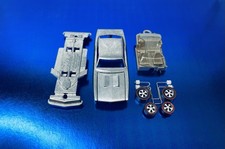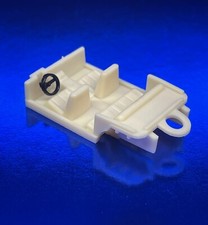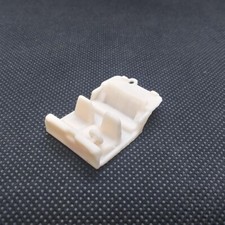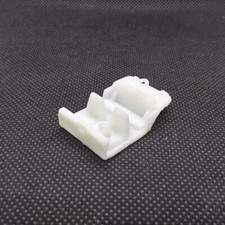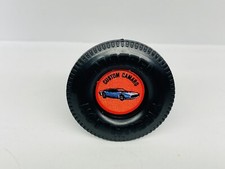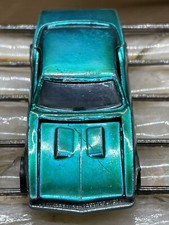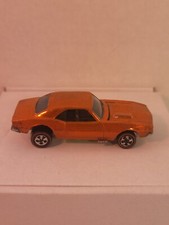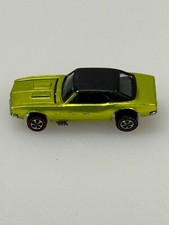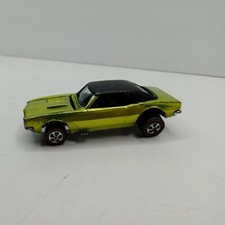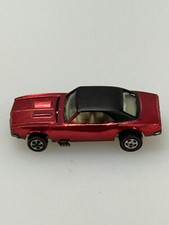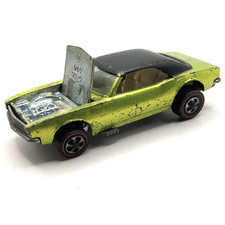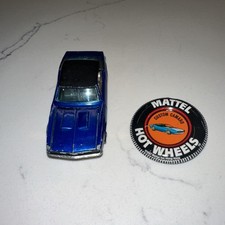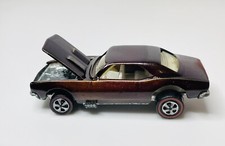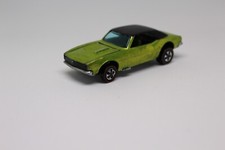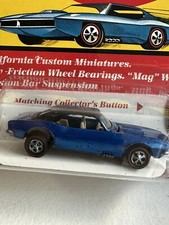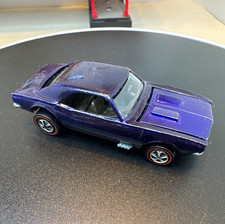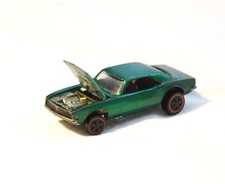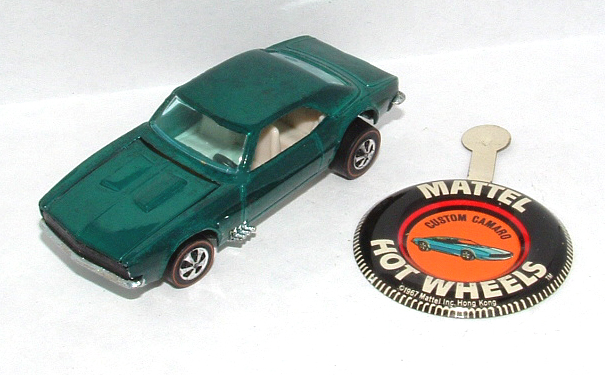
Casting #: 6208
Custom Camaro
Designer: Harry Bradley
Production Run: 1968-1969
Note: Enamel white version is considered a prototype, with only a few in existence.
Picture and description thanx to NCHWA.comOpenAI/ChatGPT Collector Guide
1968 Hot Wheels Redline Custom Camaro Collector Guide
Quick Value Snapshot
| Category |
Collector Interpretation |
| Model |
1968 Hot Wheels Redline Custom Camaro |
| Designer |
Harry Bradley |
| Production Run |
1968-1969 |
| Wheel Setup |
2 medium wheels and 2 small wheels |
| Major Rarity Note |
Enamel white is considered a prototype, with only a few known examples |
| Pricing Confidence |
Limited without verified recent sold-price data. Asking prices should not be treated as market value. |
Collector Summary
The 1968 Hot Wheels Redline Custom Camaro is one of the early Redline-era castings and is strongly associated with the first generation of Hot Wheels collecting. Designed by Harry Bradley and produced during 1968-1969, it is a key casting for collectors who focus on early Mattel Redlines, Original 16-era cars, muscle car castings, and Camaro models.
For value purposes, the most important factors are originality, condition, color, wheel correctness, base integrity, hood fit, and whether the car is loose, carded, restored, repainted, or altered. Because this casting is popular, many examples appear in varying states of wear, restoration, and modification. Collectors should separate original loose cars from restored cars, reproduction-part cars, customs, repaints, and damaged examples when comparing prices.
Known Variations and Details
- Designer: Harry Bradley.
- Production years: 1968-1969.
- Wheel configuration: 2 medium wheels and 2 small wheels.
- Era: Early Hot Wheels Redline production.
- Body style: Custom Camaro casting, based on the early Camaro muscle car theme.
- Opening feature: The casting is known for its opening hood, which is an important condition and originality checkpoint.
- Prototype note: The enamel white version is considered a prototype, with only a few examples known to exist.
Color and Desirability Notes
Color is one of the strongest value drivers for Redline-era cars, but it must be evaluated together with condition and originality. A scarce color in poor condition may not outperform a more common color in excellent original condition. For the Custom Camaro, collectors place special attention on paint originality, color depth, toning, roof paint condition where applicable, and whether the finish shows signs of repainting or restoration.
Enamel white: The enamel white Custom Camaro is considered a prototype and should be treated separately from normal production-color examples. Because only a few are known, it should not be used as a normal market comparison for regular Custom Camaro pricing. Any claimed enamel white example requires very careful authentication.
Active asking prices for rare colors or unusual examples may be much higher than typical sold prices. An asking price only shows what a seller hopes to receive; it does not prove current market value.
Condition Factors That Affect Value
- Original paint: Original finish is essential. Repainted or touched-up cars should not be priced against untouched examples.
- Chips and edge wear: Hood edges, roof areas, fenders, nose, rear corners, and wheel arches are common areas to inspect.
- Hood condition: The hood should open and close properly. Bent, loose, mismatched, repainted, or replacement hoods affect value.
- Wheel condition: Correct redline wheels, proper size arrangement, axle straightness, and wheel shine all matter.
- Base condition: Check for corrosion, heavy scratches, drilling, pry marks, or signs the car has been opened.
- Glass and interior: Cracks, discoloration, missing parts, or swapped components reduce collector confidence.
- Toning and fading: Spectraflame-era finishes can vary due to age, handling, and storage. Even original cars may show uneven color or dullness.
- Packaging: Carded or blister-pack examples must be evaluated separately from loose cars. Packaging condition can outweigh small differences in the car itself.
Restorer Notes
The Custom Camaro is a popular restoration candidate because of its strong collector demand and recognizable casting. Restorers should document any repainting, polishing, wheel replacement, base work, hood replacement, or reproduction parts. A well-restored example can display very well, but it should not be represented as an original-condition car.
When restoring, pay close attention to the hood fit, wheel sizing, axle stance, and correct Redline-era presentation. Over-polished bases, incorrect wheels, modern paint finishes, and poorly matched replacement parts are common signs that separate a restored car from an original survivor.
Buyer Cautions
- Do not treat asking prices as sold values. Many listed prices are aspirational and may not reflect what buyers are actually paying.
- Confirm originality. Repaints, touched-up cars, reproduction hoods, wheel swaps, and drilled bases can significantly change value.
- Be careful with rare-color claims. Rare color listings need clear photos, provenance when possible, and comparison to known authentic examples.
- Prototype claims require strong proof. The enamel white Custom Camaro is considered a prototype. Any claimed example should be examined with caution.
- Avoid wrong comparisons. Do not compare loose original cars to carded examples, restored cars, customs, lots, damaged cars, or listings with reproduction parts.
- Inspect the hood area. The hood is one of the key parts of the casting and is often a condition issue.
Seller Notes
- State whether the car is original or restored. Transparency helps serious collectors evaluate the listing.
- Photograph all sides. Include front, rear, both sides, top, base, hood open, hood closed, wheels, and close-ups of flaws.
- Identify wheel condition clearly. Mention bent axles, wheel wear, missing redlines, or mismatched wheels.
- Disclose repairs and replacement parts. Reproduction or swapped parts should be described clearly.
- Separate packaging value. If carded, describe blister clarity, card condition, cracks, lifting, creases, and any reseal concerns.
- Use sold comparisons carefully. Compare only to similar color, condition, originality, and packaging status.
Pricing Analysis
No verified specific sold-price records were supplied for this page, so exact value confidence is limited. The Custom Camaro is a desirable early Redline casting, but pricing varies widely based on originality, color, condition, and whether the example is loose or packaged.
Active asking prices should be treated only as seller expectations. They can help show availability and seller sentiment, but they do not establish market value unless supported by completed sales of comparable examples.
Actual sold prices are the more useful benchmark, but only when the examples are comparable. A valid comparison should match the car by originality, condition, color, wheel correctness, base condition, hood condition, and packaging status. Restored cars, repaints, reproduction-part cars, damaged examples, mixed lots, and customs should be excluded from normal original-car pricing analysis.
Strong outliers should be reviewed separately. Prototype-level examples, unusual colors, high-grade carded cars, or examples with exceptional provenance can sell outside the normal range. Those results should not be used to price average loose production examples.
Listings to Exclude or Treat Carefully
- Repainted or restored Custom Camaros listed without clear disclosure.
- Cars with reproduction wheels, hoods, glass, interiors, or other replacement parts.
- Drilled-base cars or cars that show signs of being opened.
- Custom builds, fantasy colors, or modified display pieces.
- Mixed lots where the individual Custom Camaro value cannot be isolated.
- Damaged examples with missing hoods, broken wheels, crushed roofs, heavy corrosion, or major casting damage.
- Wrong-casting listings or listings that use Custom Camaro keywords for a different Camaro release.
- Prototype claims, including enamel white examples, unless supported by strong authentication.
- Carded examples with possible reseals, cracked blisters, lifted blisters, or reproduction packaging.
New Collector Advice
If you are new to Redlines, start by learning the difference between an original car, a restored car, and a custom. The Custom Camaro is popular, so it appears often, but condition and originality vary greatly. A clean original example with honest wear is usually more desirable to collectors than a shiny repaint being presented as original.
Before buying, compare multiple examples and study the hood, wheels, base, and paint. Avoid paying rare-color prices unless the seller provides clear photos and the car can be evaluated confidently. For an enamel white example, assume expert authentication is necessary.
Advanced Collector Notes
Advanced collectors should focus on fine distinctions in originality, color tone, casting traits, base details, wheel fitment, and hood alignment. Because the Custom Camaro is a high-interest early casting, small differences in condition can have a large effect on desirability.
When researching market value, separate production-color loose cars, high-grade loose cars, carded examples, restored cars, and prototype-level examples into different groups. The enamel white prototype should be treated as a separate research category and not included in ordinary production-run pricing.
Short Page Blurb
The 1968 Hot Wheels Redline Custom Camaro, designed by Harry Bradley and produced from 1968-1969, is a major early Redline casting. Collectors value it for its early production history, opening hood, Redline wheels, and color variations. The enamel white version is considered a prototype with only a few known examples and should be evaluated separately from standard production cars.
Disclaimer
Values for Hot Wheels Redline cars can change based on condition, originality, color, packaging, buyer demand, and the quality of available sold-price data. Active asking prices are not the same as actual sold prices. This guide does not guarantee exact values and should be used as a collector reference, not a fixed price list.
Gemini/Google AI Collector Guide
1968 Hot Wheels Redline Custom Camaro Collector Guide
Quick Value Snapshot
| Condition Level |
Estimated Price Range |
Confidence |
| Played With (C4-C5) |
Low to Moderate |
High |
| Good to Fine (C6-C7) |
Moderate |
High |
| Excellent to Near Mint (C8-C9) |
High to Premium |
Moderate |
| Prototypes (Enamel White) |
Extreme Premium / Private Treaty |
Limited Data |
Collector Summary
The 1968 Custom Camaro holds a legendary status as one of the "Sweet Sixteen"—the original 16 Hot Wheels cars released by Mattel. Designed by former GM designer Harry Bradley, this casting was modeled after his own personalized 1968 Chevrolet Camaro. It features an opening hood that reveals a detailed engine. Because it was the very first casting released to the public, it is considered a cornerstone of any serious Redline collection.
Known Variations and Details
- Production Run: 1968–1969.
- Wheels: Standard configuration includes 2 medium wheels in the rear and 2 small wheels in the front.
- Base: Most common versions feature a silver-painted or zinc-plated base. There are distinct differences between United States (US) and Hong Kong (HK) production runs, including variations in interior colors and glass tint.
- Enamel White: This is a documented prototype version. It was produced in extremely small numbers and was never intended for retail sale in this finish.
Color and Desirability Notes
The Custom Camaro was released in a wide variety of Spectraflame colors. Standard colors like Blue, Lime, and Gold are more frequently found. Rarer colors such as Purple, Pink, Rose, and Brown command significantly higher interest from advanced collectors. The Enamel White version remains the most sought-after and rarest variation of this casting.
Condition Factors That Affect Value
- Paint Integrity: Spectraflame paint is prone to "toning" (darkening of the metal underneath) and "foxing" (small spots). Crisp, bright paint with minimal chipping on the roof and fenders is ideal.
- The Hood: The hood should sit flush and the hinges should be intact. Bent or loose hoods significantly reduce value.
- Glass: Scratches or cracks in the plastic windshield are common. Clear, unmarred glass is a premium feature.
- Suspension: The "working" suspension should be springy. "Bent axles" or wheels that lean inward are common signs of heavy play.
- Chrome: The chrome finish on the wheels (the "redlines") often wears off. Mirror-like chrome on the hubcaps is highly desirable.
Restorer Notes
Because of its value, the Custom Camaro is a frequent candidate for restoration. Original paint is always more valuable than a "pro-restoration." Restorers should be careful not to damage the delicate hood hinges during disassembly. Collectors should note that using reproduction parts (wheels, glass, or hoods) turns the car into a "restored" example rather than an original survivor.
Buyer Cautions
Buyers should be wary of listings labeled as "Mint" that are actually high-quality restorations. Look for the specific "crinkle" or "orange peel" texture of original Spectraflame paint. Check the rivets on the base; if they appear drilled out or replaced with screws/glue, the car has been opened. Additionally, ensure the car is an original 1968 casting and not a later "Vintage Series" or "Classics" reissue, which do not have the same value as original Redlines.
Seller Notes
When selling, high-resolution photos of the base and the engine bay are essential. Clearly state if the hood stays open or if it falls shut. Document any "toning" in the paint. If you believe you have a rare color, photograph the car in natural light alongside a common color (like Blue) to help collectors verify the hue.
Pricing Analysis
Asking Prices vs. Sold Prices: There is often a significant gap between asking prices on secondary markets and actual realized sold prices. Asking prices for "Near Mint" examples are frequently inflated. Actual market value is determined by completed sales of similar condition and color combinations.
Note: Confidence in pricing for the Enamel White version is limited due to the extreme rarity and lack of public transaction data.
Listings to Exclude or Treat Carefully
- Customs/Restorations: Cars that have been repainted or have reproduction parts do not represent the market value of original survivors.
- Multi-car Lots: "Junk" lots containing damaged Camaros can skew average price data.
- Wrong Castings: Listings for "1968 Camaro" that are actually modern re-releases.
- Damaged Examples: Cars with missing hoods, broken pillars, or heavy oxidation.
New Collector Advice
If you are just starting, look for a "Played-with" but complete Custom Camaro in a common color like Blue or Gold. This allows you to own a piece of history without the heavy premium of a high-grade example. Avoid buying "lots" until you can identify original vs. reproduction parts.
Advanced Collector Notes
Advanced collectors focus on "Early Production" features. Look for the Hong Kong variations which often feature blue-tinted glass and different dashboard molding. The Enamel White prototype is the pinnacle of this casting; however, authentication by a known Redline expert is highly recommended before any such acquisition.
Short Page Blurb
The 1968 Custom Camaro is the car that started it all. As the first Hot Wheels casting ever released, this Harry Bradley design is a must-have for any Redline enthusiast. From common Spectraflame colors to the legendary Enamel White prototype, the Custom Camaro remains a centerpiece of the die-cast hobby.
Disclaimer
Historical sales data is not a guarantee of future value. The die-cast market is subject to fluctuations based on collector demand and economic conditions. This guide is for informational purposes and does not constitute financial advice.
Online Redline Guide / Color Reference
Wheels: 2 Med, 2 Sm
US Colors
| Color | Comments |
|---|
| blue w/black roof | common |
| blue | common |
| antifreeze w/black roof | common |
| lime w/black roof | common |
| green | uncommon |
| red w/black roof | uncommon |
| antifreeze | hard to find |
| medium blue | hard to find |
| olive | hard to find |
| aqua | hard to find |
| lime | hard to find |
| purple | hard to find; light purple is a later run color |
| red | hard to find |
| rose | hard to find |
| light blue | rare |
| creamy pink | rare |
| copper | rare |
| orange | rare |
| gold | very rare |
| brown | very rare; store display has white interior |
| white enamel | very rare; prototype |
HK Colors
| Color | Comments |
|---|
| blue w/black roof | common |
| antifreeze w/black roof | common |
| blue | uncommon |
| orange | uncommon |
| aqua | uncommon |
| green | hard to find |
| gold | hard to find |
| red | hard to find |
| olive | very hard to find |
| purple | very hard to find |
| copper | very hard to find |
| brown | rare |
| aqua w/black roof | rare |
| orange w/black roof | rare |
| purple w/black roof | very rare |
| creamy pink | very rare |
NCHWA.com Ratings
MINT Loose pricing below probably. Check ebay for blister pricing.
Note that these values are very old. Typical selling prices can be significantly higher now. Check the AI summaries for more info or ebay listings here.
Please see NCHWA.com Grading Page to reduce value due to condition.
| Color | US
Rating | US
Value | HK
Rating | HK
Value |
|---|
| Blue | 5 | $113 | . | . |
| Green | 5 | $113 | 5 | $113 |
| Red | 9 | $213 | 9 | $213 |
| Antifreeze | 11 | $263 | . | . |
| Lime | 12 | $288 | . | . |
| Purple | 13 | $326 | 16 | $476 |
| Aqua | 14 | $376 | 7 | $163 |
| Olive | 15 | $426 | 13 | $326 |
| Rose | 16 | $476 | . | . |
| Creamy Pink | 18 | $576 | 24 | $876 |
| Brown | 25 | $1,001 | . | . |
| Orange | 28 | $1,601 | 7 | $163 |
| Light Blue | 29 | $1,801 | . | . |
| White Enamel | 30 | $2,001 | . | . |
| Copper | 31 | $2,201 | 10 | $238 |
| Gold | 32 | $2,401 | 12 | $288 |
| Blue | 4 | $88 | 4 | $88 |
| A/Freeze | 7 | $163 | 5 | $113 |
| Red | 9 | $213 | . | . |
| Lime | 13 | $326 | 6 | $138 |
| Aqua | . | . | 15 | $426 |
| Orange | . | . | 16 | $476 |
| Purple | . | . | 29 | $1,801 |
| A/Freeze | 25 | $1,001 | . | . |
| Blue | 8 | $188 | . | . |
| Red | 9 | $213 | . | . |
| A/freeze | 12 | $288 | . | . |
| | . | | . |
Looking for reproduction redline parts?

Total results 31
Average price for this page is $28